Invaluable support: the activities of the brass band ladies’ committee

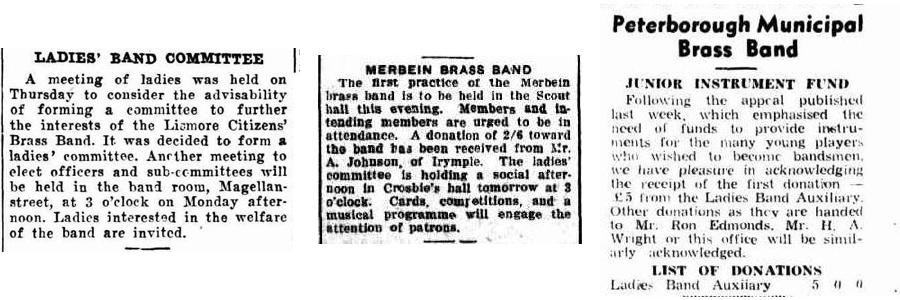
Figure 1: Northern Star, 26/07/1930, p. 8; Sunraysia Daily, 26/07/1932, p. 1;
Times and Northern Advertiser, 13/09/1946, p. 2

Introduction:

It would be a difficult matter to adequately express the appreciation we have for the efforts of our ladies’ committee.  Their help, both financially and socially, places us under a debt of deep gratitude.  It was mutually agreed that their fund should be transferred to the band’s account, and they handed over £25 /9.  The ladies also donated £20 to the building fund, and there was another gift of £4 4/ – a total of £49 13/.  The ladies should be proud of this work.

(“EXCELSIOR BAND ACTIVITIES,” 1936)

So stated Mr. A. E. Sanders, then Secretary of the Port Pirie (S.A.) based B.H.A.S. Excelsior Band. And rightly so, it was a substantial amount of money for those times to be provided to the band.  Bands all over Australia, since they began, were always in need of funds, and they worked hard to provide for themselves.  However, here we have a group, the ladies’ committee, who were not playing members of the band, but an associated entity, nonetheless.  There were many of these ladies’ committees, or auxiliaries – the naming is interchangeable – associated with brass bands across the nation during a good seventy year of the last century.  This post focuses on the important fundraising and social activities they undertook.

These ladies’ committees should not be viewed purely through gendered glasses as they were set up in different times.  In the history of our band movement, we know that while there were early female brass bands, it was largely a male orientated activity.  But there is a wealth of evidence that shows the womenfolk were very supportive of the band movement, not only actively listening to the bands, but also providing material support, which they were very good at doing.  In fact, we could view the ladies’ committee as a kind of club as the women involved not only supported the band, but being part of a committee was a social activity as well.

In this post, we will find that the ladies’ committees involved themselves in a range of activities to support their brass bands, and that their support was integral and deserved much thanks.  The evidence of their activities comes from the newspaper articles of the day and reports of annual general meetings – like the one provided by the B.H.A.S. Excelsior Band.  What we do not have is pictures of these fine folk.  Photographs of bands are easy to find. Finding pictures of their supporters is much more difficult.  Nevertheless, this post will highlight a measure of support for bands that is perhaps underrated and lost to time.  It is important to acknowledge the work of these women.

Seeing a need:

As detailed in a previous posts, bands were in need of some essentials in order to function – instruments, sheet music, and uniforms (de Korte, 2018b).  We must not forget places to rehearse as well (de Korte, 2020b).  All these things came with costs attached and while bands were reasonably good at dealing with local councils to obtain funds, more money was always needed and welcomed.  Such was the perilous state of some band finances that they could not survive monetary shocks or social upheaval (de Korte, 2020a, 2020c).  So having varied sources of funding was always going to be of benefit.

Let us work with a theory through this post, and the evidence will become clear, that the bands of this time that had two committees worked quite effectively.  For the simple fact that a band committee, which, due to the time, was male and they largely focused on the running of the band.  Having a ladies’ committee that focused on fundraising and social events meant that the time and energy of the band committee was somewhat freed up. 

The need was clearly there; it was just a matter of forming ladies’ committees who were enthusiastic about supporting the brass band.  According to a letter writer who wrote to the Glengarry, Toongabbie and Cowwarr Journal newspaper in 1925, ladies were quite fond of music, especially that of a brass band (A Member’s Wife, 1925).

Bands and their ladies:

There is no definitive time as to when the earliest brass band ladies’ committee started but newspaper articles provide us with indicative dates.  In an article published by the Sydney Morning Herald newspaper in July 1899, we find that the Newtown Brass Band of Sydney was the benefit of a ball “arranged and carried out by a committee of ladies of which Mrs. W. Rigg was the hon. Secretary, and Mrs. Trindall the hon. Treasurer” (“NEWTOWN BRASS BAND.,” 1899) with the aim of providing funds for the band to obtain new uniforms.  Admittedly. The Newtown Brass Band was already well supported by the local community – Dr. Trindall was the MC for this event and Mr. Rigg M.L.A. “made a few remarks” in support of the band (“NEWTOWN BRASS BAND.,” 1899).

For the newly formed Quairading Brass Band located in the town of Quairading, east of Perth, a ladies’ auxiliary was formed not long after the band came into existence in 1919.  And as reported in the Eastern Districts Chronicle newspaper, this auxiliary applied themselves to arranging the concerts with great success (“District News,” 1919).

The Essendon City Band, based in the north west suburbs of Melbourne, had quite the proactive band committee, and reported as such at the 1922 annual general meeting by the then (retiring) secretary, Mr. W. H. Gore, jun. (“ESSENDON CITY BAND,” 1922).  However, it was Mr. Gore’s wife, Mrs. Gore who took some initiative to help the band.

On August 22, Mrs. Gore proposed a gift sale to raise funds.  The proposal was adopted, and a ladies committee formed.  In the short time available the sum of £78 10s 6d was raised (including £9 proceeds of house party organised by Mr. Skehan), and £6 17s was also donated from R.S.S.I.L.A.  Mrs. Gore reported that in moving amongst the people she found that the upmost good-will existed towards the band, and the citizens generally were appreciative of its work in the district.  Some of the public bodies were endeavouring to make arrangements to work conjointly with the band in promoting the social life of the community, and it remained for the committee to make the best and most equitable arrangements possible.

 (“ESSENDON CITY BAND,” 1922)
Figure 2: Essendon Gazette and Keilor, Bulla and Broadmeadows Reporter, 07/12/1922, p. 1

The South Caulfield Brass Band located in the east of Melbourne, decided to form a ladies’ committee to help put on a concert at the Caulfield Town Hall in September 1927 as the band needed to pay off the debt on instruments (“South Caulfield Brass Band.,” 1927).  Their invitation to interested parties, which was detailed in an article published by The Prahran Telegraph newspaper, was welcoming.

Any lady interested in the work of the band is requested to communicate with the secretary, if desirous of assisting.

(“South Caulfield Brass Band.,” 1927)

The South Caulfield Brass Band was not the only band to form a ladies’ committee for help with special events.  In the same year, the Healesville Brass Band also formed a ladies’ committee, and they were much more organised as they voted in office bearers – “President, Mrs. Verity; vice-president Mrs. Hal Brown; secretary and treasurer, Mrs. R. Coates.” (“HEALESVILLE BRASS BAND.,” 1927).  This committee was quite firm in their fundraising aims:

The main objects of the ladies’ committee is to provide members of the band with suitable uniforms and to purchase new instruments.  It is confidently expected that the ladies of the district will support the band to their utmost ability.

(“HEALESVILLE BRASS BAND.,” 1927)

Sometimes, the main objectives to starting a ladies’ committee were a bit more open ended.  The Lismore Citizens’ Brass Band, as can be read in the article below, held a meeting to “consider the advisability of forming a committee to further the interests” of the band – with the end result of forming a ladies’ committee (“LADIES’ BAND COMMITTEE,” 1930).
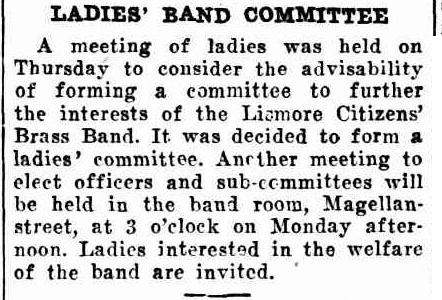
Figure 3: The Northern Star, 26/07/1930, p. 8

In the town of Merbein, located in the far north west of Victoria, the newly reconstituted Merbein Brass Band was the recipient of an equally enthusiastic ladies’ social committee that   immediately decided to hold a “social, in aid of band funds” (“BRASS BAND LADIES’ COMMITTEE,” 1932).  The social was to consist of “Cards, competitions, and a musical programme” to “engage the attention of patrons” (“MERBEIN BRASS BAND,” 1932).  This would have been a successful event given that way the town swung behind their band.
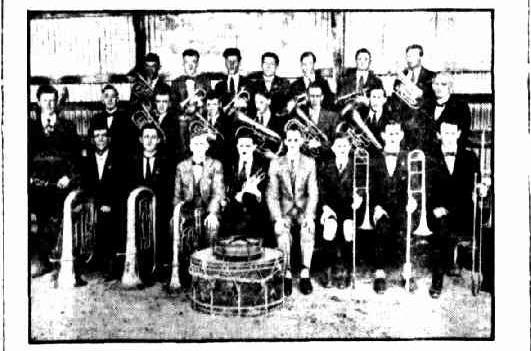
Figure 4: Merbein Public Brass Band-August 1926. Sunraysia Daily, 07/09/1926, p. 1

Support for the brass bands often came from people who held important positions in towns.  Such was the case in Shepparton, Victoria, where the then Lady Mayoress, Mrs. D. Summers invited interested women to be part of a new ladies’’ auxiliary and presided over the meeting – the ladies’ auxiliary was to take the place of the existing social committee of the Shepparton Brass Band (“SHEPPARTON BRASS BAND,” 1935).  Within one month of starting, in November 1935 this new auxiliary got to work almost immediately to raise funds in order to provide 27 uniforms for the band (“BAND UNIFORMS,” 1935b).  For the Shepparton Brass Band, there was a sense of urgency to provide the uniforms.  In January 1936 they were to host a meeting of all the bands from the Goulburn Valley and it was important that the Shepparton Brass Band looked as good as possible (“BAND UNIFORMS,” 1935a).  The new ladies’ auxiliary, and the band itself had their work cut out for them soliciting the support of the townsfolk.

The middle years of last century brought about upheaval with the advent of the Second World War, but for the bands, they recognized that additional help was needed to operate.  And they continued to form ladies’ committees to help the bands.  Mr. W. J. Moore, then secretary of the Berry Brass Band outlined in his report at the 1937 Annual General Meeting of the band how new committees would assist the band.

We would like to recommend the formation of a Citizens’ Committee, and also a Ladies’ Auxiliary, in the near future.  What can be done by such adjuncts is shown in Casino, where there is a juvenile band of 63 performers, and 25 clamouring for admission.  We must get the people of Berry interested in their band.  With the formation of theory classes at regular intervals, and the hearty co-operation of the general public, the band should flourish and provide a never-failing source of enjoyment to those who appreciated the inspiring strains of outdoor music.

(Moore in “Berry Brass Band,” 1937)

Some very worthwhile aims for the then Berry Brass Band to achieve.

Another band based in the Riverina region of New South Wales voted at their meeting in 1940 to form a ladies’ auxiliary, but it was only mentioned in the minutes with no clear goal as to what this auxiliary should aim for.

It was moved by Mr. McLay and seconded by Mr. Turner, that the lady supporters of the band be given the authority to form a committee to be known as the Narrandera Citizens’ Brass Band Women’s Auxiliary.

(“Citizens’ Band,” 1940)

The newly inaugurated ladies’ auxiliary of the Norseman Brass Band in Western Australia formed post WWII and found their work in supporting the band as well as providing a social group for lady supporters of the band, thus providing two avenues of connection (“Norseman Brass Band Ladies Aux. Formed,” 1949).

This is only a small sample of little stories relating to the formation of ladies’ committees across the Australian band movement.  For the various reasons they were formed, the fact that these committees were comprised of volunteers who gave their time for the band and social connection was the most important aspect of all.

The many ways to raise funds:

Figure 5: Members of the Casterton Vice Regal Band Ladies’ Auxiliary preparing supper at the CVRB “Belle of Belles Ball”. Weekly Times, 20/09/1950, p. 20

Balls, socials, bazaars, carnivals, baby competitions, singing competitions, cake stalls, and assisting at concerts…if there was any way to raise funds for brass bands, the ladies’ committees were on to them.  And they had a good time doing it too as the committees, as mentioned, functioned as a kind of social club.  The takings from such events were not insignificant, and the funds were much appreciated by the bands.

Some of the events that were held have already been detailed in this post as ladies’ committees were initially formed to fund specific items for the band – instruments and uniforms were particularly important. All things considered, most of the events were held just to raise additional funds which the bands used at their will. 

The ladies committee of the Port Pirie Proprietary Brass Band held a very successful social event at Port Pirie’s International Hall in March 1906.  Not only were 90 people present and £21 raised, but the ladies’ committee also presented something very special to the band.

The chief event of the evening came as a great surprise to all in the shape of a very handsome drum major’s staff, being presented to the Band by Mesdames J. Holwell and C. Langford on behalf of the Ladies’ Committee.

[…]

The Chairman in a very neat speech called upon Mr Fred Lewsey as an old supporter of the Band to make the presentation on behalf of the ladies, to the band, through their Conductor and Bandmaster, Mr. Thos Morgan.  Both gentlemen thanked the donors for the valuable and handsome present,  and expressed the hope that wherever the staff was carried it would be the means of bringing good luck and victories to the Proprietary Band.

The Bandmaster then called on Mr Tom Everon, drum-major of the Band, to accept the present custodian.  Mr Everon, in responding, said it gave him the greatest pleasure of his life in having an opportunity of thanking the donors for their useful and ornamental gift, especially as the donors were ladies.”

(“The Proprietary Brass Band.,” 1906)

Running social events was a popular activity for ladies’ committees and this is evident through a range of newspaper articles which detailed what went on.  Despite World War One being underway, the Lakes Creek Brass Band Ladies’ Committee of Rockhampton held a coin social at the local Masonic Hall.  Several activities were on offer including dancing, a progressive euchre tournament, open air games, a waltzing competition, a find-your-partner competition, and musical items were provided by the band and vocalists (“LAKE’S CREEK BRASS BAND.,” 1917).

Like the Lakes Creek Brass Band Ladies’ Committee social that took place in 1917, several years later the ladies’ committee of the Bacchus Marsh Brass Band also ran a very successful social event.  In front of 80 people, musical items were presented by soloists from the band – including a mouth-organ duet – and vocal and other items were part of the entertainment (“BACCHUS MARSH BRASS BAND.,” 1934).  The obligatory thanks were provided by members of the band.

The boys voted the ladies “Jolly Good Fellows” at the close of the very enjoyable function, for they provided the good things that appeal to the boys and incidentally to grownups as well.

(“BACCHUS MARSH BRASS BAND.,” 1934)

In the early years of World War Two, any pleasant activity must have been a welcome distraction.  For the ladies committee of the Clare Brass Band, one activity was a singing competition which was held in the home of Miss M. Rowley in October 1941 (“Clare Brass Band.,” 1941).  It was not a small affair as fifty ladies attended the afternoon, and twelve of them participated in the competition where variety on order.  Some ladies presented tap dancing, others played the piano, and there was singing – “which caused much fun” (“Clare Brass Band.,” 1941).  Takings were a bit on the small side at “£1/3/6”, but no doubt appreciated by the band (“Clare Brass Band.,” 1941).
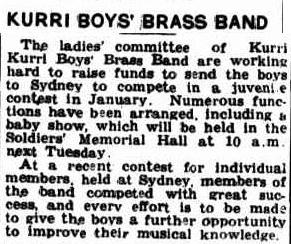
Figure 6: Cessnock Eagle and South Maitland Recorder, 04/12/1942, p. 3

The Kurri Kurri Boys’ Brass Band were very lucky to have a ladies’ committee helping them with fundraising.  Being the proactive band that they were and having the opportunity to enter band competitions on a regular basis, adequate funds were essential.  Kudos to the ladies’ committee of the band for arranging various functions, including the mentioned “baby show” (“KURRI BOYS’ BRASS BAND,” 1942).  For the record, a tiny snippet of news published in the Cessnock Eagle and South Maitland Recorder newspaper noted that the boys travelled to Sydney on the 22nd of January 1943 to compete in a competition (“PERSONAL,” 1943).  Obviously, the latest rounds of fundraising were successful in meeting goals.

In April 1950, the Clare Brass Band was in recess “due to a shortage of bandsmen”, but that did not stop their very proactive ladies’ committee from raising funds in the hope the band would become active again (“Clare Brass Band,” 1950).  They held a social afternoon that month with a variety of entertainments including “competitions, elocutionary items, songs and games” (“Clare Brass Band,” 1950).  It was noted in this article published in The Northern Argus newspaper that the Clare Brass Band Ladies’ Committee was quite proactive in what they did and how much in funds they had raised.

The ladies committee have £105 in the bank, proceeds from the social afternoons.  Many food parcels have been sent overseas, and appreciative letters have been received from the recipients.

Mrs. Shashall, President, and Mrs. H. J. Aitken, Mrs.  M. Kain, and Mrs. R. McEvoy, vice-presidents, thanked and expressed their appreciation for past help, and hoped in the near future the ladies would support their local band which is an acquisition to any town.

(“Clare Brass Band,” 1950)

On a side note, the Clare Municipal Brass Band reformed (and renamed) in 1951, then went into recess by the end of 1952, before being reformed again in November 1954 (“Clare Municipal Brass Band Reformed,” 1954; Tilbrook, 1954; “YOUNG RIDERS—AND THE BIG BRASS,” 1952).  The photograph below shows the Clare Municipal Brass Band as it was in 1952.  No doubt the ladies’ committee of the band would have been pleased to see the band reformed and know that their extensive fundraising activities helped.

Figure 7: The News, 06/08/1952, p. 12

The Horsham Brass Band Ladies’ Auxiliary was also active in the early 1950s.  As the article below shows, they held a cake  and produce stall, with the proceeds being £6 with further events planned in the lead up to Christmas (“CAKE STALL FOR BAND,” 1953).  Even small amounts of fundraising were useful for the band.

Figure 8: The Horsham Times, 04/11/1953, p. 3

With the varied forms of fundraising, the ladies’ committees contributed much to their bands as well as contributing to their localities as well.  With this help came much thanks, as was evident in these articles.  Funds for bands was an ongoing concern, and the more help that was provided, the better.

A long-standing anachonism:

It is not the greatest measurement but judging by the numbers of newspaper articles that mentioned ladies’ committees in the 1950s and 1960s, there seems to be a reduction in the numbers throughout this time.  History will tell us that from the 1950s, females started joining brass bands in greater numbers as playing band members so perhaps, this also influenced the makeup of band committees (de Korte, 2018a).  However, social factors could also be at play as society in general changed.  For example, the King Island Municipal Band noted in 1968 that the loss of their ladies’ committee was due to the lady that ran it leaving the island (On the Beat, 1968).  Change in the band movement can sometimes be gradual as new ideas take hold.

Conclusion:

This author has often heard of bands being described as a family or a community.  The stories here demonstrate that all people involved – players and helpers – are important.  The bands and their committees were wholly responsible for creating a community that supported the band.  And in times past, that support was much needed.  The ladies that volunteered to organise, run cake stalls, dances, obtained uniforms, and undertook innumerable other supporting roles did so with an enthusiasm that made a real difference. Who knows how many bands would have faltered over time had it not been for that little bit of extra support provided by a hard-working ladies’ committee?

References:

A Member’s Wife. (1925, 30 March). Coursing Club and Ladies : AND A BRASS BAND, TOO! Journal : Glengarry, Toongabbie and Cowwarr Journal (Traralgon, Vic. : 1923 – 1929), 1. http://nla.gov.au/nla.news-article274569550

BACCHUS MARSH BRASS BAND. (1934, 28 July). Melton Express (Vic. : 1915 – 1943), 3. http://nla.gov.au/nla.news-article254741515

BAND UNIFORMS : Appeal by Auxiliary. (1935a, 23 November). Shepparton Advertiser (Vic. : 1887 – 1953), 2. http://nla.gov.au/nla.news-article175424913

BAND UNIFORMS : LADIES’ AUXILIARY ACTIVE : CONCERT AND FAIR. (1935b, 15 November). Shepparton Advertiser (Vic. : 1887 – 1953),b1. http://nla.gov.au/nla.news-article175424344

Belle of Belles Chosen At Casterton. (1950, 20 September). Weekly Times (Melbourne, Vic. : 1869 – 1954), 20. http://nla.gov.au/nla.news-article224922352

Berry Brass Band : Annual Meeting. (1937, 23 September). South Coast Register (Berry, NSW : 1926; 1929 – 1931; 1933 – 1948), 1. http://nla.gov.au/nla.news-article284207960

BRASS BAND LADIES’ COMMITTEE. (1932, 19 July). Sunraysia Daily (Mildura, Vic. : 1920 – 1956), 1. http://nla.gov.au/nla.news-article265797449

CAKE STALL FOR BAND. (1953, 04 November). Horsham Times (Vic. : 1882 – 1954), 3. http://nla.gov.au/nla.news-article72774559

Citizens’ Band : Meeting of Committee. (1940, 16 February). Narandera Argus and Riverina Advertiser (NSW : 1893 – 1953), 6. http://nla.gov.au/nla.news-article130478489

Clare Brass Band. (1941, 17 October). Blyth Agriculturist (SA : 1908 – 1954), 4. http://nla.gov.au/nla.news-article222446550

Clare Brass Band. (1950, 05 April). Northern Argus (Clare, SA : 1869 – 1954), 9. http://nla.gov.au/nla.news-article97823288

Clare Municipal Brass Band Reformed. (1954, 24 November). Northern Argus (Clare, SA : 1869 – 1954), 8. http://nla.gov.au/nla.news-article97827526

de Korte, J. D. (2018a, 22 April). Early female brass bands in Australia: they were rare but they made their mark. Band Blasts from the Past: Anecdotes, Stories and Personalities. https://bandblastsfromthepast.blog/2018/04/22/early-female-brass-bands-in-australia-they-were-rare-but-they-made-their-mark/

de Korte, J. D. (2018b, 08 July). Instruments, sheet music and uniforms: how the bands of old obtained the essentials. Band Blasts from the Past: Anecdotes, Stories and Personalities. https://bandblastsfromthepast.blog/2018/05/13/instruments-sheet-music-and-uniforms-how-the-bands-of-old-obtained-the-essentials/

de Korte, J. D. (2020a, 04 June). Australian society and brass bands: The Pneumonic Influenza pandemic of 1919. Band Blasts from the Past: Anecdotes, Stories and Personalities. https://bandblastsfromthepast.blog/2020/06/04/australian-society-and-brass-bands-the-pneumonic-influenza-pandemic-of-1919/

de Korte, J. D. (2020b, 01 September 2020). A room to call their own: the space and place for bands. Band Blasts from the Past: Anecdotes, Stories and Personalities. https://bandblastsfromthepast.blog/2020/09/01/a-room-to-call-their-own-the-space-and-place-for-bands/

de Korte, J. D. (2020c, 18 October). Testing times: the resilience of Australian bands during the Great Depression. Band Blasts from the Past: Anecdotes, Stories and Personalities. https://bandblastsfromthepast.blog/2020/10/18/testing-times-the-resilience-of-australian-bands-during-the-great-depression/

District News : QUAIRADING : Brass Band. (1919, 10 October). Eastern Districts Chronicle (York, WA : 1877 – 1927), 2. http://nla.gov.au/nla.news-article148580826

ESSENDON CITY BAND : ANNUAL MEETING HELD : Year of Pronounced Activity. (1922, 07 December). Essendon Gazette and Keilor, Bulla and Broadmeadows Reporter (Moonee Ponds, Vic. : 1905 – 1924), 1. http://nla.gov.au/nla.news-article283500348

EXCELSIOR BAND ACTIVITIES : How Public Supports Music : Seventeen Concerts Bring £19 to Funds. (1936, 21 February). Recorder (Port Pirie, SA : 1919 – 1954), 1. http://nla.gov.au/nla.news-article95923315

HEALESVILLE BRASS BAND : LADIES COMMITTEE. (1927, 10 December). Healesville and Yarra Glen Guardian (Vic. : 1900 – 1942), 3. http://nla.gov.au/nla.news-article60293633

KURRI BOYS’ BRASS BAND. (1942, 04 December). Cessnock Eagle and South Maitland Recorder (NSW : 1913 – 1954), 3. http://nla.gov.au/nla.news-article99933708

LADIES’ BAND COMMITTEE. (1930, 26 July). Northern Star (Lismore, NSW : 1876 – 1954), 8. http://nla.gov.au/nla.news-article94144077

LAKE’S CREEK BRASS BAND. (1917, 03 November). Morning Bulletin (Rockhampton, Qld. : 1878 – 1954), 4. http://nla.gov.au/nla.news-article53831976

MERBEIN BRASS BAND. (1932, 26 July). Sunraysia Daily (Mildura, Vic. : 1920 – 1956), 1. http://nla.gov.au/nla.news-article265800182

NEWTOWN BRASS BAND. (1899, 24 July). Sydney Morning Herald (NSW : 1842 – 1954), 3. http://nla.gov.au/nla.news-article14228752

Nice, A. C. (1926, 07 September). MERBEIN PUBLIC BRASS BAND—August, 1926. Sunraysia Daily (Mildura, Vic. : 1920 – 1956), 1. http://nla.gov.au/nla.news-article258720934

Norseman Brass Band Ladies Aux. Formed. (1949, 09 June). Norseman-Esperance News (WA : 1936 – 1954), 2. http://nla.gov.au/nla.news-article258610441

On the Beat. (1968, 03 September). BAND HAS NOT BEEN INACTIVE. King Island News (Currie, King Island : 1912 – 1986, 2. http://nla.gov.au/nla.news-article264727496

PERSONAL. (1943, 22 January). Cessnock Eagle and South Maitland Recorder (NSW : 1913 – 1954), 3. http://nla.gov.au/nla.news-article100051247

Peterborough Municipal Brass Band : JUNIOR INSTRUMENT FUND. (1946, 13 September). Times and Northern Advertiser, Peterborough, South Australia (SA : 1919 – 1950), 2. http://nla.gov.au/nla.news-article124976509

The Proprietary Brass Band. (1906, 28 March). Port Pirie Recorder and North Western Mail (SA : 1898 – 1918), 4. http://nla.gov.au/nla.news-article95249731

SHEPPARTON BRASS BAND : Ladies Auxiliary Suggested. (1935, 03 October). Shepparton Advertiser (Vic. : 1887 – 1953), 1. http://nla.gov.au/nla.news-article175421706

South Caulfield Brass Band. (1927, 15 July). Prahran Telegraph (Vic. : 1889 – 1930), 4. http://nla.gov.au/nla.news-article165185419

Tilbrook, I. T. (1954, 10 November). CLARE MUNICIPAL BRASS BAND TO BE RE-ORGANISED : CONDUCTOR REQUIRED : (To the Editor). Northern Argus (Clare, SA : 1869 – 1954), 10. http://nla.gov.au/nla.news-article97827167

YOUNG RIDERS—AND THE BIG BRASS. (1952, 06 August). News (Adelaide, SA : 1923 – 1954), 12. http://nla.gov.au/nla.news-article130812675

Managing the march cards (and other such material): roles of the amateur band librarian

Figure 1: Digital scan of march card back with Victorian Police Band stamp. (source: Victorian Bands’ League Archive)

Introduction:

His duties as Librarian (self-imposed) were to clean up the room after practices and to arrange the various sets of music so as to have any particular set “right under his thumb,” if required, at a moment’s notice; which was itself no sinecure. No practice or public performance was complete without him to distribute the music, whilst everyone always had a cheery word for Billy Wardle, whose ready smile was always evidence on such occasions.  Old age and ill-health took him and for the last two years he had to relinquish all active connection with Band affairs, but his epitaph might well read thus: “He did his Job.”

(Faulkner in “WILLIAM WARDLE,” 1938)

William (Billy) Wardle, late of the Boorowa Town and District Band was one of those selfless band members who saw fit to undertake some necessary duties to support the band.  That duty being the band librarian, and William Wardle was just one of many band members from bands everywhere who undertook the same role.  Despite being untrained as librarians (in the formal understanding of the profession), and amateur, these band librarians organised large quantities of sheet music that the bands owned.  They did their part to make sure the band master and each band member had their parts when and where required.

Who were these people, and why did they undertake such an arduous and difficult task?  Working largely by themselves, they put their hands up time and time again to do the job, and we can see this in the records of Annual General Meetings that were held by bands.  There, in amongst all the other committee positions such as President, Treasurer and Secretary, will be Librarian with the name of the band member (or members) who were elected to this position.  Interspersed throughout this post will be lists of band members who were elected as band librarians.  The lists are by no means complete as there were so many of them.  Names and bands were chosen at random. 

This author has some understanding of the role of librarians within community bands being a qualified librarian and having undertaken music librarian roles for bands in the past – the duties of this role in bands has barely changed, albeit for changing technology.  This post will try to fit the role of the amateur band librarian within a broader context of music librarianship and librarianship in general.  To start this post, we will see where librarianship as a trained profession has come from in Australia, and the very specialised role of music librarians.  The next part of this post will unpack the job description of a band librarian, brief and undescriptive as they sometimes were.  The third part of this post will highlight the appreciation that was given to band librarians by their bands for undertaking this role.

Figure 2: The Sydney Police Band, 1896. Senior-constable F. J. Knopp (Hon. Librarian) is seated second from the right in the front row. Australian Town and Country Journal, 28/03/1896, p. 20
1896Sen. Const F. J. KnoppHon. LibrarianSydney Police Band (N.S.W.)
1896H. NortheLibrarianBrighton Brass Band (Vic.)
1897Mr. J. LeeLibrarianTemperance Brass Band (W.A.)
1898Mr. F. MortonLibrarianLilydale Brass Band (Vic.)
1899Mr. FranksLibrarianTallangatta Brass Band (Vic.)
1900Mr. M. JohnstonLibrarianLake’s Creek Brass Band (Qld.)
Table 1: (“BRIGHTON BRASS BAND.,” 1896; “LAKE’S CREEK BRASS BAND.,” 1900; “LILYDALE BRASS BAND.,” 1898; “TALLANGATTA BRASS BAND.,” 1899; “TEMPERANCE BRASS BAND.,” 1897; The Crown Studios, 1896)

Librarianship and librarians:

In Australia, the establishment of Universities, Mechanics’ Institutes, schools, and municipal libraries meant that there was a greater need for librarians who understood the rigours of the position.  Since the late 1800s, education for librarians in various areas of librarianship has developed consistent with the needs of the profession.  Nowadays it is common to find full academic courses for librarians in Universities and TAFE’s.  But back in the early days until training began to be more formalised, librarians generally learnt ‘on the job’.  In this respect, we could equate this with the early band librarians in Australia who also learnt what to do within the confines of their organisation.  There are similarities between the roles of a librarian and amateur band librarian as in general, both organise and catalogue resources.  But this is where the similarity ends.  This section will outline a brief history of librarianship in Australia and explore the specialised role of a music librarian.

In the library sector and in the band movement, both had the benefit of associations, but it was not always the case.  In Australia, as we can see in previous posts, the first band association started forming in the late 1800s and State association started working together in the early 1900s (de Korte, 2018b, 2019a, 2019b).  Within the library sector, the first attempts at association began in 1896 with the establishment of a Library Association of Australasia at the conference at The University of Melbourne (Keane, 1982a, 1982b).  The Library associations gradually became more focused on the educational needs of librarians (this process took a few decades) as the associations recognized that the profession was changing, and, these associations proactively encouraged librarians to become qualified to do the job (Keane, 1982b).  In contrast, the band associations, while representing a largely amateur movement of bands and musicians, at times tried to focus on education and training but unfortunately lacked the resources to do so (de Korte, 2022).  Such was the difference between associations that supported professional work, and those that represented amateurs.  This is a difference that will be evident throughout this post.

1901Mr. J. Donelly
Mr. H. Wilkinson
Librarian
Assistant Librarian
Rutherglen Brass Band (Vic.)
1902Mr. F. RaglassSecretary and LibrarianNarandera Town Band (N.S.W.)
1903Mr. W. SymmonsLibrarianHealesville Brass Band (Vic.)
1904Mr. E. SchmidtLibrarianFederal Brass Band (Echuca, Vic.)
1904Mr. O. BrauerLibrarianPetersburg Brass Band (S.A.)
1905Mr. OvertonLibrarianWoodend Brass Band (Vic.)
Table 2: (“Federal Brass Band.,” 1904; “HEALESVILLE BRASS BAND.,” 1903; “Petersburg Brass Band.,” 1904; “Rutherglen Brass Band.,” 1901; “Town Band.,” 1902; “Woodend Brass Band.,” 1905)

Music libraries and librarians:

Music Librarians are those that have worked, or currently work in highly specialised positions.  They are, as the job title suggests, librarians who work with music resources whether that be sheet music, reference material or recorded music.  While special music librarians have been working in this sector in Australia from the early 1900s, professional associations for this sub-sector came much later than regular library associations.  The International Association of Music Libraries, Archives and Documentation Centres (IAML) was formed in 1949 with an Australian chapter of IAML being formed in 1970 (“Australian Seminar in Music Librarianship,” 1970; Enquist & Flury, 2023).

Music Libraries were first established in Australia in 1913 with the opening of the ‘New South Wales Government Music Library’ which was a library that catered for “societies, church choirs, and other musical bodies” (“The New South Wales Government Music Library,” 1913).  It was initially housed at the Sydney Girls’ High School before being moved to the N.S.W. Conservatorium.  It is interesting to note that the article published in the Australian Town and Country Journal included a large picture (below) of all the trustees of this library, but no mention of the music librarians.

Figure 3: Trustees of the New South Wales Government Music Library. Australian Town and Country Journal, 30/07/1913, p. 27

Like their band librarian counterparts, some music librarians fulfilled roles attached to orchestras and choirs.  In 1921 we hear about the passing of Mr. William Henry Gresty who was a Cornet player with Her Majesty’s Theatre Orchestra and in a later career was the Music Librarian with the N.S.W. Conservatorium Orchestra (“DEATH OF LIBRARIAN,” 1921).  As it says in his obituary published by The Sun newspaper,

When the Conservatorium was founded he joined the staff as librarian, but kept his position at Her Majesty’s until a couple of years ago when he resigned because of the establishment of the Conservatorium Orchestra as a permanent body.  From that time he devoted himself exclusively to the Conservatorium and orchestra, travelling with the latter, and performing an enormous amount of work in looking after the music and the orchestra generally

(“DEATH OF LIBRARIAN,” 1921)

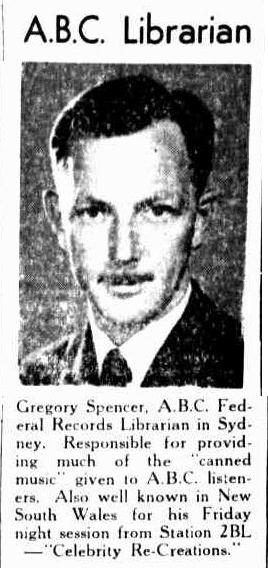
Some years later, the Australian Broadcasting Commission was formed and being the national broadcaster that it was with radio stations around the country, they had a need for music librarians who organised recorded music.  One of these music librarians was Mr. Gregory Spencer (pictured below) who was based in Sydney and was the “Federal Records Librarian” (“A.B.C. Librarian,” 1941).  No doubt he dealt with music recorded by our brass bands and the A.B.C. Military Band (de Korte, 2018a).

Figure 4: Goulburn Evening Post, 18/07/1941, p. 5

The A.B.C. was also home to several innovations in music librarianship and music copying, including a music copying machine which was invented by their in-house music librarians (“COPYING MACHINE TYPES MUSIC,” 1948).

Figure 5: The Argus, 02/06/1948, p. 5

Just as there were varied roles for librarians, there were also varied roles for music librarians.  While fewer in number, their expertise in managing large music-related resources was very much needed at the time – and still is needed.  Given some music libraries, like the New South Wales Government Music Library, catered for amateur music groups, it is quite possible that knowledge from the professional music librarians was provided to individuals in these groups with tips on how to manage their music collections. But it is difficult to find some evidence of this happening.

1906Mr. L. ElseLibrarianCundletown Brass Band (N.S.W.)
1907Mr. S. LordLibrarianKew Brass Band (Vic.)
1908Mr. L. SmithLibrarianAlma Brass Band (N.S.W.)
1909Mr. JewellLibrarianBorough Brass Band (Clunes, Vic.)
1910Messrs. S. Bryant and
H. Hoffmann
LibrariansAdelaide City Brass Band (S.A.)
Table 3: (“ALMA BRASS BAND.,” 1908; “CITY BRASS BAND.,” 1910; “CLUNES.,” 1909; “Cundletown Brass Band.,” 1906; “Kew Brass Band.,” 1907)

A vague role description and learning ‘on the job’:

There are dozens of minor details.  A library of music has to be formed and maintained.  A set of music for an ordinary selection lasting 10 minutes means an expense of from 10’6 to 15’6, and some libraries possess more than 1000 sets.  A librarian has to be appointed to look after them.

(Fleming, 1939)

For the newly elected or re-elected librarians of brass bands, doing their duties was sometimes a tough ask.  When new music arrived, they had to process and catalogue, stamp, file, and distribute the music to the band members and conductor.  Brass band libraries could get quite extensive depending on the activities of the bands.  However, there was one main problem.  The brass band librarians were often provided with a vague rule on the duty of a librarian, but nothing explaining how to do the job – for some, it was too much.  In amongst the sporadic publishing of rules and by-laws of brass bands are some general rules outlining what a librarian should be doing.  Some rules were more descriptive than others, such as this rule from the Frankston Brass Band in 1913:

8. The Librarian shall have sole charge of all music of the band.  He shall keep a record of name, and shall render to the Secretary annually a statement (or an account) of all music under his charge.

(Plowman et al., 1913)

…which contrasts with the rule provided for the Queanbeyan Town Band librarian in 1915:

40. Librarian’s duties : Charge of music.

 (DeClifton & Mathews, 1915)

Rules governing the duties of librarians did not really improve over the years, yet still they carried out their duties.  Based on this limited information though, it is quite clear where the librarians stood in chain of command with some rules stating that the librarian must report to the secretary.  The Collie Brass Band in Western Australia had a rule that closely matched the rule from the Frankston Brass Band:

22. The Librarian shall take charge of all the music and shall keep correct list of names to tally with Secretary’s.

(“REVISED RULES.,” 1924)

Obviously, some bands provide better job descriptions for librarians in their rules than others.  Perhaps this indicates a general envisioning in the band movement of what a band librarian should be doing, but there is no way of knowing this without some very in-depth research.  The Peterborough Federal Band from South Australia was one band that did provide a very good rule for the librarian which no doubt helped them in their duties:

13. The Librarian shall take charge of, be responsible for, and keep a catalogue of all music the property of the Band; and distribute and collect the music at practices, concerts, and engagements.  He shall furnish a written report of the state of the library at each annual meeting, and must adhere to By-law 21 (b).

(“Peterborough Federal Band,” 1931)

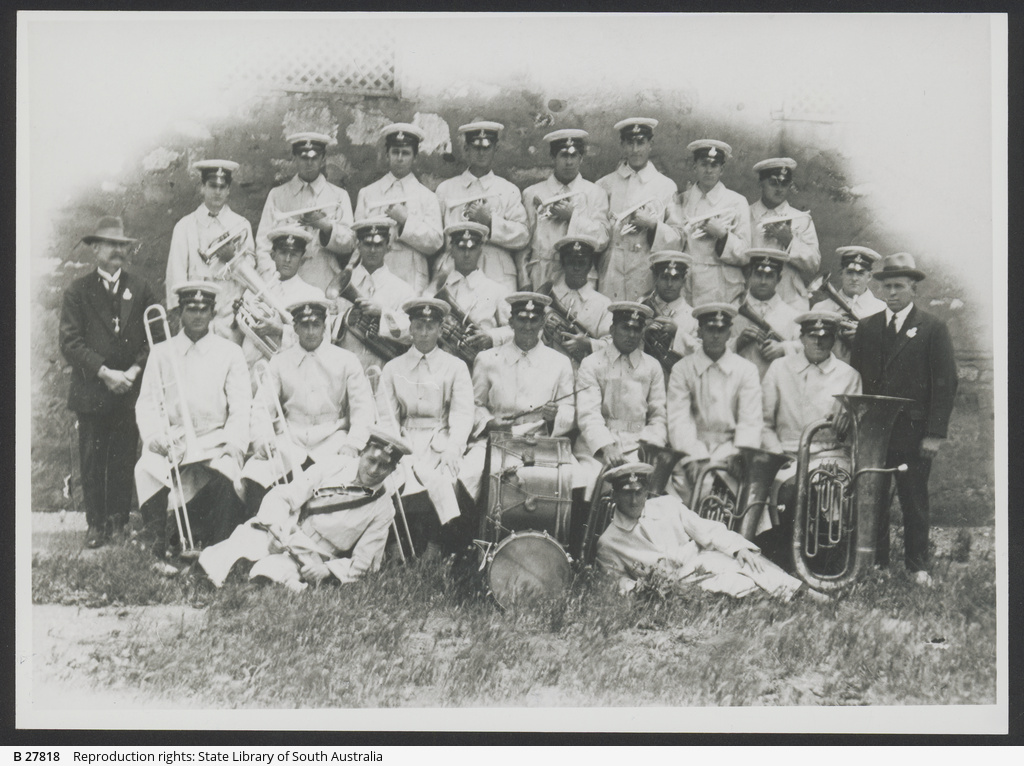
The band member who was elected to be Librarian at the Peterborough Federal Band in 1931 was a Mr. T. Jenkins (“Peterborough Federal Band,” 1931).

Figure 6: Peterborough Federal Band, 1924 (source: State Library South Australia: B+27818)

It must be said that these band members were used to working under all sorts of rules, by-laws and other regulations – we saw as much in a previous post on the deportment of band members (de Korte, 2021).  So having minimal direction on the operating of a large music library was an issue that they dealt with as best they could.  Occasionally there were some from this time who found they did not have enough time to undertake the role.  In an article published by the Dimboola Banner and Wimmera Mallee Advertiser newspaper in January 1914, Mr. Moy of the Dimboola and District Brass Band submitted his resignation to the band from his post as librarian which was read out at the Annual General Meeting.

The secretary read a letter from Mr Moy, in which he tendered his resignation of the post of librarian.

Mr Moy said that it was a farce for him to continue to hold the position, as he could not find enough time to attend to his duties.  He moved that Mr C. Deneys be appointed. After several other members had been nominated and had refused the appointment, Mr Deneys consented to take it, and Mr L. Frazer was elected as his assistant.

(“Dimboola Brass Band.,” 1914)

The position was obviously not for everyone.

Regarding the passing of knowledge from one band librarian to another, we can only assume that there was some kind of handover and there might have been contact between individual band librarians from time to time.  Unfortunately, the newspaper articles of the time and other material did not delve into these small details.  Any word about training for amateurs in this kind of role is non-existent.  This is in contrast with their professional counterparts where there is mentions of the training they required to become fully-fledged librarians (“LIBRARIANSHIP DIPLOMA,” 1939; “Record library school opens,” 1945).

We know what kind of work they did, and it has survived the years.  In band libraries all over Australia are collections of music, some decades, or centuries old. Below is a small sample of band stamps that were diligently stamped on every piece of sheet music.  Some of the stamps are very old examples, yet they lasted, and we know that a band librarian at some stage was involved in processing this music.

Figure 7:  Samples of band stamps found on sheet music (source: Victorian Bands’ League Archive)
1911Mr. C. StewartLibrarianDerby Brass Band (Tas.)
1912Mr. P. CutterLibrarianYea Brass Band (Vic.)
1912Mr. D. T. HobbsLibrarian and property masterRailway Brass Band (W.A.)
1913Mr. E. Woolrich
Mr. C. Hawkes
Librarian
Assistant Librarian
Warburton Brass Band (Vic.)
1914Mr. Deneys
Mr L. Frazer
Librarian
Assistant Librarian
Dimboola and District Brass Band (Vic.)
1915Mr. SmallhornLibrarianWestonia Brass Band (W.A.)
1915Mr. E. UrlwinLibrarianBalaklava Brass Band (S.A.)
Table 4: (“Balaklava Brass Band.,” 1915; “DERBY BRASS BAND,” 1911; “Dimboola Brass Band.,” 1914; Presto, 1913; “Railway Brass Band.,” 1912; “WESTONIA BRASS BAND,” 1915; “Yea Brass Band.,” 1912)

Always appreciated:

It would be fair to say that a band could not function without a librarian, or two librarians as was the case in some years.  As well as their participation as band members, they had these additional tasks to do.  We saw at the head of this post the appreciative comments for the late William Wardle of the Boorowa Town and District Band.  Every so often there would be another article published in the newspapers about other band librarians who received appreciative comments and presentations from their bands.

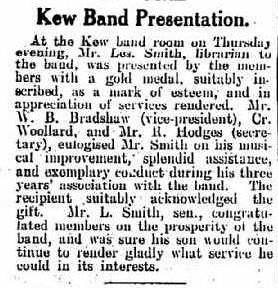
In September 1910, the Kew Band in Melbourne awarded their band librarian Mr. Les Smith with a gold medal in appreciation of his services to the band (“Kew Band Presentation.,” 1910).  The article published in The Reporter newspaper can be viewed below, and it was obvious that the Kew Band thought very highly of Mr. Smith.

Figure 8: The Reporter, 30/09/1910, p. 7

The Murray Bridge Brass Band thought highly of their (former) librarian in 1912 when they placed on a meeting record the “good work done by Mr. W. Paige as librarian to the band, which position is now occupied by Mr. G. Hoare.” (“BAND MATTERS.,” 1912).  In Queensland, the Maryborough Naval Band presented their band librarian with gifts for his service.  The said person also had other important roles within the band.

During practice at the rooms Lennox street on Thursday night last, the President, Mr. H. A. Reed, sought permission of the Conductor, Mr. W. Ryder, for the Patron, Mr. J. E. Archibald to give a short address to the bandsmen.  At the conclusion of the address, a presentation was made to Mr. Vin Zemek (Deputy Band Master, Senior Band and Librarian) of a gold mounted cigarette holder and good supply of cigarettes, for his past untiring efforts in the interest of the band, and his successful work as librarian.

 (“NAVAL BAND ASSOCIATION.,” 1919)
Figure 9: Photograph of members of the Maryborough Naval Volunteer Band after they had returned from the brass band contests held in Ipswich on 2nd January 1905. Mr J. Zemek was the conductor. (source: State Library of Queensland: 3234)

It was sometimes necessary for band members to move on from their bands, for whatever reason that may be.  At a concert in November 1937, the Mount Gambier Citizens’ Band used the interval to give a presentation and thanks to Euphonium player, committee member, and band librarian Mr. Bern Holman who leaving to take up other activities (“BAND RECITAL.,” 1937). 

Sadly, during the First World War, many Australians gave their service and paid the ultimate sacrifice.  Private W. C. Carlson of Kapunda, South Australia was one of them and an obituary published in the Kapunda Herald newspaper made mention of his extensive involvement in organisations in the town, including service with the Kapunda Brass Band.

He was an active member of the Kapunda Brass Band, also a member of the local lodge of Rechabites.  When the members of the brass band met for practice on Wednesday night Bandmaster Neindorf made feeling references to the death of Private Carlson, who had been an enthusiastic member for a number of years, during which time he acted as librarian.  Members sood to order with bowed heads for a time, and then adjourned as a mark of respect for their late comrade.

(“For King and Country,” 1917)

They did their jobs.

1916Mr. F Rowe
Mr. J. Matthews
LibrariansWandiligong Brass Band (Vic.)
1917Mr. H. LittleLibrarianLandsborough Brass Band (Vic.)
1918Mr. J. OrmondyLibrarianGuyra Brass Band (N.S.W.)
1919Mr. Wilfred WebsterLibrarianPenguin Brass Band (Tas.)
1920Mr. R. FielderLibrarianBayswater Brass Band (Vic.)
Table 5: (“Bayswater Brass Band.,” 1920; “GUYRA BRASS BAND.,” 1918; “LANDSBOROUGH.,” 1917; “PENGUIN BRASS BAND,” 1919; “Wandiligong Brass Band.,” 1916)

Conclusion:

They worked without the professional knowledge or qualification of a librarian, yet they basically did the same jobs, and organised their band libraries as best they could.  In hindsight, would these band librarians have benefited from classes or knowledge from professional librarians?  The band movement was very much amateur and as was evident, the crossover of professional knowledge was sporadic at best, even for musical training.  Given that early librarians in Australia had limited training themselves, one could only imagine the trials and tribulations of band librarians as they sought to make sense of the role they had to do.

It is through the work of band librarians of the past that we have surviving sets of music that has been neatly catalogued and stamped, ready for future librarians to keep organised.  We can see the band stamps in corners of sheet music, the marches that were stuck onto cards, the frail sets of music that were handwritten, and the envelopes and folders to store the music.  And if we dig deeply enough, we have their names and bands.

1921Mr. H. R. HochuliLibrarianMagill Brass Band (S.A.)
1922Mr. J. DonnellyLibrarianSkipton Brass Band (Vic.)
1923Messrs. W. Stavert and
R. Bassman
LibrariansMullumbimby Citizens’ Band (N.S.W.)
1924Mr. Wes StokesLibrarianAssociation Brass Band (Bowral, N.S.W.)
1925Mr. A. ClarkeLibrarianLatrobe Federal Brass Band (Tas.)
1926Mr. J. DonaldsonActing LibrarianKellerberrin Brass Band (W.A.)
1927Mr. A. L. DavidsonSecretary and LibrarianBordertown Brass Band (S.A.)
1928Mr. Alf WorrallLibrarianVictor Harbour Municipal Band (S.A.)
1929Mr. R. AinsworthLibrarianWingham Band (N.S.W.)
1930Mr. P. Bandt
Mr. A. Pedler
Librarian
Assistant Librarian
Freeling Brass Band (S.A.)
Table 6: (“ASSOCIATION BRASS BAND,” 1924; “Bordertown Brass Band,” 1927; “FREELING BRASS BAND.,” 1930; “Kellerberrin Brass Band.,” 1926; “LATROBE BRASS BAND.,” 1925; “MAGILL BRASS BAND.,” 1921; “MUNICIPAL BAND,” 1928; Norris, 1923; “Skipton Brass Band.,” 1922; “WINGHAM BAND.,” 1929)

References:

ALMA BRASS BAND. (1908, 27 June). Barrier Miner (Broken Hill, NSW : 1888 – 1954), 4. http://nla.gov.au/nla.news-article45035483

[Armidale Brass Band]. (n.d.). In S10.4 – Band Stamps (Digital scan of band stamp on sheet music ed., Vol. S10 – Music (Sheet)): Victorian Bands’ League Archive.

ASSOCIATION BRASS BAND. (1924, 27 May). Southern Mail (Bowral, NSW : 1889 – 1954), 2. http://nla.gov.au/nla.news-article114059676

Australian Seminar in Music Librarianship and Documentation – Adelaide 1970. (1970). [Report]. Australian Journal of Music Education(7), 53-54. https://search.informit.org/doi/10.3316/informit.870190744257826 

A.B.C. Librarian. (1941, 18 July). Goulburn Evening Post (NSW : 1940 – 1954), 5. http://nla.gov.au/nla.news-article103631833

Balaklava Brass Band. (1915, 26 August). Wooroora Producer (Balaklava, SA : 1909 – 1940), 3. http://nla.gov.au/nla.news-article207099757

BAND MATTERS. (1912, 06 December). Mount Barker Courier and Onkaparinga and Gumeracha Advertiser (SA : 1880 – 1954), 4. http://nla.gov.au/nla.news-article147749582

BAND RECITAL : Presentation to Committeeman. (1937, 30 November). Border Watch (Mount Gambier, SA : 1861 – 1954), 3. http://nla.gov.au/nla.news-article78003653

Bayswater Brass Band. (1920, 17 December). Reporter (Box Hill, Vic. : 1889 – 1925), 2. http://nla.gov.au/nla.news-article257155681

Bordertown Brass Band. (1927, 24 June). Border Chronicle (Bordertown, SA : 1908 – 1950), 2. http://nla.gov.au/nla.news-article212866665

BRIGHTON BRASS BAND. (1896, 28 March). Caulfield and Elsternwick Leader (North Brighton, Vic. : 1888 – 1902), 2. http://nla.gov.au/nla.news-article66852240

CITY BRASS BAND. (1910, 02 May). Express and Telegraph (Adelaide, SA : 1867 – 1922), 4. http://nla.gov.au/nla.news-article209909713

CLUNES : Brass Band. (1909, 25 February). Ballarat Star (Vic. : 1865 – 1924), 6. http://nla.gov.au/nla.news-article217280286

[Coburg Central Brass Band Club]. (n.d.). In S10.4 – Band Stamps (Digital scan of band stamp on sheet music ed., Vol. S10 – Music (Sheet): Victorian Bands’ League Archive.

COPYING MACHINE TYPES MUSIC. (1948, 02 June). Argus (Melbourne, Vic. : 1848 – 1957), 5. http://nla.gov.au/nla.news-article22543108

Cundletown Brass Band. (1906, 24 January). Manning River Times and Advocate for the Northern Coast Districts of New South Wales (Taree, NSW : 1898 – 1954), 2. http://nla.gov.au/nla.news-article172821374

de Korte, J. D. (2018a, 12 July). The A.B.C. Military Band: an ensemble of the times. Band Blasts from the Past : Anecdotes, Stories and Personalities. https://bandblastsfromthepast.blog/2018/07/12/the-a-b-c-military-band-an-ensemble-of-the-times/

de Korte, J. D. (2018b, 15 March). The politics of affiliation: The Victorian Bands’ Association to the Victorian Bands’ League. Band Blasts from the Past : Anecdotes, Stories and Personalities. https://bandblastsfromthepast.blog/2018/03/15/the-politics-of-affiliation-victorian-bands-association-to-the-victorian-bands-league/

de Korte, J. D. (2019a, 07 December). Brass bands of the New South Wales Central West: Part 2: Association and competition. Band Blasts from the Past : Anecdotes, Stories and Personalities. https://bandblastsfromthepast.blog/2019/12/07/brass-bands-of-the-new-south-wales-central-west-part-2-association-and-competition/

de Korte, J. D. (2019b, 05 June). Finding National consensus: how State band associations started working with each other. Band Blasts from the Past : Anecdotes, Stories and Personalities. https://bandblastsfromthepast.blog/2019/06/05/finding-national-consensus-how-state-band-associations-started-working-with-each-other/

de Korte, J. D. (2021, 03 November). Earning points: proper deportment of band member’s. Band Blasts from the Past : Anecdotes, Stories and Personalities. https://bandblastsfromthepast.blog/2021/11/03/earning-points-proper-deportment-of-band-members/

de Korte, J. D. (2022, 04 April). Training Bandmasters in the art of conducting: the problems, the stats quo, and the plans. Band Blasts from the Past : Anecdotes, Stories and Personalities. https://bandblastsfromthepast.blog/2022/04/04/training-bandmasters-in-the-art-of-conducting-the-problems-the-status-quo-and-the-plans/

DEATH OF LIBRARIAN : State Orchestra Official. (1921, 03 June). Sun (Sydney, NSW : 1910 – 1954), 2. http://nla.gov.au/nla.news-article221464087

DeClifton, G., & Mathews, F. W. (1915, 18 May). Queanbeyan Town Band. Queanbeyan Age and Queanbeyan Observer (NSW : 1915 – 1927), 4. http://nla.gov.au/nla.news-article31665819

DERBY BRASS BAND. (1911, 03 February). Examiner (Launceston, Tas. : 1900 – 1954), 2. http://nla.gov.au/nla.news-article50459725

Dimboola Brass Band : GENERAL MEETING : WEEKLY PAYMENTS BY MEMBERS TO CEASE : DEPUTY BANDMASTER TO BE APPOINTED : NEW INSTRUMENTS NEEDED. (1914, 23 January). Dimboola Banner and Wimmera and Mallee Advertiser (Vic. : 1914 – 1918), 3. http://nla.gov.au/nla.news-article152648753

Enquist, I., & Flury, R. (2023). Chronology, 1949-2018. IAML : International Association of Music Libraries, Archives and Documentation Centres. Retrieved 14 September 2023 from https://www.iaml.info/iaml-chronology

Federal Brass Band. (1904, 29 January). Riverine Herald (Echuca, Vic. : Moama, NSW : 1869 – 1954; 1998 – 2002), 2. http://nla.gov.au/nla.news-article115056762

Fleming, A. (1939, 28 May). OUR BANDSMEN PLAY— : To the TUNE of £70,000. Sunday Mail (Brisbane, Qld. : 1926 – 1954), 2. http://nla.gov.au/nla.news-article98236539

For King and Country : Late Private W. C. Carlson. (1917, 22 June). Kapunda Herald (SA : 1878 – 1951), 2. http://nla.gov.au/nla.news-article124989226

Fosbrooke, A. R. (1905). Maryborough Naval Volunteer Band, Queensland, 1905 [Photographic print : black & white]. [3234]. John Oxley Library, State Library of Queensland, Brisbane, Queensland. https://hdl.handle.net/10462/deriv/248614

[Frankston Silver Band]. (n.d.). In S10.4 – Band Stamps (Digital scan of band stamp on sheet music ed., Vol. S10 – Music (Sheet)): Victorian Bands’ League Archive.

FREELING BRASS BAND. (1930, 27 June). Bunyip (Gawler, SA : 1863 – 1954), 11. http://nla.gov.au/nla.news-article96669501

GUYRA BRASS BAND. (1918, 09 May). Guyra Argus (NSW : 1902 – 1954), 6. http://nla.gov.au/nla.news-article173591348

HEALESVILLE BRASS BAND. (1903, 18 July). Healesville and Yarra Glen Guardian (Vic. : 1900 – 1942), 2. http://nla.gov.au/nla.news-article60284026

[Heidelberg District Band]. (n.d.). In S10.4 – Band Stamps (Digital scan of band stamp on sheet music ed., Vol. S10 – Music (Sheet)): Victorian Bands’ League Archive.

Keane, M. V. (1982a). Chronology of Education for Librarianship in Australia, 1896-1976. The Australian Library Journal, 13(3), 16-24. https://doi.org/10.1080/00049670.1982.10755458

Keane, M. V. (1982b). The development of education for librarianship in Australia between 1896 and 1976, with special emphasis on the role of the Library Association of Australia. The Australian Library Journal, 31(2), 12-23. https://doi.org/10.1080/00049670.1982.10755450

Kellerberrin Brass Band. (1926, 15 January). Eastern Recorder (Kellerberrin, WA : 1909 – 1954), 2. http://nla.gov.au/nla.news-article256404975

Kew Band Presentation. (1910, 30 September). Reporter (Box Hill, Vic. : 1889 – 1925), 7. http://nla.gov.au/nla.news-article89698013

Kew Brass Band. (1907, 06 September). Reporter (Box Hill, Vic. : 1889 – 1925), 7. http://nla.gov.au/nla.news-article90312804

LAKE’S CREEK BRASS BAND. (1900, 05 April). Morning Bulletin (Rockhampton, Qld. : 1878 – 1954), 4. http://nla.gov.au/nla.news-article52571271

LANDSBOROUGH : BRASS BAND. (1917, 01 August). Ballarat Courier (Vic. : 1869 – 1886; 1914 – 1918), 6. http://nla.gov.au/nla.news-article73321617

LATROBE BRASS BAND. (1925, 17 September). Daily Telegraph (Launceston, Tas. : 1883 – 1928), 4. http://nla.gov.au/nla.news-article153656236

LIBRARIANSHIP DIPLOMA : Establishment Sought. (1939, 28 January). Argus (Melbourne, Vic. : 1848 – 1957), 13. http://nla.gov.au/nla.news-article12091273

LILYDALE BRASS BAND. (1898, 02 December). Lilydale Express and Yarra Glen, Wandin Yallock, Upper Yarra, Healesville and Ringwood Chronicle (Vic. : 1898 – 1914), 2. http://nla.gov.au/nla.news-article258343462

MAGILL BRASS BAND. (1921, 11 August). Register (Adelaide, SA : 1901 – 1929), 3. http://nla.gov.au/nla.news-article63195858

[March Card Backing with Victoria Police Band stamp]. (n.d.). In S10.3 – March Card Backs (Digital scan of march card back and band stamp ed., Vol. S10 – Music (Sheet)): Victorian Bands’ League Archive.

MUNICIPAL BAND. (1928, 01 June). Victor Harbor Times and Encounter Bay and Lower Murray Pilot (SA : 1912 – 1930), 2. http://nla.gov.au/nla.news-article167135026

NAVAL BAND ASSOCIATION : PRESENTATION TO MR. VIN ZEMEK. (1919, 27 May). Maryborough Chronicle, Wide Bay and Burnett Advertiser (Qld. : 1860 – 1947), 2. http://nla.gov.au/nla.news-article151041581

The New South Wales Government Music Library–Official Opening by the Minister for Education. (1913, 30 July). Australian Town and Country Journal (Sydney, NSW : 1870 – 1919), 27. http://nla.gov.au/nla.news-article263942420

Norris, A. (1923, 04 October). Mullumbimby Citizens’ Band : ANNUAL REPORT AND BALANCE SHEET. Mullumbimby Star (NSW : 1906 – 1936), 5. http://nla.gov.au/nla.news-article125397418

PENGUIN BRASS BAND. (1919, 14 June). Advocate (Burnie, Tas. : 1890 – 1954), 2. http://nla.gov.au/nla.news-article66489853

Peterborough Federal Band. (1924). [Photograph]. [B+27818]. State Library South Australia, Peterborough Collection. https://collections.slsa.sa.gov.au/resource/B+27818

Peterborough Federal Band : Annual General Meeting. (1931, 17 July). Times and Northern Advertiser, Peterborough, South Australia (SA : 1919 – 1950), 4. http://nla.gov.au/nla.news-article110542695

Petersburg Brass Band. (1904, 19 July). Quorn Mercury (SA : 1895 – 1954), 4. http://nla.gov.au/nla.news-article213634359

Plowman, S., Hammond, E. C., Gunson, J. L., & Croskell, V. (1913, 04 October). Rules and Regulations of the Frankston Brass Band. Mornington Standard (Frankston, Vic. : 1911 – 1920), 3. http://nla.gov.au/nla.news-article65849798

Presto. (1913, 07 February). WARBURTON BRASS BAND. Lilydale Express and Yarra Glen, Wandin Yallock, Upper Yarra, Healesville and Ringwood Chronicle (Vic. : 1898 – 1914), 5. http://nla.gov.au/nla.news-article258398095

Railway Brass Band. (1912, 08 June). Northam Advertiser (WA : 1895 – 1955), 3. http://nla.gov.au/nla.news-article212605209

Record library school opens. (1945, 22 April). Daily Telegraph (Sydney, NSW : 1931 – 1954), 9. http://nla.gov.au/nla.news-article248011012

REVISED RULES. (1924, 01 February). Collie Mail (Perth, WA : 1908 – 1954), 5. http://nla.gov.au/nla.news-article256075368

Rutherglen Brass Band. (1901, 19 February). Rutherglen Sun and Chiltern Valley Advertiser (Vic. : 1886 – 1957), 3. http://nla.gov.au/nla.news-article268482585

Skipton Brass Band. (1922, 27 May). Skipton Standard and Streatham Gazette (Vic. : 1914 – 1928), 3. http://nla.gov.au/nla.news-article269333879

TALLANGATTA BRASS BAND : [FROM THE UPPER MURRAY HERALD]. (1899, 01 April). Ovens and Murray Advertiser (Beechworth, Vic. : 1855 – 1955), 1. http://nla.gov.au/nla.news-article199466692

TEMPERANCE BRASS BAND. (1897, 10 July). Geraldton Murchison Telegraph (WA : 1892 – 1899), 2. http://nla.gov.au/nla.news-article259398587

The Crown Studios. (1896, 28 March). New South Wales Police Band. Australian Town and Country Journal (Sydney, NSW : 1870 – 1919), 20. http://nla.gov.au/nla.news-article71243570

Town Band. (1902, 20 June). Narandera Argus and Riverina Advertiser (NSW : 1893 – 1953), 2. http://nla.gov.au/nla.news-article99243761

Wandiligong Brass Band. (1916, 17 November). Alpine Observer and North-Eastern Herald (Vic. : 1916 – 1918), 1. http://nla.gov.au/nla.news-article129515421

WESTONIA BRASS BAND. (1915, 22 May). Westonian (WA : 1915 – 1920), 3. http://nla.gov.au/nla.news-article211653459

WILLIAM WARDLE : LATE HONORARY LIBRARIAN OF BOOROWA BAND. (1938, 04 February). Burrowa News (NSW : 1874 – 1951), 8. http://nla.gov.au/nla.news-article102498287

WINGHAM BAND. (1929, 10 August). Manning River Times and Advocate for the Northern Coast Districts of New South Wales (Taree, NSW : 1898 – 1954), 1. http://nla.gov.au/nla.news-article173806266

Woodend Brass Band. (1905, 14 January). Woodend Star (Vic. : 1888 – 1942), 2. http://nla.gov.au/nla.news-article270719524

Yea Brass Band. (1912, 14 March). Yea Chronicle (Yea, Vic. : 1891 – 1920), 3. http://nla.gov.au/nla.news-article69663903