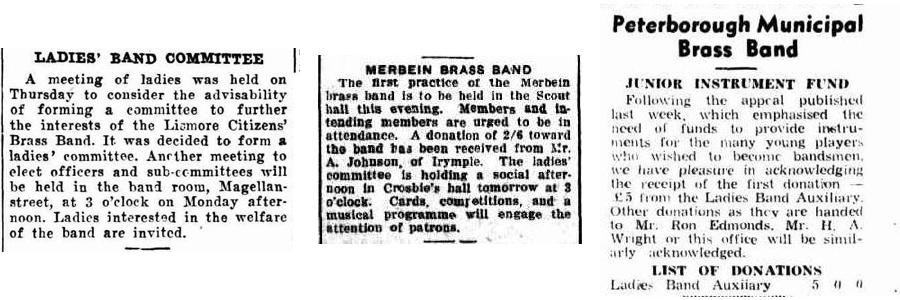
Invaluable support: the activities of the brass band ladies’ committee

Figure 1: Northern Star, 26/07/1930, p. 8; Sunraysia Daily, 26/07/1932, p. 1;
Times and Northern Advertiser, 13/09/1946, p. 2

Introduction:

It would be a difficult matter to adequately express the appreciation we have for the efforts of our ladies’ committee.  Their help, both financially and socially, places us under a debt of deep gratitude.  It was mutually agreed that their fund should be transferred to the band’s account, and they handed over £25 /9.  The ladies also donated £20 to the building fund, and there was another gift of £4 4/ – a total of £49 13/.  The ladies should be proud of this work.

(“EXCELSIOR BAND ACTIVITIES,” 1936)

So stated Mr. A. E. Sanders, then Secretary of the Port Pirie (S.A.) based B.H.A.S. Excelsior Band. And rightly so, it was a substantial amount of money for those times to be provided to the band.  Bands all over Australia, since they began, were always in need of funds, and they worked hard to provide for themselves.  However, here we have a group, the ladies’ committee, who were not playing members of the band, but an associated entity, nonetheless.  There were many of these ladies’ committees, or auxiliaries – the naming is interchangeable – associated with brass bands across the nation during a good seventy year of the last century.  This post focuses on the important fundraising and social activities they undertook.

These ladies’ committees should not be viewed purely through gendered glasses as they were set up in different times.  In the history of our band movement, we know that while there were early female brass bands, it was largely a male orientated activity.  But there is a wealth of evidence that shows the womenfolk were very supportive of the band movement, not only actively listening to the bands, but also providing material support, which they were very good at doing.  In fact, we could view the ladies’ committee as a kind of club as the women involved not only supported the band, but being part of a committee was a social activity as well.

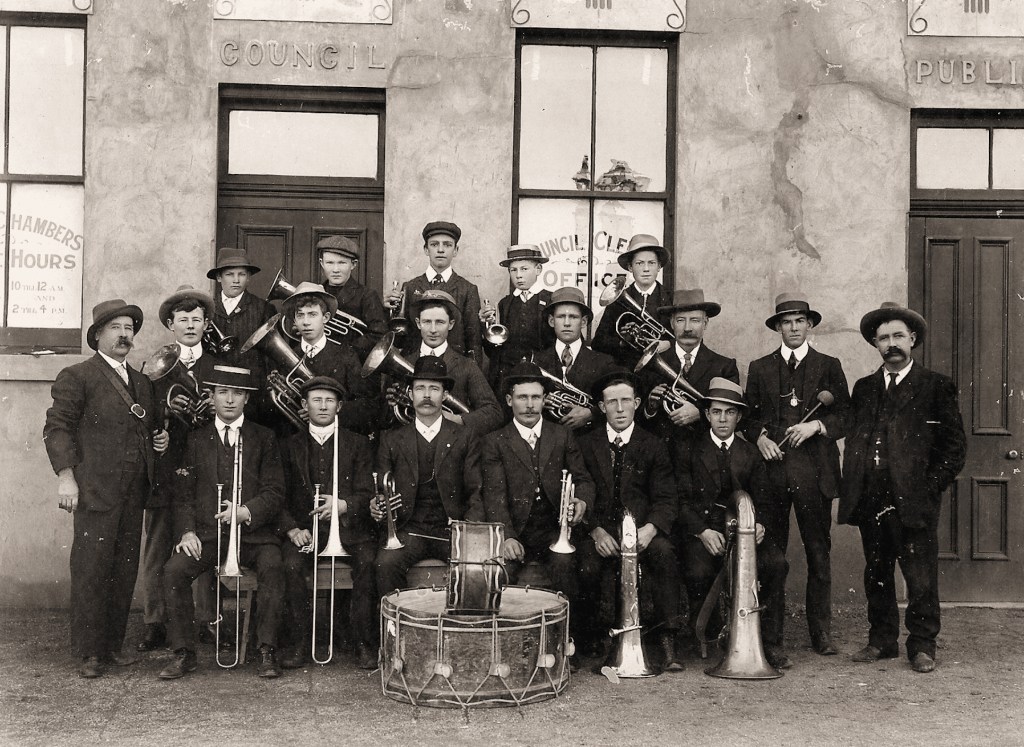
In this post, we will find that the ladies’ committees involved themselves in a range of activities to support their brass bands, and that their support was integral and deserved much thanks.  The evidence of their activities comes from the newspaper articles of the day and reports of annual general meetings – like the one provided by the B.H.A.S. Excelsior Band.  What we do not have is pictures of these fine folk.  Photographs of bands are easy to find. Finding pictures of their supporters is much more difficult.  Nevertheless, this post will highlight a measure of support for bands that is perhaps underrated and lost to time.  It is important to acknowledge the work of these women.

Seeing a need:

As detailed in a previous posts, bands were in need of some essentials in order to function – instruments, sheet music, and uniforms (de Korte, 2018b).  We must not forget places to rehearse as well (de Korte, 2020b).  All these things came with costs attached and while bands were reasonably good at dealing with local councils to obtain funds, more money was always needed and welcomed.  Such was the perilous state of some band finances that they could not survive monetary shocks or social upheaval (de Korte, 2020a, 2020c).  So having varied sources of funding was always going to be of benefit.

Let us work with a theory through this post, and the evidence will become clear, that the bands of this time that had two committees worked quite effectively.  For the simple fact that a band committee, which, due to the time, was male and they largely focused on the running of the band.  Having a ladies’ committee that focused on fundraising and social events meant that the time and energy of the band committee was somewhat freed up. 

The need was clearly there; it was just a matter of forming ladies’ committees who were enthusiastic about supporting the brass band.  According to a letter writer who wrote to the Glengarry, Toongabbie and Cowwarr Journal newspaper in 1925, ladies were quite fond of music, especially that of a brass band (A Member’s Wife, 1925).

Bands and their ladies:

There is no definitive time as to when the earliest brass band ladies’ committee started but newspaper articles provide us with indicative dates.  In an article published by the Sydney Morning Herald newspaper in July 1899, we find that the Newtown Brass Band of Sydney was the benefit of a ball “arranged and carried out by a committee of ladies of which Mrs. W. Rigg was the hon. Secretary, and Mrs. Trindall the hon. Treasurer” (“NEWTOWN BRASS BAND.,” 1899) with the aim of providing funds for the band to obtain new uniforms.  Admittedly. The Newtown Brass Band was already well supported by the local community – Dr. Trindall was the MC for this event and Mr. Rigg M.L.A. “made a few remarks” in support of the band (“NEWTOWN BRASS BAND.,” 1899).

For the newly formed Quairading Brass Band located in the town of Quairading, east of Perth, a ladies’ auxiliary was formed not long after the band came into existence in 1919.  And as reported in the Eastern Districts Chronicle newspaper, this auxiliary applied themselves to arranging the concerts with great success (“District News,” 1919).

The Essendon City Band, based in the north west suburbs of Melbourne, had quite the proactive band committee, and reported as such at the 1922 annual general meeting by the then (retiring) secretary, Mr. W. H. Gore, jun. (“ESSENDON CITY BAND,” 1922).  However, it was Mr. Gore’s wife, Mrs. Gore who took some initiative to help the band.

On August 22, Mrs. Gore proposed a gift sale to raise funds.  The proposal was adopted, and a ladies committee formed.  In the short time available the sum of £78 10s 6d was raised (including £9 proceeds of house party organised by Mr. Skehan), and £6 17s was also donated from R.S.S.I.L.A.  Mrs. Gore reported that in moving amongst the people she found that the upmost good-will existed towards the band, and the citizens generally were appreciative of its work in the district.  Some of the public bodies were endeavouring to make arrangements to work conjointly with the band in promoting the social life of the community, and it remained for the committee to make the best and most equitable arrangements possible.

 (“ESSENDON CITY BAND,” 1922)
Figure 2: Essendon Gazette and Keilor, Bulla and Broadmeadows Reporter, 07/12/1922, p. 1

The South Caulfield Brass Band located in the east of Melbourne, decided to form a ladies’ committee to help put on a concert at the Caulfield Town Hall in September 1927 as the band needed to pay off the debt on instruments (“South Caulfield Brass Band.,” 1927).  Their invitation to interested parties, which was detailed in an article published by The Prahran Telegraph newspaper, was welcoming.

Any lady interested in the work of the band is requested to communicate with the secretary, if desirous of assisting.

(“South Caulfield Brass Band.,” 1927)

The South Caulfield Brass Band was not the only band to form a ladies’ committee for help with special events.  In the same year, the Healesville Brass Band also formed a ladies’ committee, and they were much more organised as they voted in office bearers – “President, Mrs. Verity; vice-president Mrs. Hal Brown; secretary and treasurer, Mrs. R. Coates.” (“HEALESVILLE BRASS BAND.,” 1927).  This committee was quite firm in their fundraising aims:

The main objects of the ladies’ committee is to provide members of the band with suitable uniforms and to purchase new instruments.  It is confidently expected that the ladies of the district will support the band to their utmost ability.

(“HEALESVILLE BRASS BAND.,” 1927)

Sometimes, the main objectives to starting a ladies’ committee were a bit more open ended.  The Lismore Citizens’ Brass Band, as can be read in the article below, held a meeting to “consider the advisability of forming a committee to further the interests” of the band – with the end result of forming a ladies’ committee (“LADIES’ BAND COMMITTEE,” 1930).
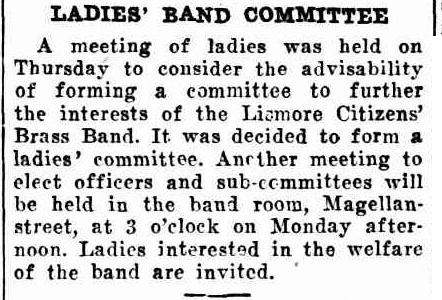
Figure 3: The Northern Star, 26/07/1930, p. 8

In the town of Merbein, located in the far north west of Victoria, the newly reconstituted Merbein Brass Band was the recipient of an equally enthusiastic ladies’ social committee that   immediately decided to hold a “social, in aid of band funds” (“BRASS BAND LADIES’ COMMITTEE,” 1932).  The social was to consist of “Cards, competitions, and a musical programme” to “engage the attention of patrons” (“MERBEIN BRASS BAND,” 1932).  This would have been a successful event given that way the town swung behind their band.
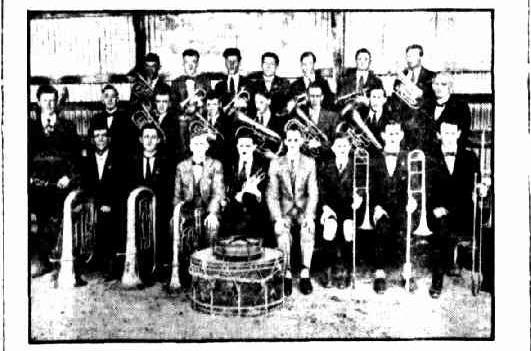
Figure 4: Merbein Public Brass Band-August 1926. Sunraysia Daily, 07/09/1926, p. 1

Support for the brass bands often came from people who held important positions in towns.  Such was the case in Shepparton, Victoria, where the then Lady Mayoress, Mrs. D. Summers invited interested women to be part of a new ladies’’ auxiliary and presided over the meeting – the ladies’ auxiliary was to take the place of the existing social committee of the Shepparton Brass Band (“SHEPPARTON BRASS BAND,” 1935).  Within one month of starting, in November 1935 this new auxiliary got to work almost immediately to raise funds in order to provide 27 uniforms for the band (“BAND UNIFORMS,” 1935b).  For the Shepparton Brass Band, there was a sense of urgency to provide the uniforms.  In January 1936 they were to host a meeting of all the bands from the Goulburn Valley and it was important that the Shepparton Brass Band looked as good as possible (“BAND UNIFORMS,” 1935a).  The new ladies’ auxiliary, and the band itself had their work cut out for them soliciting the support of the townsfolk.

The middle years of last century brought about upheaval with the advent of the Second World War, but for the bands, they recognized that additional help was needed to operate.  And they continued to form ladies’ committees to help the bands.  Mr. W. J. Moore, then secretary of the Berry Brass Band outlined in his report at the 1937 Annual General Meeting of the band how new committees would assist the band.

We would like to recommend the formation of a Citizens’ Committee, and also a Ladies’ Auxiliary, in the near future.  What can be done by such adjuncts is shown in Casino, where there is a juvenile band of 63 performers, and 25 clamouring for admission.  We must get the people of Berry interested in their band.  With the formation of theory classes at regular intervals, and the hearty co-operation of the general public, the band should flourish and provide a never-failing source of enjoyment to those who appreciated the inspiring strains of outdoor music.

(Moore in “Berry Brass Band,” 1937)

Some very worthwhile aims for the then Berry Brass Band to achieve.

Another band based in the Riverina region of New South Wales voted at their meeting in 1940 to form a ladies’ auxiliary, but it was only mentioned in the minutes with no clear goal as to what this auxiliary should aim for.

It was moved by Mr. McLay and seconded by Mr. Turner, that the lady supporters of the band be given the authority to form a committee to be known as the Narrandera Citizens’ Brass Band Women’s Auxiliary.

(“Citizens’ Band,” 1940)

The newly inaugurated ladies’ auxiliary of the Norseman Brass Band in Western Australia formed post WWII and found their work in supporting the band as well as providing a social group for lady supporters of the band, thus providing two avenues of connection (“Norseman Brass Band Ladies Aux. Formed,” 1949).

This is only a small sample of little stories relating to the formation of ladies’ committees across the Australian band movement.  For the various reasons they were formed, the fact that these committees were comprised of volunteers who gave their time for the band and social connection was the most important aspect of all.

The many ways to raise funds:

Figure 5: Members of the Casterton Vice Regal Band Ladies’ Auxiliary preparing supper at the CVRB “Belle of Belles Ball”. Weekly Times, 20/09/1950, p. 20

Balls, socials, bazaars, carnivals, baby competitions, singing competitions, cake stalls, and assisting at concerts…if there was any way to raise funds for brass bands, the ladies’ committees were on to them.  And they had a good time doing it too as the committees, as mentioned, functioned as a kind of social club.  The takings from such events were not insignificant, and the funds were much appreciated by the bands.

Some of the events that were held have already been detailed in this post as ladies’ committees were initially formed to fund specific items for the band – instruments and uniforms were particularly important. All things considered, most of the events were held just to raise additional funds which the bands used at their will. 

The ladies committee of the Port Pirie Proprietary Brass Band held a very successful social event at Port Pirie’s International Hall in March 1906.  Not only were 90 people present and £21 raised, but the ladies’ committee also presented something very special to the band.

The chief event of the evening came as a great surprise to all in the shape of a very handsome drum major’s staff, being presented to the Band by Mesdames J. Holwell and C. Langford on behalf of the Ladies’ Committee.

[…]

The Chairman in a very neat speech called upon Mr Fred Lewsey as an old supporter of the Band to make the presentation on behalf of the ladies, to the band, through their Conductor and Bandmaster, Mr. Thos Morgan.  Both gentlemen thanked the donors for the valuable and handsome present,  and expressed the hope that wherever the staff was carried it would be the means of bringing good luck and victories to the Proprietary Band.

The Bandmaster then called on Mr Tom Everon, drum-major of the Band, to accept the present custodian.  Mr Everon, in responding, said it gave him the greatest pleasure of his life in having an opportunity of thanking the donors for their useful and ornamental gift, especially as the donors were ladies.”

(“The Proprietary Brass Band.,” 1906)

Running social events was a popular activity for ladies’ committees and this is evident through a range of newspaper articles which detailed what went on.  Despite World War One being underway, the Lakes Creek Brass Band Ladies’ Committee of Rockhampton held a coin social at the local Masonic Hall.  Several activities were on offer including dancing, a progressive euchre tournament, open air games, a waltzing competition, a find-your-partner competition, and musical items were provided by the band and vocalists (“LAKE’S CREEK BRASS BAND.,” 1917).

Like the Lakes Creek Brass Band Ladies’ Committee social that took place in 1917, several years later the ladies’ committee of the Bacchus Marsh Brass Band also ran a very successful social event.  In front of 80 people, musical items were presented by soloists from the band – including a mouth-organ duet – and vocal and other items were part of the entertainment (“BACCHUS MARSH BRASS BAND.,” 1934).  The obligatory thanks were provided by members of the band.

The boys voted the ladies “Jolly Good Fellows” at the close of the very enjoyable function, for they provided the good things that appeal to the boys and incidentally to grownups as well.

(“BACCHUS MARSH BRASS BAND.,” 1934)

In the early years of World War Two, any pleasant activity must have been a welcome distraction.  For the ladies committee of the Clare Brass Band, one activity was a singing competition which was held in the home of Miss M. Rowley in October 1941 (“Clare Brass Band.,” 1941).  It was not a small affair as fifty ladies attended the afternoon, and twelve of them participated in the competition where variety on order.  Some ladies presented tap dancing, others played the piano, and there was singing – “which caused much fun” (“Clare Brass Band.,” 1941).  Takings were a bit on the small side at “£1/3/6”, but no doubt appreciated by the band (“Clare Brass Band.,” 1941).
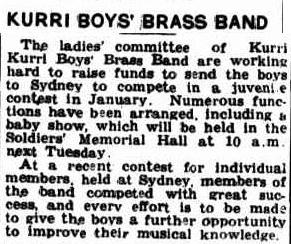
Figure 6: Cessnock Eagle and South Maitland Recorder, 04/12/1942, p. 3

The Kurri Kurri Boys’ Brass Band were very lucky to have a ladies’ committee helping them with fundraising.  Being the proactive band that they were and having the opportunity to enter band competitions on a regular basis, adequate funds were essential.  Kudos to the ladies’ committee of the band for arranging various functions, including the mentioned “baby show” (“KURRI BOYS’ BRASS BAND,” 1942).  For the record, a tiny snippet of news published in the Cessnock Eagle and South Maitland Recorder newspaper noted that the boys travelled to Sydney on the 22nd of January 1943 to compete in a competition (“PERSONAL,” 1943).  Obviously, the latest rounds of fundraising were successful in meeting goals.

In April 1950, the Clare Brass Band was in recess “due to a shortage of bandsmen”, but that did not stop their very proactive ladies’ committee from raising funds in the hope the band would become active again (“Clare Brass Band,” 1950).  They held a social afternoon that month with a variety of entertainments including “competitions, elocutionary items, songs and games” (“Clare Brass Band,” 1950).  It was noted in this article published in The Northern Argus newspaper that the Clare Brass Band Ladies’ Committee was quite proactive in what they did and how much in funds they had raised.

The ladies committee have £105 in the bank, proceeds from the social afternoons.  Many food parcels have been sent overseas, and appreciative letters have been received from the recipients.

Mrs. Shashall, President, and Mrs. H. J. Aitken, Mrs.  M. Kain, and Mrs. R. McEvoy, vice-presidents, thanked and expressed their appreciation for past help, and hoped in the near future the ladies would support their local band which is an acquisition to any town.

(“Clare Brass Band,” 1950)

On a side note, the Clare Municipal Brass Band reformed (and renamed) in 1951, then went into recess by the end of 1952, before being reformed again in November 1954 (“Clare Municipal Brass Band Reformed,” 1954; Tilbrook, 1954; “YOUNG RIDERS—AND THE BIG BRASS,” 1952).  The photograph below shows the Clare Municipal Brass Band as it was in 1952.  No doubt the ladies’ committee of the band would have been pleased to see the band reformed and know that their extensive fundraising activities helped.

Figure 7: The News, 06/08/1952, p. 12

The Horsham Brass Band Ladies’ Auxiliary was also active in the early 1950s.  As the article below shows, they held a cake  and produce stall, with the proceeds being £6 with further events planned in the lead up to Christmas (“CAKE STALL FOR BAND,” 1953).  Even small amounts of fundraising were useful for the band.

Figure 8: The Horsham Times, 04/11/1953, p. 3

With the varied forms of fundraising, the ladies’ committees contributed much to their bands as well as contributing to their localities as well.  With this help came much thanks, as was evident in these articles.  Funds for bands was an ongoing concern, and the more help that was provided, the better.

A long-standing anachonism:

It is not the greatest measurement but judging by the numbers of newspaper articles that mentioned ladies’ committees in the 1950s and 1960s, there seems to be a reduction in the numbers throughout this time.  History will tell us that from the 1950s, females started joining brass bands in greater numbers as playing band members so perhaps, this also influenced the makeup of band committees (de Korte, 2018a).  However, social factors could also be at play as society in general changed.  For example, the King Island Municipal Band noted in 1968 that the loss of their ladies’ committee was due to the lady that ran it leaving the island (On the Beat, 1968).  Change in the band movement can sometimes be gradual as new ideas take hold.

Conclusion:

This author has often heard of bands being described as a family or a community.  The stories here demonstrate that all people involved – players and helpers – are important.  The bands and their committees were wholly responsible for creating a community that supported the band.  And in times past, that support was much needed.  The ladies that volunteered to organise, run cake stalls, dances, obtained uniforms, and undertook innumerable other supporting roles did so with an enthusiasm that made a real difference. Who knows how many bands would have faltered over time had it not been for that little bit of extra support provided by a hard-working ladies’ committee?

References:

A Member’s Wife. (1925, 30 March). Coursing Club and Ladies : AND A BRASS BAND, TOO! Journal : Glengarry, Toongabbie and Cowwarr Journal (Traralgon, Vic. : 1923 – 1929), 1. http://nla.gov.au/nla.news-article274569550

BACCHUS MARSH BRASS BAND. (1934, 28 July). Melton Express (Vic. : 1915 – 1943), 3. http://nla.gov.au/nla.news-article254741515

BAND UNIFORMS : Appeal by Auxiliary. (1935a, 23 November). Shepparton Advertiser (Vic. : 1887 – 1953), 2. http://nla.gov.au/nla.news-article175424913

BAND UNIFORMS : LADIES’ AUXILIARY ACTIVE : CONCERT AND FAIR. (1935b, 15 November). Shepparton Advertiser (Vic. : 1887 – 1953),b1. http://nla.gov.au/nla.news-article175424344

Belle of Belles Chosen At Casterton. (1950, 20 September). Weekly Times (Melbourne, Vic. : 1869 – 1954), 20. http://nla.gov.au/nla.news-article224922352

Berry Brass Band : Annual Meeting. (1937, 23 September). South Coast Register (Berry, NSW : 1926; 1929 – 1931; 1933 – 1948), 1. http://nla.gov.au/nla.news-article284207960

BRASS BAND LADIES’ COMMITTEE. (1932, 19 July). Sunraysia Daily (Mildura, Vic. : 1920 – 1956), 1. http://nla.gov.au/nla.news-article265797449

CAKE STALL FOR BAND. (1953, 04 November). Horsham Times (Vic. : 1882 – 1954), 3. http://nla.gov.au/nla.news-article72774559

Citizens’ Band : Meeting of Committee. (1940, 16 February). Narandera Argus and Riverina Advertiser (NSW : 1893 – 1953), 6. http://nla.gov.au/nla.news-article130478489

Clare Brass Band. (1941, 17 October). Blyth Agriculturist (SA : 1908 – 1954), 4. http://nla.gov.au/nla.news-article222446550

Clare Brass Band. (1950, 05 April). Northern Argus (Clare, SA : 1869 – 1954), 9. http://nla.gov.au/nla.news-article97823288

Clare Municipal Brass Band Reformed. (1954, 24 November). Northern Argus (Clare, SA : 1869 – 1954), 8. http://nla.gov.au/nla.news-article97827526

de Korte, J. D. (2018a, 22 April). Early female brass bands in Australia: they were rare but they made their mark. Band Blasts from the Past: Anecdotes, Stories and Personalities. https://bandblastsfromthepast.blog/2018/04/22/early-female-brass-bands-in-australia-they-were-rare-but-they-made-their-mark/

de Korte, J. D. (2018b, 08 July). Instruments, sheet music and uniforms: how the bands of old obtained the essentials. Band Blasts from the Past: Anecdotes, Stories and Personalities. https://bandblastsfromthepast.blog/2018/05/13/instruments-sheet-music-and-uniforms-how-the-bands-of-old-obtained-the-essentials/

de Korte, J. D. (2020a, 04 June). Australian society and brass bands: The Pneumonic Influenza pandemic of 1919. Band Blasts from the Past: Anecdotes, Stories and Personalities. https://bandblastsfromthepast.blog/2020/06/04/australian-society-and-brass-bands-the-pneumonic-influenza-pandemic-of-1919/

de Korte, J. D. (2020b, 01 September 2020). A room to call their own: the space and place for bands. Band Blasts from the Past: Anecdotes, Stories and Personalities. https://bandblastsfromthepast.blog/2020/09/01/a-room-to-call-their-own-the-space-and-place-for-bands/

de Korte, J. D. (2020c, 18 October). Testing times: the resilience of Australian bands during the Great Depression. Band Blasts from the Past: Anecdotes, Stories and Personalities. https://bandblastsfromthepast.blog/2020/10/18/testing-times-the-resilience-of-australian-bands-during-the-great-depression/

District News : QUAIRADING : Brass Band. (1919, 10 October). Eastern Districts Chronicle (York, WA : 1877 – 1927), 2. http://nla.gov.au/nla.news-article148580826

ESSENDON CITY BAND : ANNUAL MEETING HELD : Year of Pronounced Activity. (1922, 07 December). Essendon Gazette and Keilor, Bulla and Broadmeadows Reporter (Moonee Ponds, Vic. : 1905 – 1924), 1. http://nla.gov.au/nla.news-article283500348

EXCELSIOR BAND ACTIVITIES : How Public Supports Music : Seventeen Concerts Bring £19 to Funds. (1936, 21 February). Recorder (Port Pirie, SA : 1919 – 1954), 1. http://nla.gov.au/nla.news-article95923315

HEALESVILLE BRASS BAND : LADIES COMMITTEE. (1927, 10 December). Healesville and Yarra Glen Guardian (Vic. : 1900 – 1942), 3. http://nla.gov.au/nla.news-article60293633

KURRI BOYS’ BRASS BAND. (1942, 04 December). Cessnock Eagle and South Maitland Recorder (NSW : 1913 – 1954), 3. http://nla.gov.au/nla.news-article99933708

LADIES’ BAND COMMITTEE. (1930, 26 July). Northern Star (Lismore, NSW : 1876 – 1954), 8. http://nla.gov.au/nla.news-article94144077

LAKE’S CREEK BRASS BAND. (1917, 03 November). Morning Bulletin (Rockhampton, Qld. : 1878 – 1954), 4. http://nla.gov.au/nla.news-article53831976

MERBEIN BRASS BAND. (1932, 26 July). Sunraysia Daily (Mildura, Vic. : 1920 – 1956), 1. http://nla.gov.au/nla.news-article265800182

NEWTOWN BRASS BAND. (1899, 24 July). Sydney Morning Herald (NSW : 1842 – 1954), 3. http://nla.gov.au/nla.news-article14228752

Nice, A. C. (1926, 07 September). MERBEIN PUBLIC BRASS BAND—August, 1926. Sunraysia Daily (Mildura, Vic. : 1920 – 1956), 1. http://nla.gov.au/nla.news-article258720934

Norseman Brass Band Ladies Aux. Formed. (1949, 09 June). Norseman-Esperance News (WA : 1936 – 1954), 2. http://nla.gov.au/nla.news-article258610441

On the Beat. (1968, 03 September). BAND HAS NOT BEEN INACTIVE. King Island News (Currie, King Island : 1912 – 1986, 2. http://nla.gov.au/nla.news-article264727496

PERSONAL. (1943, 22 January). Cessnock Eagle and South Maitland Recorder (NSW : 1913 – 1954), 3. http://nla.gov.au/nla.news-article100051247

Peterborough Municipal Brass Band : JUNIOR INSTRUMENT FUND. (1946, 13 September). Times and Northern Advertiser, Peterborough, South Australia (SA : 1919 – 1950), 2. http://nla.gov.au/nla.news-article124976509

The Proprietary Brass Band. (1906, 28 March). Port Pirie Recorder and North Western Mail (SA : 1898 – 1918), 4. http://nla.gov.au/nla.news-article95249731

SHEPPARTON BRASS BAND : Ladies Auxiliary Suggested. (1935, 03 October). Shepparton Advertiser (Vic. : 1887 – 1953), 1. http://nla.gov.au/nla.news-article175421706

South Caulfield Brass Band. (1927, 15 July). Prahran Telegraph (Vic. : 1889 – 1930), 4. http://nla.gov.au/nla.news-article165185419

Tilbrook, I. T. (1954, 10 November). CLARE MUNICIPAL BRASS BAND TO BE RE-ORGANISED : CONDUCTOR REQUIRED : (To the Editor). Northern Argus (Clare, SA : 1869 – 1954), 10. http://nla.gov.au/nla.news-article97827167

YOUNG RIDERS—AND THE BIG BRASS. (1952, 06 August). News (Adelaide, SA : 1923 – 1954), 12. http://nla.gov.au/nla.news-article130812675

A room to call their own: the space and place for bands

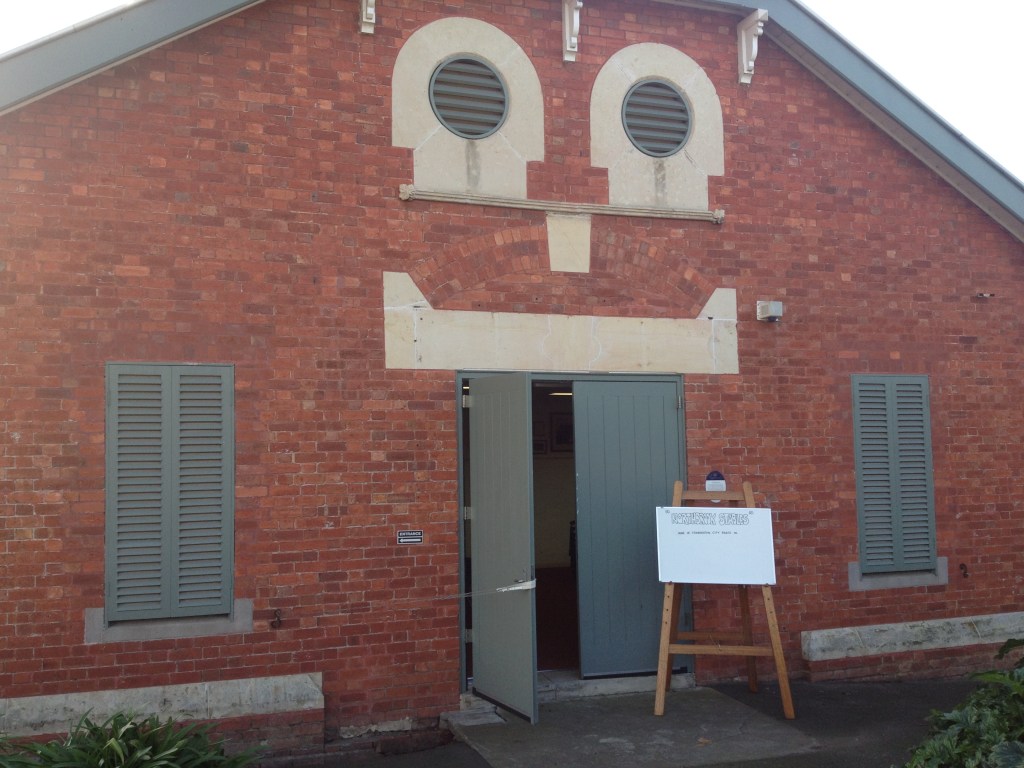
20191019-10.46_Orange_Band-Hall1
The old Orange City Band Hall (Photograph taken by Jeremy de Korte, October 2019)

Introduction:

There is no doubting that bands need material items to help them function as a band, as they do now.  And so, a previous post was written regarding instruments, sheet music and uniforms and how bands obtained such items .  Perhaps it was remiss of that post not to mention band rooms as an added essential item.  However, when researching for this current post, that omission is now justified – there is lots of historical writing on band rooms!

For the early bands, finding a room to practice in was no easy task.  We shall see that some of them were housed in stables, auction rooms, schools, rotundas, and most were subject to the whims and mercies of their local councils.  Several bands had to solicit funds from the general public for a variety of items, rooms included.  For some bands, they were able to build their own band room.  Bands that were attached to an industry were lucky enough to have rooms provided for them.

There is a similarity in the stories from across Australia when it came to bands and their rooms.  No doubt the bands themselves would have shared some of the stories when they met at events and competitions.  Bands, while competitive, are also collegial.

It is regarding band rooms that we see bands being innovative and inventive.  For the early bands, finding their own place and space was an achievement. Here are some of the stories.

Space, place, and memory:

Before this post delves into the practical stories on band rooms, it is important to explore the meaning of a band room to a community, to bands and to people.  The concept of space and place helps to explain this meaning – it is what is termed, “humanistic geography”; “A place can be seen as space that has meaning” (Selten & van der Zandt, 2011).  However, the concept of space and place should not be seen as entirely geographical.  There is social meaning as well.  It is people who provide meaning to a place and within places communities are made.

For a local band, having their own room was of great importance, they needed places to practice.  And having their own room gave them a sense of connectedness to the local community.  As Mackay (2005) writes in his article, “…connection to place is vital to our sense of identity – both personal and communal.” (Mackay, 2005).  To be able to inform a local community that their band was rehearsing in a certain place also gave the band a sense of local identity.  Rooms were a place to call home, where band members could rehearse and were also part of a band’s history.  A room was a source of pride:

The powerful sense of that place – the look of it, the feel of it, the smell of it – will stir all kind of emotions in you, positive and negative, not accessible via mere memory.

(Mackay, 2005)
00000000_Jerilderie-Town-Band_phot6408
Jerilderie Town Band, date unknown. (Source: IBEW)

For some bands people, the room gave them a sense of connectedness with the local community and their fellow band members.  Often, all it takes is a mention of the room to trigger a strong memory.  Mr H. A. McVittie, former bandmaster of the Jerilderie Town Band mentions reading a paragraph published in the Jerilderie Herald and Urana Advertiser newspaper in April 1945 about the destruction of the old band hall by fire (“Jerilderie Shire Council,” 1945).  For Mr. McVittie, this act triggered very strong memories, not only for the band room, but for himself and his fellow band members.  The article published in May 1945 opens:

Mr. H. A. McVittie, writing from Collarenebri, where he conducts the Collarenebri “Gazette,” has had memories of his old home town awakened by a paragraph which appeared in a recent issue of this paper, in which the destruction by fire of the old band room in Eastern Park was recorded.  Says Mac:-

I was given some sort of a pulsation the other day when the “Herald” arrived and I read of the destruction of the old band room in the Eastern Park.  IF there was one place more than another that held for me many happy recollections of my old home town it was the old bandroom.  If I remember correctly it was built there by the one-time Jerilderie Municipal Council and placed at the disposal of the Jerilderie Town Band as a practice room.

(“The Old Bandroom,” 1945)

The remainder of the article is devoted to Mr. McVittie’s memories big and small, and it is wonderful to read these stories.  In the finishing paragraph, he wrote this poignant observation:

Well old towners, I must close down on this somewhat hurried and disjointed sketch.  But I feel that you will excuse me for just a passing memory of the old room that gave to me so many pleasant hours.

(“The Old Bandroom,” 1945)

This is just one example of a strong connection to place that a bands person has.  For Mr. McVittie however, the story does not end with the initial article in May as two months later, he writes to the Jerilderie Herald and Urana Advertiser newspaper again.  One memory triggered many others, and old Jerilderie band people wrote to Mr. McVittie in Collarenebri and detailed their own connections with the band, the room and Jerilderie.

My memories of the old band room, which were recently published in the “Herald,” seem to have stirred the embers of the past and rekindled interest in the good old days – the days when we were young.  Letters have come to me from the most unexpected quarters in which the writers touch on some old Jerilderie theme or other, prompted by my references to the old band room, sketchy and incomplete as they were.

(“OLD MEMORIES NEVER DIE,” 1945)

It would be fair to say that other bands people share similar recollections of their rooms and the social and musical connections that they made while associated with that place.  However, to allow this connectedness to develop, bands had to have their rooms…

Building:

19250201_South-Melbourne-Bandroom-Opening
South Melbourne City Band Grand Opening of Band Room & Rotunda, 01/02/1925 – march card backing. (Source: Victorian Bands’ League Library & Archive)

Building a band room was an option open to many bands – once they had found a suitable site and had raised the funds.  This was a task that was undertaken only by the most committed ensembles as a reliance on their own labour and the goodwill of subscribers was taxing.  Nevertheless, for the most part, it became achievable, and the bands always had a sense of pride when they had a room they had built themselves.

Dealing with local councils and building regulations was the most difficult part as the Warragul Brass Band found in 1906.  They wanted to build a band room on a site that was currently being used by the local tennis and croquet clubs (“WARRAGUL BAND.,” 1906).  Unfortunately, the request was refused due to the incumbency of the said clubs at the site and the council wanting to build a new depot.  However, for the South Melbourne City Band, they had much more success with building a band room and a rotunda in 1925, as the march card backing above indicates.  They built their rotunda with labour provided by the bandsmen and friends for a total cost of £300 and held a grand opening and concert (“Albert Park Improvements.,” 1925).  This rotunda has unfortunately become a victim of change and is no longer in the park.

Then there was the fundraising aspect which either worked or did not work.  It is evident that communities were largely generous when the cause was right and the appeals from local bands were worthwhile.  The Hills Central Brass Band located in Adelaide was one group that laid out the reasons for their fundraising quite clearly in a 1912 article published in the Mount Barker Courier and Onkaparinga and Gumeracha Advertiser newspaper.  They held a concert to help with their building fund and implored the local community to help them:

It has been decided to hold a concert and social in the Mount Barker Institute on August 20 in aid of the Hills Central Brass Band building fund.  This is a most deserving institution and it is hoped that the public will recognise its usefulness and generosity by lending their patronage to this entertainment.  In all cases of distress and in many public festivities the band has volunteered assistance in the past and the least the public can do in return is to support it.

(“HILLS CENTRAL BRASS BAND.,” 1912)
19210000_Collie-Brass-Band_slwa_b3507727_1
Collie Brass Band, winners of B Grade Championship, 1921 (Source: State Library of Western Australia: BA579/138)

Coming into 1918 we find that the Collie Brass Band from Perth was trying to secure land for a band room, and many supportive platitudes were written about the band by the colloquial writer ‘Bandsman’ in the local Collie Mail newspaper, and from this there was council support:

Some of the members are now playing in the leading Australian Military Bands in England and France and messages are continually coming through saying that they are keeping in form for the old band.  What would they say if on their return, they found the old band defunct?  It was within an ace of being so last winter solely through the lack of suitable practice room.

The Collie Council has realised the necessity and have promised to find a suitable block of land, knowing that a Band room will be an asset to the town and will always belong to the citizens as do the instruments and all other property of the band.

(Bandsman, 1918)

Some years later in 1926, the Katanning Brass Band from Western Australia found itself wanting to build their own room and they also called for public support.  In an innovative move, the Katanning Brass Band formed a committee out of representatives from many other community organisations to guide the fundraising and building of a new band room (“Katanning Brass Band.,” 1926).  They were ultimately successful in this strategy.  After a year of work, in January 1927 they opened their new band room:

Monday evening last marked quite an epoch in the history of the Katanning Brass Band, the occasion being the opening their own practise room.  A brass band may be regarded as a sort of semi-public institutions and a public utility.

[…]

They have been very thankful for the use of the fire station and other buildings loaned to them from time to time, but it has not always been convenient for both parties, and thus many drawbacks have been encountered. Then early last year a brilliant idea emanated from somewhere, a scheme to carry out a gala day.  The bandsmen recognised their own inability to put the matter through, and so they invited the assistance and co-operation of the various sports of the village, the ladies, and in fact all who had the welfare of the band at heart, and a willingness to join in.

(“Katanning Brass Band.,” 1927)
19131304_Millicent-Brass-Band_B-57528
Millicent Brass Band, 13/04/1913. (Source: State Library of South Australia: B+57528)

In South Australia, local citizen, benefactor and Patron of the Millicent Brass Band, a Mr. H. F. L. Holzgrefe, J.P., proudly laid the foundation stone of their new band room (“MILLICENT BRASS BAND.,” 1928).  This had been an important project for the Millicent Brass Band and the significance was not lost on Mr. Holzgrefe who made these remarks after laying the stone:

The foundation stone was inscribed :- “This stone was laid by H. F. L. Holzgrefe, J.P., May 19, 1928.”  After it had been declared “well and truly laid,” Mr. Holzgrefe said the bandsmen had acted wisely in building a room for their own use.  It would tend to keep the members united, and make practising easier in many ways.  A band was a very useful institution, and no community should be without one.

[…]

Mr. Tothill warmly thanked Mr. Holzgrefe for his handsome contribution.  He then asked him to accept from the band an inscribed silver trowel as a memento of the occasion.  The president’s remarks were warmly applauded and Mr. Holzgrefe received an ovation when he acknowledged the gift.

(“MILLICENT BRASS BAND.,” 1928)

It was admirable that some bands around Australia managed to get the funds together and build their own band room.  Unfortunately, it is unclear just how many of these band rooms survive.  However, if the picture of the Orange Brass Band Hall at the start of this post is anything to go by, no doubt, there are some around Australia that may have been repurposed. We only must look for them.

Finding:

Short of building their own rooms, finding a suitable space was another option and whether the room was provided for bands by generous people or by councils, it was still a place to practice.  Again, there were instances when requests were mulled over as councils were sometimes very officious.

To start with it is worth exploring the experiences of some industry bands.  They were often luckier than most as they were provided with rooms on or near the sites of their industry.  The Thompson’s Foundry Band gained their first room in 1894 on the site of the Thompson’s Foundry in Castlemaine (“FOUNDRY BAND-ROOM.,” 1894).  As reported in the Mount Alexander Mail newspaper:

The opening of the new Foundry band-room erected in Parker-street, was made the occasion of a social last night tendered by the President, Mr David Thompson.  The room, which is a commodious one for practice, is 25ft long, 10ft wide, and 12ft high.  It is nearly painted green, with a dado of chocolate colour.

(“FOUNDRY BAND-ROOM.,” 1894)

It was also lucky for the Thompson’s Foundry Band that the head of the foundry was a great supporter of the band.  The Thompson’s Foundry Band still rehearse in a building associated with the foundry.

19129496_Advocate_De-La-Salle-Hall
The Advocate, 06/04/1912, p. 22. This building was added to the property of the nearby tram depot in 1930 and extended.

Likewise, the Malvern Tramways Band started out rehearsing in a room within the tram depot and then in 1930 they moved into old school buildings acquired by the tramways for the recreation of their employees (“BAND NEWS,” 1930).  The building, pictured above when it was De La Salle College, was renovated by the tramways to include two more spaces behind the original hall and was mainly used by various tramway employee clubs such as bands (both brass and harmonica) and sporting groups (Heritage Council Victoria, 1999).  It was soon after, in 1931, that the Malvern Tramways Band moved out of this building and into converted stables owned by the Malvern Council behind Northbook House.

20130727_Northbrook-Stables_south-side
(Former) Northbrook House Stables. Now home to Stonnington City Brass (formerly Malvern Tramways Band). (Photo taken by Jeremy de Korte, July 2013)

As mentioned, the local councils had quite an influence on how bands obtained rooms and as early as 1896 we see that disagreements sometimes arose, as was the instance between the Palmerston Brass Band in Darwin and the District Council.  Published among the many news items on the 4th of December1896, we can see this snippet in the Northern Territory Times and Gazette newspaper:

The collision between the Brass Band and the District Council has, we believe, had the effect of raising the charge for the Town Hall to a fixed figure for all societies and clubs using it.  By and bye, when the Masonic Hall is an established fact, the social public will not need to bother the Council, and the revenue of the Town Hall will decrease rather materially.

(“Notes of the Week.,” 1896)

Four years later we find the Palmerston Brass Band is using a room provided for them by a Mr. H. Dwyer, of which he was thanked in an annual general meeting (“Palmerston Brass Band.,” 1900).

The Hawthorn City Council found the plight of the Hawthorn City Band more favourable.  In May 1909 it was reported in the Richmond Guardian newspaper that “the patronage of the Hawthorn City Council has been bestowed upon the above band, and a room had been provided for the band to practice in.” (“Hawthorn City Band.,” 1909).  In 1918 however, the Daylesford Brass Band, wishing to reform, found themselves in differing circumstances.  The Secretary of the Daylesford Brass Band sent a letter to the local Borough Council asking if the council could provide a room where the band could practice, a perfectly reasonable request.  It seems that at the time, the band instruments and music from a former iteration of the band were stored in the Town Hall Lodgeroom, and “could the council supply the bandmaster with a key?” (access was needed every so often) (“BAND PRACTICE ROOM WANTED.,” 1918).  Which, unfortunately, touched off a debate within council on why the instruments were in the Town Hall in the first place – not so much the fact that the band wanted a practice room!  However, it also seems that a number of the instrument were in fact owned by the council so they stayed where they were. (“BAND PRACTICE ROOM WANTED.,” 1918).

Similar stories of councils deciding when and where bands could rehearse make up a large part of stories around rooms.  The Picton Council could find no objection to having the Picton District Brass Band wanting “free use of the supper room on Monday nights for band practice […] providing they pay for the electric light.” (“Picton Brass Band,” 1931).  However, there were other cases when councils could not, or would not help their local bands locate rooms, and a couple of instances in Queensland involving the Warwick City Band and Mackay City Band Association reflect this (“NO LARGER BANDROOM AVAILABLE,” 1945; Scotia, 1941).

Daily Mercury, 27/11/1945, p. 2

There was obviously a delicate balance involved when trying to find rooms and it seems that dealing with councils formed a major part of negotiations, as councils tended to be the judges of where things were put, and they controlled some of the funding.  Nevertheless, for some bands it all paid off and they were able to practice in rooms provided for them.

Using:

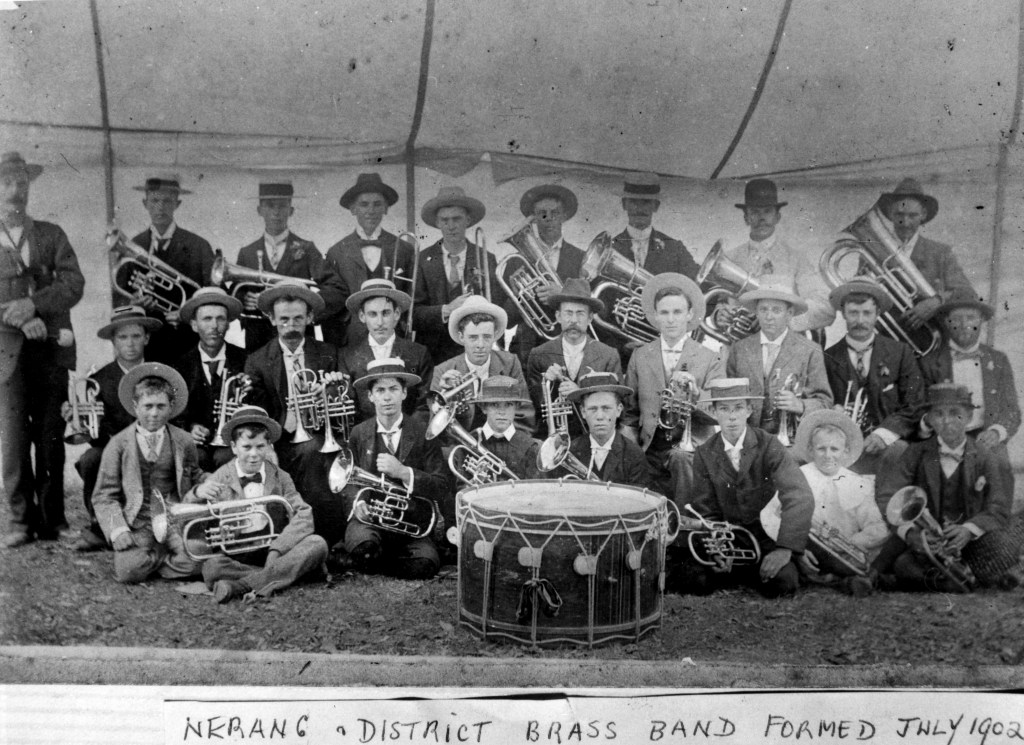
19021121_Nerang-District-BB_V1-FL393716
Portrait of the Nerang & District Brass Band, Queensland, formed in July, 1902. (Source: State Library of Queensland: 3612)

Once rooms were found or built, bands were free enough to use them as they saw fit although by today’s standards, some of the locations were a bit unusual.  We can see little stories in the articles above where bands rehearsed in fire stations and the like.  This section will highlight where some of the bands rehearsed and some of the problems that were encountered.  The Nerang & District Town Band for example started out rehearsing in the stables of the Nerang Nestle Milk Factory which cannot have been a wholly comfortable experience (Gold Coast City Brass Band, 2014).  Down south in Victoria, the Horsham Brass Band and the Oakleigh District Brass Band found themselves in rooms provided for them by generous supporters, until they found something else (“BAND ROOM.,” 1908; “Oakleigh District Brass Band.,” 1918).  The Kempsey Brass Band from N.S.W. were pleased to report that they were in slightly more appropriate quarters as they found space in the local School of Arts (“KEMPSEY BRASS BAND.,” 1921).  Whilst the Frankston Brass Band in the southern reaches of Melbourne managed to gain space in the local Mechanics’ Institute (“Frankston Brass Band,” 1924).  Out west the Narembeen Brass Band rehearsed “in the old Westralian Farmers Buildings” (“Narembeen Brass Band.,” 1937).

However, like any building, band rooms were not immune to the problems faced by any other building in towns and cities and there were some unfortunate incidents.  In February 1925 it was reported by the Blue Mountain Echo newspaper that the Katoomba District Band room had been broken into twice since Christmas (“Band-room Vandalism,” 1925).  While the damage was easily fixed, some instruments had been shifted and sheet music was strewn about.  The local police believed children were the perpetrators (“Band-room Vandalism,” 1925).

Much more serious was the threat of fire and two bands in the same year suffered the consequences.  In February 1926, fire consumed the room at the back of the Richmond Town Hall which was being used by the Richmond City Band  and unfortunately all band property was presumed lost, and the room and stock were uninsured (“FIRE AT RICHMOND.,” 1926).  This had a detrimental effect on the band and within four years the band had folded – on a side note, two artefacts survived and are now being held by the Richmond & Burnley Historical Society (Langdon, 2014).  Similarly,  in April 1926, fire broke out in the building used by the City Concert Band in Rockhampton however in this incident, all instruments were saved (“FIRE AT ROCKHAMPTON.,” 1926).

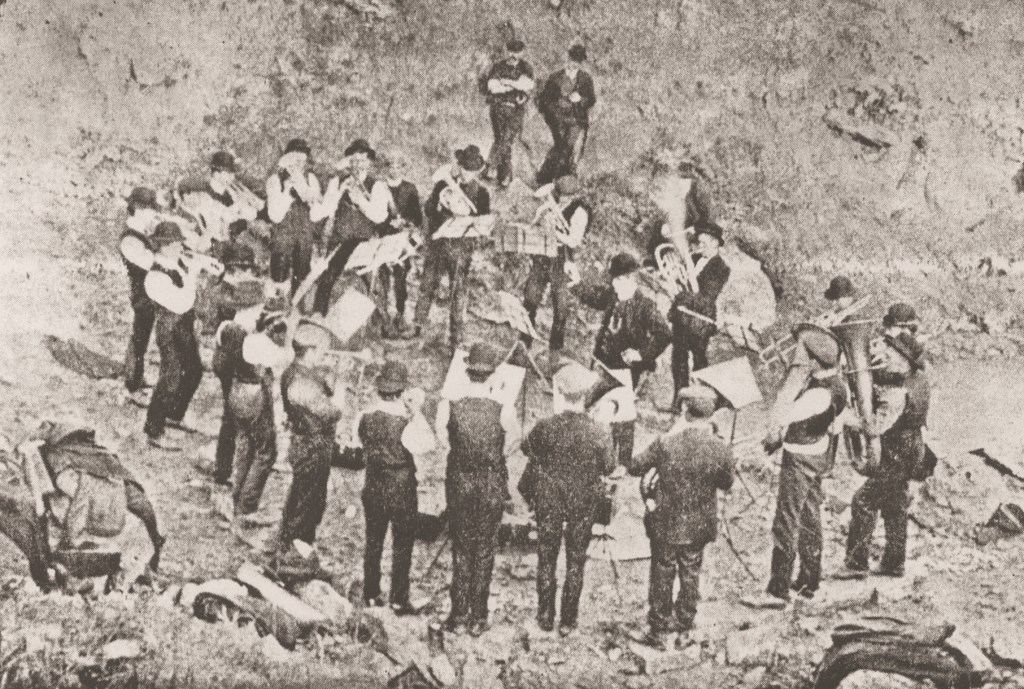
To finish off this section and to backtrack a little bit, we have the case of the Collingwood Citizens’ Band and their wanting of space to rehearse.  In early years, as can be seen in the photo at the end of this post, it is rumoured that they used to rehearse in a quarry due to the lack of a room.  There might be some truth to the rumour however they too had to make applications to council for additional places to rehearse, in this case, wanting a park where they could practice their marching – which raised debate on whether this was appropriate on Sunday mornings (“THE SUNDAY QUESTION.,” 1905).

Moving:

19330615_Northern-Star_Bandroom-Removal
Northern Star, 15/06/1933, pg. 5

Yes, it had to happen every so often of which the early bands did the best they could to adapt.  Although at times, it involved the moving of buildings, as detailed in the article above (“BAND-ROOM REMOVAL,” 1933).  And moving buildings was sometimes a condition set upon bands by local councils, as the Albury Brass Band found out when they wanted to move the old fire station to a new site owned by council (“OLD FIRE STATION AS BANDROOM.,” 1916).

Conclusion:

There is obviously much more that could be written about bands finding their own space and place as band room stories are intertwined with the histories of the bands themselves.  Rooms have their own histories.  How often do we see band rooms displaying the history of bands in the form of trophies, photos, shields and other ephemera?  Perhaps it is time we celebrated the rooms.

19060000_Collingwood-Band-Quarry_phot19034
Collingwood Citizens’ Band rehearsing in a quarry, 1906. (Source: IBEW)

References:

Albert Park Improvements : New Band Stand Opened. (1925, 02 February). Age (Melbourne, Vic. : 1854 – 1954), 8. http://nla.gov.au/nla.news-article155554629

BAND NEWS : Malvern Municipal and Tramways Band. (1930, 07 August). Malvern Standard (Vic. : 1906 – 1931), 8. http://nla.gov.au/nla.news-article66452967

BAND PRACTICE ROOM WANTED. (1918, 18 October). Daylesford Advocate, Yandoit, Glenlyon and Eganstown Chronicle (Vic. : 1914 – 1918), 4. http://nla.gov.au/nla.news-article119561430

BAND ROOM. (1908, 16 June). Horsham Times (Vic. : 1882 – 1954), 2. http://nla.gov.au/nla.news-article72810141

BAND-ROOM REMOVAL : Building for Practices. (1933, 15 June). Northern Star (Lismore, NSW : 1876 – 1954), 5. http://nla.gov.au/nla.news-article94219810

Band-room Vandalism. (1925, 27 February). Blue Mountain Echo (NSW : 1909 – 1928), 9. http://nla.gov.au/nla.news-article108852760

Bandsman. (1918, 28 March). THE COLLIE BAND ROOM. Collie Mail (Perth, WA : 1908 – 1954), 2. http://nla.gov.au/nla.news-article189243021

Collingwood Citizens’ Band rehearsing in a quarry. (1906). [Photograph]. [phot19034]. The Internet Bandsman Everything Within, Vintage Brass Band Pictures : Australia. http://www.ibew.org.uk/vbbp-oz.html

de Korte, J. D. (2013). Malvern, Vic. : Northbrook Stables : South side [Photograph]. [IMG_0413]. Jeremy de Korte, Malvern, Victoria. 

de Korte, J. D. (2018, 08 July). Instruments, sheet music and uniforms: how the bands of old obtained the essentials. Band Blasts from the Past : Anecdotes, Stories and Personalities. https://bandblastsfromthepast.blog/2018/05/13/instruments-sheet-music-and-uniforms-how-the-bands-of-old-obtained-the-essentials/

de Korte, J. D. (2019). Orange, N.S.W. : Old Orange City Band Hall, 1888 [Photograph]. [IMG_4453]. Jeremy de Korte, Sydney, N.S.W. 

De La Salle Brothers’ Boys’ School, MALVERN : Blessed and Opened by the Archbishop : His Grace on the Education Question : Fair Play for Catholic Schools. (1912, 06 April). Advocate (Melbourne, Vic. : 1868 – 1954), 22. http://nla.gov.au/nla.news-article170941033

FIRE AT RICHMOND : Band Hall Destroyed. (1926, 27 February). Age (Melbourne, Vic. : 1854 – 1954), 16. http://nla.gov.au/nla.news-article155771911

FIRE AT ROCKHAMPTON : City Band Instruments Saved. (1926, 13 April). Brisbane Courier (Qld. : 1864 – 1933), 15. http://nla.gov.au/nla.news-article21021996

FOUNDRY BAND-ROOM. (1894, 10 October). Mount Alexander Mail (Vic. : 1854 – 1917), 3. http://nla.gov.au/nla.news-article198243209

Frankston Brass Band : First Practice on Friday, February 18. (1924, 06 February). Frankston and Somerville Standard (Vic. : 1921 – 1939), 2. http://nla.gov.au/nla.news-article73498546

Gold Coast City Brass Band. (2014). History : If it happened on the Gold Coast then the Gold Coast City Brass Band was there to help Celebrate the Occasion. Gold Coast City Brass Band. Retrieved 07 August 2020 from http://www.goldcoastcitybrassband.com/history/

Hawthorn City Band. (1909, 22 May). Richmond Guardian (Vic. : 1907 – 1920), 2. http://nla.gov.au/nla.news-article257211806

Heritage Council Victoria. (1999, 08 September). Malvern Tram Depot : Coldblo Road Armadale, Stonnington City. Heritage Council Victoria. Retrieved 09 August 2020 from https://vhd.heritagecouncil.vic.gov.au/places/2138

HILLS CENTRAL BRASS BAND. (1912, 19 July). Mount Barker Courier and Onkaparinga and Gumeracha Advertiser (SA : 1880 – 1954), 2. http://nla.gov.au/nla.news-article147747963

Jerilderie Shire Council. (1945, 19 April). Jerilderie Herald and Urana Advertiser (NSW : 1898 – 1958), 4. http://nla.gov.au/nla.news-article134629256

Jerilderie Town Band. (n.d.). [Photograph]. [phot6408]. The Internet Bandsman Everything Within, Vintage Brass Band Pictures : Australia. http://www.ibew.org.uk/vbbp-oz.html

Katanning Brass Band : Proposed Band Room. (1926, 13 February). Great Southern Herald (Katanning, WA : 1901 – 1954), 5. http://nla.gov.au/nla.news-article147654428

Katanning Brass Band : Opening of new practice room. (1927, 24 January). Southern Districts Advocate (Katanning, WA : 1913 – 1936), 4. http://nla.gov.au/nla.news-article209839059

KEMPSEY BRASS BAND. (1921, 30 August). Macleay Argus (Kempsey, NSW : 1885 – 1907; 1909 – 1910; 1912 – 1913; 1915 – 1916; 1918 – 1954), 2. http://nla.gov.au/nla.news-article234195704

Langdon, D. (2014). Brass bands [Newsletter article]. Richmond & Burnley Historical Society Newsletter, 31(5), 2 & 4-6. 

Mackay, H. (2005, 15 October). A sense of place. The Age. https://www.theage.com.au/national/a-sense-of-place-20051015-ge11sy.html

Millicent Brass Band. (1913). [Photograph (b&w print)]. [B+57528]. State Library of South Australia, Millicent Collection. https://collections.slsa.sa.gov.au/resource/B+57528

MILLICENT BRASS BAND : Successful Building Appeal : A Generous Patron. (1928, 22 May). Border Watch (Mount Gambier, SA : 1861 – 1954), 1. http://nla.gov.au/nla.news-article77706076

Narembeen Brass Band. (1937, 11 March). Bruce Rock Post and Corrigin and Narembeen Guardian (WA : 1924 – 1948), 3. http://nla.gov.au/nla.news-article211359163

NO LARGER BANDROOM AVAILABLE. (1945, 27 November). Daily Mercury (Mackay, Qld. : 1906 – 1954), 2. http://nla.gov.au/nla.news-article170630099

Notes of the Week. (1896, 04 December). Northern Territory Times and Gazette (Darwin, NT : 1873 – 1927), 2. http://nla.gov.au/nla.news-article3333362

Oakleigh District Brass Band : A Valuable Local Institution. (1918, 16 February). Oakleigh and Caulfield Times Mulgrave and Ferntree Gully Guardian (Vic. : 1914 – 1918), 3. http://nla.gov.au/nla.news-article88808027

The Old Bandroom : Former Bandmaster in reminiscent mood. (1945, 03 May). Jerilderie Herald and Urana Advertiser (NSW : 1898 – 1958), 3. http://nla.gov.au/nla.news-article134632025

OLD FIRE STATION AS BANDROOM : Removal and tenure of occupancy. (1916, 16 September). Border Morning Mail and Riverina Times (Albury, NSW : 1903 – 1920), 3. http://nla.gov.au/nla.news-article109967848

OLD MEMORIES NEVER DIE : Further reflections from Collarenebri. (1945, 05 July). Jerilderie Herald and Urana Advertiser (NSW : 1898 – 1958), 3. http://nla.gov.au/nla.news-article134633491

Palmerston Brass Band. (1900, 23 February). Northern Territory Times and Gazette (Darwin, NT : 1873 – 1927), 3. http://nla.gov.au/nla.news-article4259300

Picton Brass Band : To practice in Town Hall Supper Room. (1931, 14 October). Picton Post (NSW : 1907 – 1954), 2. http://nla.gov.au/nla.news-article112760838

Portrait of Nerang and District Brass Band, Queensland, formed in July, 1902. (1902). [photographic print : black & white]. [3612]. Brisbane John Oxley Library, State Library of Queensland, South Bank Collection. https://hdl.handle.net/10462/deriv/143348

Scotia. (1941, 20 May). CORRESPONDENCE : Band Practice Room : (To the Editor). Warwick Daily News (Qld. : 1919 -1954), 2. http://nla.gov.au/nla.news-article189029180

Selten, M., & van der Zandt, F. (2012, 25 October). Space vs. place. About Geography. Retrieved 20 August 2020 from http://geography.ruhosting.nl/geography/index.php?title=Space_vs._place

South Melbourne City Band. (1925). South Melbourne City Band : Grand Opening [March card backing]. South Melbourne City Band, South Melbourne, Victoria. 

THE SUNDAY QUESTION : Band practice at Collingwood. (1905, 29 August). Age (Melbourne, Vic. : 1854 – 1954), 6. http://nla.gov.au/nla.news-article198599129

WARRAGUL BAND : Request for Bandroom Site. (1906, 12 June). West Gippsland Gazette (Warragul, Vic. : 1898 – 1930), 2. http://nla.gov.au/nla.news-article68669583

Williams, H. W. (1921). Collie Brass Band, winners of B Grade Championship [1 negative : acetate, black and white ; 3 x 4 cm.]. [024861PD]. State Library of Western Australia, Collie Museum collection of photographs. https://encore.slwa.wa.gov.au/iii/encore/record/C__Rb3507727