Invaluable support: the activities of the brass band ladies’ committee

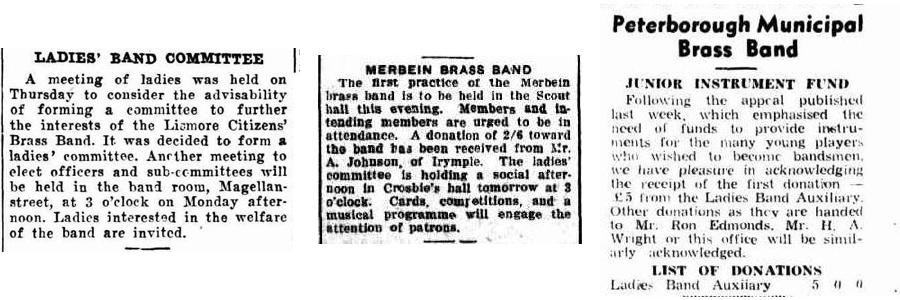
Figure 1: Northern Star, 26/07/1930, p. 8; Sunraysia Daily, 26/07/1932, p. 1;
Times and Northern Advertiser, 13/09/1946, p. 2

Introduction:

It would be a difficult matter to adequately express the appreciation we have for the efforts of our ladies’ committee.  Their help, both financially and socially, places us under a debt of deep gratitude.  It was mutually agreed that their fund should be transferred to the band’s account, and they handed over £25 /9.  The ladies also donated £20 to the building fund, and there was another gift of £4 4/ – a total of £49 13/.  The ladies should be proud of this work.

(“EXCELSIOR BAND ACTIVITIES,” 1936)

So stated Mr. A. E. Sanders, then Secretary of the Port Pirie (S.A.) based B.H.A.S. Excelsior Band. And rightly so, it was a substantial amount of money for those times to be provided to the band.  Bands all over Australia, since they began, were always in need of funds, and they worked hard to provide for themselves.  However, here we have a group, the ladies’ committee, who were not playing members of the band, but an associated entity, nonetheless.  There were many of these ladies’ committees, or auxiliaries – the naming is interchangeable – associated with brass bands across the nation during a good seventy year of the last century.  This post focuses on the important fundraising and social activities they undertook.

These ladies’ committees should not be viewed purely through gendered glasses as they were set up in different times.  In the history of our band movement, we know that while there were early female brass bands, it was largely a male orientated activity.  But there is a wealth of evidence that shows the womenfolk were very supportive of the band movement, not only actively listening to the bands, but also providing material support, which they were very good at doing.  In fact, we could view the ladies’ committee as a kind of club as the women involved not only supported the band, but being part of a committee was a social activity as well.

In this post, we will find that the ladies’ committees involved themselves in a range of activities to support their brass bands, and that their support was integral and deserved much thanks.  The evidence of their activities comes from the newspaper articles of the day and reports of annual general meetings – like the one provided by the B.H.A.S. Excelsior Band.  What we do not have is pictures of these fine folk.  Photographs of bands are easy to find. Finding pictures of their supporters is much more difficult.  Nevertheless, this post will highlight a measure of support for bands that is perhaps underrated and lost to time.  It is important to acknowledge the work of these women.

Seeing a need:

As detailed in a previous posts, bands were in need of some essentials in order to function – instruments, sheet music, and uniforms (de Korte, 2018b).  We must not forget places to rehearse as well (de Korte, 2020b).  All these things came with costs attached and while bands were reasonably good at dealing with local councils to obtain funds, more money was always needed and welcomed.  Such was the perilous state of some band finances that they could not survive monetary shocks or social upheaval (de Korte, 2020a, 2020c).  So having varied sources of funding was always going to be of benefit.

Let us work with a theory through this post, and the evidence will become clear, that the bands of this time that had two committees worked quite effectively.  For the simple fact that a band committee, which, due to the time, was male and they largely focused on the running of the band.  Having a ladies’ committee that focused on fundraising and social events meant that the time and energy of the band committee was somewhat freed up. 

The need was clearly there; it was just a matter of forming ladies’ committees who were enthusiastic about supporting the brass band.  According to a letter writer who wrote to the Glengarry, Toongabbie and Cowwarr Journal newspaper in 1925, ladies were quite fond of music, especially that of a brass band (A Member’s Wife, 1925).

Bands and their ladies:

There is no definitive time as to when the earliest brass band ladies’ committee started but newspaper articles provide us with indicative dates.  In an article published by the Sydney Morning Herald newspaper in July 1899, we find that the Newtown Brass Band of Sydney was the benefit of a ball “arranged and carried out by a committee of ladies of which Mrs. W. Rigg was the hon. Secretary, and Mrs. Trindall the hon. Treasurer” (“NEWTOWN BRASS BAND.,” 1899) with the aim of providing funds for the band to obtain new uniforms.  Admittedly. The Newtown Brass Band was already well supported by the local community – Dr. Trindall was the MC for this event and Mr. Rigg M.L.A. “made a few remarks” in support of the band (“NEWTOWN BRASS BAND.,” 1899).

For the newly formed Quairading Brass Band located in the town of Quairading, east of Perth, a ladies’ auxiliary was formed not long after the band came into existence in 1919.  And as reported in the Eastern Districts Chronicle newspaper, this auxiliary applied themselves to arranging the concerts with great success (“District News,” 1919).

The Essendon City Band, based in the north west suburbs of Melbourne, had quite the proactive band committee, and reported as such at the 1922 annual general meeting by the then (retiring) secretary, Mr. W. H. Gore, jun. (“ESSENDON CITY BAND,” 1922).  However, it was Mr. Gore’s wife, Mrs. Gore who took some initiative to help the band.

On August 22, Mrs. Gore proposed a gift sale to raise funds.  The proposal was adopted, and a ladies committee formed.  In the short time available the sum of £78 10s 6d was raised (including £9 proceeds of house party organised by Mr. Skehan), and £6 17s was also donated from R.S.S.I.L.A.  Mrs. Gore reported that in moving amongst the people she found that the upmost good-will existed towards the band, and the citizens generally were appreciative of its work in the district.  Some of the public bodies were endeavouring to make arrangements to work conjointly with the band in promoting the social life of the community, and it remained for the committee to make the best and most equitable arrangements possible.

 (“ESSENDON CITY BAND,” 1922)
Figure 2: Essendon Gazette and Keilor, Bulla and Broadmeadows Reporter, 07/12/1922, p. 1

The South Caulfield Brass Band located in the east of Melbourne, decided to form a ladies’ committee to help put on a concert at the Caulfield Town Hall in September 1927 as the band needed to pay off the debt on instruments (“South Caulfield Brass Band.,” 1927).  Their invitation to interested parties, which was detailed in an article published by The Prahran Telegraph newspaper, was welcoming.

Any lady interested in the work of the band is requested to communicate with the secretary, if desirous of assisting.

(“South Caulfield Brass Band.,” 1927)

The South Caulfield Brass Band was not the only band to form a ladies’ committee for help with special events.  In the same year, the Healesville Brass Band also formed a ladies’ committee, and they were much more organised as they voted in office bearers – “President, Mrs. Verity; vice-president Mrs. Hal Brown; secretary and treasurer, Mrs. R. Coates.” (“HEALESVILLE BRASS BAND.,” 1927).  This committee was quite firm in their fundraising aims:

The main objects of the ladies’ committee is to provide members of the band with suitable uniforms and to purchase new instruments.  It is confidently expected that the ladies of the district will support the band to their utmost ability.

(“HEALESVILLE BRASS BAND.,” 1927)

Sometimes, the main objectives to starting a ladies’ committee were a bit more open ended.  The Lismore Citizens’ Brass Band, as can be read in the article below, held a meeting to “consider the advisability of forming a committee to further the interests” of the band – with the end result of forming a ladies’ committee (“LADIES’ BAND COMMITTEE,” 1930).
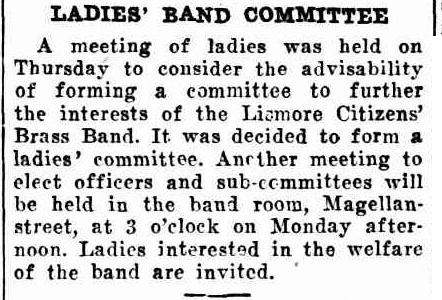
Figure 3: The Northern Star, 26/07/1930, p. 8

In the town of Merbein, located in the far north west of Victoria, the newly reconstituted Merbein Brass Band was the recipient of an equally enthusiastic ladies’ social committee that   immediately decided to hold a “social, in aid of band funds” (“BRASS BAND LADIES’ COMMITTEE,” 1932).  The social was to consist of “Cards, competitions, and a musical programme” to “engage the attention of patrons” (“MERBEIN BRASS BAND,” 1932).  This would have been a successful event given that way the town swung behind their band.
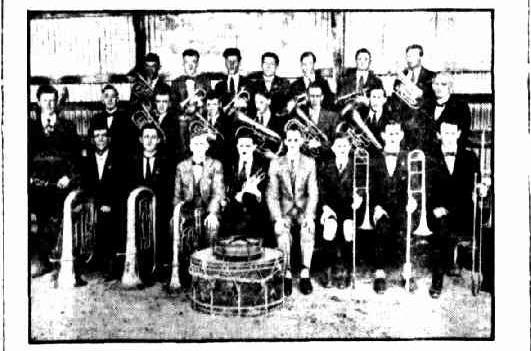
Figure 4: Merbein Public Brass Band-August 1926. Sunraysia Daily, 07/09/1926, p. 1

Support for the brass bands often came from people who held important positions in towns.  Such was the case in Shepparton, Victoria, where the then Lady Mayoress, Mrs. D. Summers invited interested women to be part of a new ladies’’ auxiliary and presided over the meeting – the ladies’ auxiliary was to take the place of the existing social committee of the Shepparton Brass Band (“SHEPPARTON BRASS BAND,” 1935).  Within one month of starting, in November 1935 this new auxiliary got to work almost immediately to raise funds in order to provide 27 uniforms for the band (“BAND UNIFORMS,” 1935b).  For the Shepparton Brass Band, there was a sense of urgency to provide the uniforms.  In January 1936 they were to host a meeting of all the bands from the Goulburn Valley and it was important that the Shepparton Brass Band looked as good as possible (“BAND UNIFORMS,” 1935a).  The new ladies’ auxiliary, and the band itself had their work cut out for them soliciting the support of the townsfolk.

The middle years of last century brought about upheaval with the advent of the Second World War, but for the bands, they recognized that additional help was needed to operate.  And they continued to form ladies’ committees to help the bands.  Mr. W. J. Moore, then secretary of the Berry Brass Band outlined in his report at the 1937 Annual General Meeting of the band how new committees would assist the band.

We would like to recommend the formation of a Citizens’ Committee, and also a Ladies’ Auxiliary, in the near future.  What can be done by such adjuncts is shown in Casino, where there is a juvenile band of 63 performers, and 25 clamouring for admission.  We must get the people of Berry interested in their band.  With the formation of theory classes at regular intervals, and the hearty co-operation of the general public, the band should flourish and provide a never-failing source of enjoyment to those who appreciated the inspiring strains of outdoor music.

(Moore in “Berry Brass Band,” 1937)

Some very worthwhile aims for the then Berry Brass Band to achieve.

Another band based in the Riverina region of New South Wales voted at their meeting in 1940 to form a ladies’ auxiliary, but it was only mentioned in the minutes with no clear goal as to what this auxiliary should aim for.

It was moved by Mr. McLay and seconded by Mr. Turner, that the lady supporters of the band be given the authority to form a committee to be known as the Narrandera Citizens’ Brass Band Women’s Auxiliary.

(“Citizens’ Band,” 1940)

The newly inaugurated ladies’ auxiliary of the Norseman Brass Band in Western Australia formed post WWII and found their work in supporting the band as well as providing a social group for lady supporters of the band, thus providing two avenues of connection (“Norseman Brass Band Ladies Aux. Formed,” 1949).

This is only a small sample of little stories relating to the formation of ladies’ committees across the Australian band movement.  For the various reasons they were formed, the fact that these committees were comprised of volunteers who gave their time for the band and social connection was the most important aspect of all.

The many ways to raise funds:

Figure 5: Members of the Casterton Vice Regal Band Ladies’ Auxiliary preparing supper at the CVRB “Belle of Belles Ball”. Weekly Times, 20/09/1950, p. 20

Balls, socials, bazaars, carnivals, baby competitions, singing competitions, cake stalls, and assisting at concerts…if there was any way to raise funds for brass bands, the ladies’ committees were on to them.  And they had a good time doing it too as the committees, as mentioned, functioned as a kind of social club.  The takings from such events were not insignificant, and the funds were much appreciated by the bands.

Some of the events that were held have already been detailed in this post as ladies’ committees were initially formed to fund specific items for the band – instruments and uniforms were particularly important. All things considered, most of the events were held just to raise additional funds which the bands used at their will. 

The ladies committee of the Port Pirie Proprietary Brass Band held a very successful social event at Port Pirie’s International Hall in March 1906.  Not only were 90 people present and £21 raised, but the ladies’ committee also presented something very special to the band.

The chief event of the evening came as a great surprise to all in the shape of a very handsome drum major’s staff, being presented to the Band by Mesdames J. Holwell and C. Langford on behalf of the Ladies’ Committee.

[…]

The Chairman in a very neat speech called upon Mr Fred Lewsey as an old supporter of the Band to make the presentation on behalf of the ladies, to the band, through their Conductor and Bandmaster, Mr. Thos Morgan.  Both gentlemen thanked the donors for the valuable and handsome present,  and expressed the hope that wherever the staff was carried it would be the means of bringing good luck and victories to the Proprietary Band.

The Bandmaster then called on Mr Tom Everon, drum-major of the Band, to accept the present custodian.  Mr Everon, in responding, said it gave him the greatest pleasure of his life in having an opportunity of thanking the donors for their useful and ornamental gift, especially as the donors were ladies.”

(“The Proprietary Brass Band.,” 1906)

Running social events was a popular activity for ladies’ committees and this is evident through a range of newspaper articles which detailed what went on.  Despite World War One being underway, the Lakes Creek Brass Band Ladies’ Committee of Rockhampton held a coin social at the local Masonic Hall.  Several activities were on offer including dancing, a progressive euchre tournament, open air games, a waltzing competition, a find-your-partner competition, and musical items were provided by the band and vocalists (“LAKE’S CREEK BRASS BAND.,” 1917).

Like the Lakes Creek Brass Band Ladies’ Committee social that took place in 1917, several years later the ladies’ committee of the Bacchus Marsh Brass Band also ran a very successful social event.  In front of 80 people, musical items were presented by soloists from the band – including a mouth-organ duet – and vocal and other items were part of the entertainment (“BACCHUS MARSH BRASS BAND.,” 1934).  The obligatory thanks were provided by members of the band.

The boys voted the ladies “Jolly Good Fellows” at the close of the very enjoyable function, for they provided the good things that appeal to the boys and incidentally to grownups as well.

(“BACCHUS MARSH BRASS BAND.,” 1934)

In the early years of World War Two, any pleasant activity must have been a welcome distraction.  For the ladies committee of the Clare Brass Band, one activity was a singing competition which was held in the home of Miss M. Rowley in October 1941 (“Clare Brass Band.,” 1941).  It was not a small affair as fifty ladies attended the afternoon, and twelve of them participated in the competition where variety on order.  Some ladies presented tap dancing, others played the piano, and there was singing – “which caused much fun” (“Clare Brass Band.,” 1941).  Takings were a bit on the small side at “£1/3/6”, but no doubt appreciated by the band (“Clare Brass Band.,” 1941).
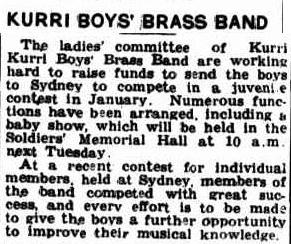
Figure 6: Cessnock Eagle and South Maitland Recorder, 04/12/1942, p. 3

The Kurri Kurri Boys’ Brass Band were very lucky to have a ladies’ committee helping them with fundraising.  Being the proactive band that they were and having the opportunity to enter band competitions on a regular basis, adequate funds were essential.  Kudos to the ladies’ committee of the band for arranging various functions, including the mentioned “baby show” (“KURRI BOYS’ BRASS BAND,” 1942).  For the record, a tiny snippet of news published in the Cessnock Eagle and South Maitland Recorder newspaper noted that the boys travelled to Sydney on the 22nd of January 1943 to compete in a competition (“PERSONAL,” 1943).  Obviously, the latest rounds of fundraising were successful in meeting goals.

In April 1950, the Clare Brass Band was in recess “due to a shortage of bandsmen”, but that did not stop their very proactive ladies’ committee from raising funds in the hope the band would become active again (“Clare Brass Band,” 1950).  They held a social afternoon that month with a variety of entertainments including “competitions, elocutionary items, songs and games” (“Clare Brass Band,” 1950).  It was noted in this article published in The Northern Argus newspaper that the Clare Brass Band Ladies’ Committee was quite proactive in what they did and how much in funds they had raised.

The ladies committee have £105 in the bank, proceeds from the social afternoons.  Many food parcels have been sent overseas, and appreciative letters have been received from the recipients.

Mrs. Shashall, President, and Mrs. H. J. Aitken, Mrs.  M. Kain, and Mrs. R. McEvoy, vice-presidents, thanked and expressed their appreciation for past help, and hoped in the near future the ladies would support their local band which is an acquisition to any town.

(“Clare Brass Band,” 1950)

On a side note, the Clare Municipal Brass Band reformed (and renamed) in 1951, then went into recess by the end of 1952, before being reformed again in November 1954 (“Clare Municipal Brass Band Reformed,” 1954; Tilbrook, 1954; “YOUNG RIDERS—AND THE BIG BRASS,” 1952).  The photograph below shows the Clare Municipal Brass Band as it was in 1952.  No doubt the ladies’ committee of the band would have been pleased to see the band reformed and know that their extensive fundraising activities helped.

Figure 7: The News, 06/08/1952, p. 12

The Horsham Brass Band Ladies’ Auxiliary was also active in the early 1950s.  As the article below shows, they held a cake  and produce stall, with the proceeds being £6 with further events planned in the lead up to Christmas (“CAKE STALL FOR BAND,” 1953).  Even small amounts of fundraising were useful for the band.

Figure 8: The Horsham Times, 04/11/1953, p. 3

With the varied forms of fundraising, the ladies’ committees contributed much to their bands as well as contributing to their localities as well.  With this help came much thanks, as was evident in these articles.  Funds for bands was an ongoing concern, and the more help that was provided, the better.

A long-standing anachonism:

It is not the greatest measurement but judging by the numbers of newspaper articles that mentioned ladies’ committees in the 1950s and 1960s, there seems to be a reduction in the numbers throughout this time.  History will tell us that from the 1950s, females started joining brass bands in greater numbers as playing band members so perhaps, this also influenced the makeup of band committees (de Korte, 2018a).  However, social factors could also be at play as society in general changed.  For example, the King Island Municipal Band noted in 1968 that the loss of their ladies’ committee was due to the lady that ran it leaving the island (On the Beat, 1968).  Change in the band movement can sometimes be gradual as new ideas take hold.

Conclusion:

This author has often heard of bands being described as a family or a community.  The stories here demonstrate that all people involved – players and helpers – are important.  The bands and their committees were wholly responsible for creating a community that supported the band.  And in times past, that support was much needed.  The ladies that volunteered to organise, run cake stalls, dances, obtained uniforms, and undertook innumerable other supporting roles did so with an enthusiasm that made a real difference. Who knows how many bands would have faltered over time had it not been for that little bit of extra support provided by a hard-working ladies’ committee?

References:

A Member’s Wife. (1925, 30 March). Coursing Club and Ladies : AND A BRASS BAND, TOO! Journal : Glengarry, Toongabbie and Cowwarr Journal (Traralgon, Vic. : 1923 – 1929), 1. http://nla.gov.au/nla.news-article274569550

BACCHUS MARSH BRASS BAND. (1934, 28 July). Melton Express (Vic. : 1915 – 1943), 3. http://nla.gov.au/nla.news-article254741515

BAND UNIFORMS : Appeal by Auxiliary. (1935a, 23 November). Shepparton Advertiser (Vic. : 1887 – 1953), 2. http://nla.gov.au/nla.news-article175424913

BAND UNIFORMS : LADIES’ AUXILIARY ACTIVE : CONCERT AND FAIR. (1935b, 15 November). Shepparton Advertiser (Vic. : 1887 – 1953),b1. http://nla.gov.au/nla.news-article175424344

Belle of Belles Chosen At Casterton. (1950, 20 September). Weekly Times (Melbourne, Vic. : 1869 – 1954), 20. http://nla.gov.au/nla.news-article224922352

Berry Brass Band : Annual Meeting. (1937, 23 September). South Coast Register (Berry, NSW : 1926; 1929 – 1931; 1933 – 1948), 1. http://nla.gov.au/nla.news-article284207960

BRASS BAND LADIES’ COMMITTEE. (1932, 19 July). Sunraysia Daily (Mildura, Vic. : 1920 – 1956), 1. http://nla.gov.au/nla.news-article265797449

CAKE STALL FOR BAND. (1953, 04 November). Horsham Times (Vic. : 1882 – 1954), 3. http://nla.gov.au/nla.news-article72774559

Citizens’ Band : Meeting of Committee. (1940, 16 February). Narandera Argus and Riverina Advertiser (NSW : 1893 – 1953), 6. http://nla.gov.au/nla.news-article130478489

Clare Brass Band. (1941, 17 October). Blyth Agriculturist (SA : 1908 – 1954), 4. http://nla.gov.au/nla.news-article222446550

Clare Brass Band. (1950, 05 April). Northern Argus (Clare, SA : 1869 – 1954), 9. http://nla.gov.au/nla.news-article97823288

Clare Municipal Brass Band Reformed. (1954, 24 November). Northern Argus (Clare, SA : 1869 – 1954), 8. http://nla.gov.au/nla.news-article97827526

de Korte, J. D. (2018a, 22 April). Early female brass bands in Australia: they were rare but they made their mark. Band Blasts from the Past: Anecdotes, Stories and Personalities. https://bandblastsfromthepast.blog/2018/04/22/early-female-brass-bands-in-australia-they-were-rare-but-they-made-their-mark/

de Korte, J. D. (2018b, 08 July). Instruments, sheet music and uniforms: how the bands of old obtained the essentials. Band Blasts from the Past: Anecdotes, Stories and Personalities. https://bandblastsfromthepast.blog/2018/05/13/instruments-sheet-music-and-uniforms-how-the-bands-of-old-obtained-the-essentials/

de Korte, J. D. (2020a, 04 June). Australian society and brass bands: The Pneumonic Influenza pandemic of 1919. Band Blasts from the Past: Anecdotes, Stories and Personalities. https://bandblastsfromthepast.blog/2020/06/04/australian-society-and-brass-bands-the-pneumonic-influenza-pandemic-of-1919/

de Korte, J. D. (2020b, 01 September 2020). A room to call their own: the space and place for bands. Band Blasts from the Past: Anecdotes, Stories and Personalities. https://bandblastsfromthepast.blog/2020/09/01/a-room-to-call-their-own-the-space-and-place-for-bands/

de Korte, J. D. (2020c, 18 October). Testing times: the resilience of Australian bands during the Great Depression. Band Blasts from the Past: Anecdotes, Stories and Personalities. https://bandblastsfromthepast.blog/2020/10/18/testing-times-the-resilience-of-australian-bands-during-the-great-depression/

District News : QUAIRADING : Brass Band. (1919, 10 October). Eastern Districts Chronicle (York, WA : 1877 – 1927), 2. http://nla.gov.au/nla.news-article148580826

ESSENDON CITY BAND : ANNUAL MEETING HELD : Year of Pronounced Activity. (1922, 07 December). Essendon Gazette and Keilor, Bulla and Broadmeadows Reporter (Moonee Ponds, Vic. : 1905 – 1924), 1. http://nla.gov.au/nla.news-article283500348

EXCELSIOR BAND ACTIVITIES : How Public Supports Music : Seventeen Concerts Bring £19 to Funds. (1936, 21 February). Recorder (Port Pirie, SA : 1919 – 1954), 1. http://nla.gov.au/nla.news-article95923315

HEALESVILLE BRASS BAND : LADIES COMMITTEE. (1927, 10 December). Healesville and Yarra Glen Guardian (Vic. : 1900 – 1942), 3. http://nla.gov.au/nla.news-article60293633

KURRI BOYS’ BRASS BAND. (1942, 04 December). Cessnock Eagle and South Maitland Recorder (NSW : 1913 – 1954), 3. http://nla.gov.au/nla.news-article99933708

LADIES’ BAND COMMITTEE. (1930, 26 July). Northern Star (Lismore, NSW : 1876 – 1954), 8. http://nla.gov.au/nla.news-article94144077

LAKE’S CREEK BRASS BAND. (1917, 03 November). Morning Bulletin (Rockhampton, Qld. : 1878 – 1954), 4. http://nla.gov.au/nla.news-article53831976

MERBEIN BRASS BAND. (1932, 26 July). Sunraysia Daily (Mildura, Vic. : 1920 – 1956), 1. http://nla.gov.au/nla.news-article265800182

NEWTOWN BRASS BAND. (1899, 24 July). Sydney Morning Herald (NSW : 1842 – 1954), 3. http://nla.gov.au/nla.news-article14228752

Nice, A. C. (1926, 07 September). MERBEIN PUBLIC BRASS BAND—August, 1926. Sunraysia Daily (Mildura, Vic. : 1920 – 1956), 1. http://nla.gov.au/nla.news-article258720934

Norseman Brass Band Ladies Aux. Formed. (1949, 09 June). Norseman-Esperance News (WA : 1936 – 1954), 2. http://nla.gov.au/nla.news-article258610441

On the Beat. (1968, 03 September). BAND HAS NOT BEEN INACTIVE. King Island News (Currie, King Island : 1912 – 1986, 2. http://nla.gov.au/nla.news-article264727496

PERSONAL. (1943, 22 January). Cessnock Eagle and South Maitland Recorder (NSW : 1913 – 1954), 3. http://nla.gov.au/nla.news-article100051247

Peterborough Municipal Brass Band : JUNIOR INSTRUMENT FUND. (1946, 13 September). Times and Northern Advertiser, Peterborough, South Australia (SA : 1919 – 1950), 2. http://nla.gov.au/nla.news-article124976509

The Proprietary Brass Band. (1906, 28 March). Port Pirie Recorder and North Western Mail (SA : 1898 – 1918), 4. http://nla.gov.au/nla.news-article95249731

SHEPPARTON BRASS BAND : Ladies Auxiliary Suggested. (1935, 03 October). Shepparton Advertiser (Vic. : 1887 – 1953), 1. http://nla.gov.au/nla.news-article175421706

South Caulfield Brass Band. (1927, 15 July). Prahran Telegraph (Vic. : 1889 – 1930), 4. http://nla.gov.au/nla.news-article165185419

Tilbrook, I. T. (1954, 10 November). CLARE MUNICIPAL BRASS BAND TO BE RE-ORGANISED : CONDUCTOR REQUIRED : (To the Editor). Northern Argus (Clare, SA : 1869 – 1954), 10. http://nla.gov.au/nla.news-article97827167

YOUNG RIDERS—AND THE BIG BRASS. (1952, 06 August). News (Adelaide, SA : 1923 – 1954), 12. http://nla.gov.au/nla.news-article130812675
Band contests fit for a Victorian centenary: a Duke, Grenadier Guards, and the brass bands

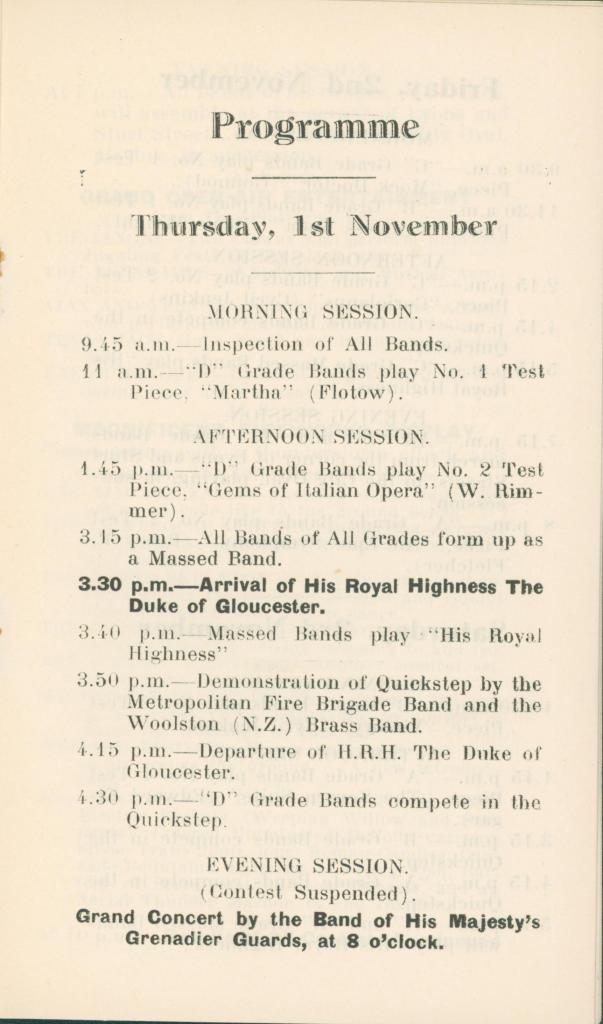
Programme: South Street “Centenary” Brass Band Contest, 1934, part of the front cover.
(Source: Victorian Collections: Victorian Bands’ League Archives)

An international band contest may be a feature of the Centenary celebrations.  An effort will be made to include one in the 1934 Eisteddfod and Band Contest at Ballarat.

The Grand National Eisteddfod of Australasia has promised its enthusiastic support of the celebrations.  Bands contests were resumed last year at the Ballarat competitions after a lapse of eight years, and they proved successful. (“Band Contest For Centenary,” 1933)

Introduction:

The year is 1934 and in Ballarat on the 1st of November, the Royal South Street Eisteddfod band sections are getting underway again.  Except this year is a bit different.  It is the year of the Victorian and Melbourne Centenary and across Victoria, celebrations and other events are in full swing.  The South Street band sections were part of these grand festivities, and all efforts were made to attract bands from across Australia and New Zealand.  In addition, the band contest was honoured by the presence of Prince Henry, Duke of Gloucester and The Band of HM Grenadier Guards.  The Royal South Street Society band contest, while being the most prestigious, attracted the most attention in the wider band movement.  For the bands themselves, there were lots of other events and band contests they were involved in.

Planning for the 1934 Ballarat band contest was extensive and as shown by the quote at the head of this post, the ideas started over eighteen months earlier.  Even if the idealism of the organisers was led astray at times.  They thought big, but had to accept that economic conditions were not the best as Australia was coming out of the Great Depression.  To put on a band contest befitting a visit of royalty was the utmost challenge.  Not to mention the scheduling given the extensive touring of the Grenadier Guards Band and the Duke. 

With the cooperation many different parties, somehow, everything worked out.  This post is mainly about the 1934 South Street band contest, ninety years to the day.

The Centenary:

Officially, the Victorian and Melbourne centenaries marked two historical events; the landing of the Henty family in Portland 1834, and John Batman’s grand pronouncement in 1835 that the Port Philip bay area with the Yarra River at its head would be “the place for a Village” (McCubbin, 2008).  However, like any celebration of this nature, there was some curious disagreement over the dates, especially from interstate commentators.  An article published in The Adelaide Chronicle newspaper in April 1934 questioned the historical accuracy of the centenary.  The article suggested that 1934 was too early as Victoria was officially proclaimed an independent colony in 1851 (“Victoria’s Centenary,” 1934).  Or maybe, as the article also suggested, the centenary was thirty-two years too late as 1802 was the year surveyors from New South Wales first explored the country in the vicinity of Port Phillip Bay (“Victoria’s Centenary,” 1934).  And there were plenty of other historical events connected with Victoria before 1834 that could have been commemorated.  The Victorian Government was probably well aware of these dates and as an article published in The Record newspaper proclaimed:

And now after warring factions have harmonised, the official foundation of Victoria is given as November 19, 1834, when the “Thistle” anchored in Portland Bay: and the centenary of this event is to be taken as the starting point of our Centenary celebrations. (“Victoria’s Centenary.,” 1933)

Nowadays Victoria celebrates an event on the 1st of July each year which marks the day Victoria was officially proclaimed an independent colony from New South Wales (Brown, 2015).  Melbourne Day is also recognized on the 30th of August each year which commemorates “the anniversary of the first European settlement in 1835” (Melbourne Day, 2024).

Confusing, isn’t it…

Prince Henry, Duke of Gloucester:

As early as 1932 if newspaper reports are anything to go by, negotiations were underway to bring a member of the Royal Family to Victoria for the Centenary commemorations in 1934.  The Scrutineer and Berrima District Press newspaper was one of these and they published a tiny article on the 6th of November 1932.

Victoria’s Centenary will probably be celebrated from October, 1934, to February, 1935.  Negotiations are in progress for a Royal visit, and it is almost certain that the British Fleet, which was to have visited Australia in 1933, will postpone the visit to coincide with the celebrations. (“Victoria’s Centenary,” 1932)

By early May 1933, the progress of the negotiations was evident to the extent that it was confirmed a member of the Royal Family would visit in 1934.  But which one?  The Victorian government initiated the negotiations; however, Canberra was also involved and any Royal that visited would be taken to the national capital as well, and to various places in Australia and New Zealand.  Speculation as to which Royal it might be was rife, and as reported by The Herald and several other newspapers, the Royal family member was going to be the Earl of Athlone, the brother of the Queen, or the Duke of Gloucester, the King’s third son (“CENTENARY PLANS TAKE SHAPE,” 1933).

In February 1934, the proposed Royal was mentioned in various newspapers as Prince George and the Royal South Street Society immediately sought to secure a visit to Ballarat by the Prince on the 1st of November so that he could open the famous band sections (“CENTENARY BAND CONTEST,” 1934).  The RSSS was concerned that the Prince, according to a tentative itinerary, might be in New South Wales while the contest was taking place.

The Age, 01/03/1934, p. 10

However, even with the best of plans, circumstances can change overnight, and by May 1934, news broke about a change of Royal, but this did not substantially alter the planning of a Royal visit.

It was announced, in the week-end, that, owing to the strain of the South African tour, Prince George would be unable to fulfil the engagement to come to Australia for the Melbourne Centenary celebrations.  Prince Henry, Duke of Gloucester, is to take his place.

The least robust member of the Royal family, Prince George felt the strain of his South African tour before it was finished.  It was far heavier than had been expected, and his letters home indicated that he was feeling tired, although delighted at the cordiality of his reception everywhere.

It was consequently considered unwise for a young man of Prince George’s temperament, which is rather highly strung, to undertake a second tour, especially as the Australasian programme was longer and more arduous than the African.

[…]

The Duke of Gloucester is the only one of the King’s sons who has not yet toured the Empire.  He fulfilled his duties during his visit to Japan so well that it was felt that he should be given the opportunity to visit Australia, where he would be likely to find so much congenial to his temperament. (“Duke of Gloucester to Come Here for Centenary Celebrations,” 1934)

With a member of a Royal family confirmed, and in all likelihood, the Duke of Gloucester would be in Ballarat on the 1st of November, planning for other parts of the Centenary celebrations and the band contest continued (“CENTENARY BAND CONTEST.,” 1934).

H.R.H. Prince Henry, Duke of Gloucester. Sunraysia Daily, 31/10/1934, p. 21

The Duke arrived in Australia in early October and visited Perth, then Adelaide on his way to Melbourne, travelling aboard H.M.S. Sussex which was escorted by elements of the Australian naval fleet (“DEPARTURE OF H.M.S. SUSSEX.,” 1934).  Prince Henry disembarked in Melbourne on the 18th of October and was afforded all the military and civic pageantry that Victoria could muster at the time. Below is a short film clip of his arrival and speech on the steps of the Victorian Parliament.

The Band of HM Grenadier Guards:

Programme: Front Cover – The Band of His Majesty’s Grenadier Guards : By Special Permission of the King, 1934. (Source: Jeremy de Korte Collection)

If the experiences of bringing a member of the Royal family to Ballarat was anything to go by, then securing a visit by one of the finest military bands in the world (at that time) was no less stressful and speculative.  Given the planning of the Centenary celebrations were well-underway in 1933, this is when newspapers started reporting that an English military band would be visiting as part of the festivities.  The Argus newspaper published a lengthy article in September 1933 that mentioned the Coldstream Guards, and that Victorian band musicians would be eager to hear them play, and be inspired (“COLDSTREAM GUARDS BAND,” 1933).  As mentioned in a previous post about this tour, only the Musicians’ Union raised objections to the tour of an English band, a position that was berated by a letter writer to The Herald newspaper (de Korte, 2018b; Musician, 1933).  In October, The Age newspaper was a little more speculative – given there are multiple guards’ bands, this article mentioned the bands of the Coldstream Guards, Welsh Guards, or Grenadier Guards as possibilities of touring (“GUARDS’ BAND VISIT.,” 1933).

It was quite a bit later, June 1934, that the Grenadier Guards Band was strongly expected to be the English military band visiting for the Centenary, and that their tour, estimated to cost £10,000 pounds, would also take in provincial towns (“FAMOUS BAND EXPECTED,” 1934).  In August, this tour was very much confirmed – one could appreciate the formality of the article published in The Age newspaper.

By special permission of the King, the band of Grenadier Guards is to give a season in Melbourne under the auspices of the Commonwealth and New Zealand Governments and the Centenary Celebrations Council, and Messrs. J. and N. Tait have been entrusted with the management of the tour.  The opening concert will be given in the Town Hall on Saturday, 20th October.  The band is the premier band of the United Kingdom, and negotiations for this visit have been carried through the Commonwealth High Commissioner in London with the British Government.  The band has no fewer than twenty different programmes.  Their uniforms of scarlet, blue and gold, with bearskin busbies, should make a fine spectacle. (“Grenadier Guards’ Band.,” 1934)

The Grenadier Guards band duly arrived in Melbourne on the 20th of October and were given a civic reception at the town hall, and a parade up Collins Street led by the Melbourne Fire Brigade Band (“GRENADIER GUARDS BAND HAS WONDERFUL WELCOME.,” 1934).  The picture below published in The Age newspaper showing the proceedings, and part of the crowd of 100,000, says it all.

The Age, 22/10/1934, p. 15

After their welcome in Melbourne and opening concert, the Band of the Grenadier Guards commenced on a country tour of Victoria, such was the interest in their visit – their first tour concert was in Wangaratta on the 22nd of October (“GRENADIER GUARDS BAND.,” 1934).  By no coincidence at all, many of the places the band visited intersected with visits of the Duke of Gloucester, including Ballarat on the 1st of November.

Of interest is the back cover of the programme used for this visit which advertises Boosey & Hawkes instruments, and the Australian music retailers that sold them – with a picture of H.M.S. Sussex which was transporting Prince Henry to Australia (Kingtson, 1934).


Programme: Back Cover – The Band of His Majesty’s Grenadier Guards : By Special Permission of the King, 1934. (Source: Jeremy de Korte Collection)

Two of the puzzle pieces for the Royal South Street band contest were now in place. But we must not forget the brass bands that were travelling to South Street for the contest.

Attracting the bands:

It would not be a band contest without the bands, and the Royal South Street Society, conscious of the significance of the 1934 contest, wanted to put on a good show.  At the head of this post was the idea that the band contest could be an international contest with the finest bands from around the world travelling to Ballarat to participate (“Band Contest For Centenary,” 1933).  Alas, bringing international bands was not to be.  Australia was just coming out of the Great Depression and economic conditions were not the best and attracting international bands was probably deemed too expensive (de Korte, 2020).  Nevertheless, in June 1933 the Lord Mayor of Melbourne gave his blessing to the band contest in Ballarat, stating,

Ballarat is looked upon as the venue for brass band contests, and I can assure you that during the centenary celebrations it will be recognised as such” said the Lord Mayor of Melbourne (Councillor H. Gengoult Smith) in speaking at a civic welcome at the city hall yesterday.  […] In recognition of what Ballarat, through the South Street Society, had done for the encouragement of brass band music, he would give his assurance that the finals of the centenary band contest would be held in Ballarat. (“CENTENARY BAND CONTEST.,” 1933)

The Mayor of Ballarat, Cr. A. J. Darling expressed confidence in January 1934 that arrangements for the official opening of the Centenary band contest were well-underway, as well as confirmation that a member of the Royal family would be attending (“CENTENARY BAND CONTEST.,” 1934).  With the Royal South Street Society and the newly formed Victorian Bands’ League working on the particulars of the contest, there was no need to think this was not the case.  And in April came the details of the prize money that was on offer, and the announcement that “Mr. Stephen Yorke, conductor of the Australian national military band, will adjudicate.” (“CENTENARY BAND CONTESTS.,” 1934).  On a side note, the A.B.C. Military Band was undertaking its own national tour in 1934 – it was a great year to listen to top bands in Australia (de Korte, 2018a).

Individual bands were also starting to make plans to visit Ballarat for the contest.  We see that in April, the Mildura Municipal Band (also known as the Sunraysia District Brass Band) announced plans to visit Ballarat to listen to the A grade sections, and then proceed to Melbourne to present a concert in conjunction with the Essendon City Band (“CENTENARY BAND CONTESTS,” 1934).  However, their ideas must have changed as they ended up participating in the contest in the C and D grade sections, and achieving equal first prize with the Pleasant Street Boys’ Band in the D grade (Royal South Street Society, 1934c). 

Photograph: Mildura & District Brass Band, 1930s. (Source: IBEW)
Photograph: Pleasant Street School Band, 1933. (Source: IBEW)
Telegraph, 13/10/1933, p. 27

Interest in competing was also expressed by bands in New Zealand as the Woolston Brass Band announced its intention to come to Ballarat for the centenary contest (“NEW ZEALAND BAND TO VISIT MELBOURNE.,” 1933).  An article published in the Dominion newspaper by the writer, ‘Kneller Hall’, speculated that the Port Nicholson Silver Band was preparing to travel to Ballarat to compete, while also confirming that the famous Woolston Brass Band was going to make the trip over the Tasman (Kneller Hall, 1934).  In the end, only one band from New Zealand ended up attending, Woolston, and they were given a civic welcome when they arrived in Ballarat (“BALLARAT AND DISTRICT,” 1934; “PROVINCIAL CITIES AND TOWNS.,” 1934a).

Woolston Brass Band. Dominion, 13/10/1934, p. 13

The South Street “Centenary” Band Contest:

With bands arriving in Ballarat, the Duke of Gloucester travelling down by train from Mildura, and the Band of the Grenadier Guards arriving from Bendigo, all was now in place for the opening of the Royal South Street band sections on the 1st of November (“GRENADIER GUARDS BAND.,” 1934; “Sunraysia, Land of Sunshine Greets The Duke,” 1934).  Twenty-two bands from Victoria, Tasmania, New South Wales, and New Zealand had entered the South Street contests this year and the list of bands and bandmasters in the official souvenir programme can be viewed below (Royal South Street Society, 1934e).

Programme: South Street “Centenary” Brass Band Contest, 1934, p. 4.
(Source: Victorian Collections: Victorian Bands’ League Archives)

To have twenty-two bands enter in 1934 was not bad considering that the early thirties were times of upheaval for the Victorian band movement and society in general.  In 1931, the Victorian Bands’ League was established having superseded the Victorian Bands’ Association, the Australian economy was recovering after the Great Depression, and the band sections at Royal South Street had resumed in 1932 after an eight year hiatus (de Korte, 2018c, 2020; Royal South Street Society, 1979).

However, it would have been pleasing to see bands from a wide variety of areas coming to South Street.  We know that for some bands, like the Phillip Island Brass Band, that they did a considerable amount of fundraising to attend (de Korte, 2019).  The line up for bands for the A Grade section represented the best of A grade bands that Victoria had in the day, and having the Woolston Brass Band from Christchurch, N.Z. made the section even more top notch.

Photograph: Phillip Island Brass Band, 1932. (Source: IBEW)

The opening day of the band contest was a spectacular affair with the Royal South Street Society having programmed all events down to the minute.  According to various newspaper articles, 10,000 people attended the opening day at Ballarat’s City Oval, no doubt drawn to the fact that the Duke of Gloucester would be there to officially open the contest.  The souvenir programme outlined the proceedings of the day as can be seen below.

Programme: South Street “Centenary” Brass Band Contest, 1934, p. 6.
(Source: Victorian Collections: Victorian Bands’ League Archives)

In superb weather, everything proceeded to plan, and the bands did their best to produce a ceremony befitting the occasion (“BAND CONTESTS,” 1934).  There was a massed band performance, a demonstration of the quickstep, and the Woolston Brass Band even performed a haka for the Duke after the march past of the bands (“DUKE AT BALLARAT,” 1934).  That night, the Band of HM Grenadier Guards performed in a concert which would have inspired the bandsmen and audience (Royal South Street Society, 1934e). 

Results for the contests were announced on Saturday 3rd of November with another 10,000 people attending to find out the placings.  The full results will not be detailed in this post due to space, but they can be found on the RSSS results database via these links:

The Solo contests were held a day before the band sections on the 31st of October.  The results of these can be found on the RSSS database via the link:

By all accounts, the standard of playing across all sections was brilliant and the adjudicator was very impressed.  The A Grade section in particular was a very hard fought affair, but in the end, the Melbourne Fire Brigade Band won the Besson Shield for the third year in a row (Royal South Street Society, 1934a).  The Woolston Brass Band from N.Z. suffered some misfortune when one of their cornet players became ill – the other A Grade bands offered them a choice of cornet players to help out – however, they decided to proceed down a player and were happy to achieve third place (“BRILLIANT PLAYING,” 1934; “PROVINCIAL CITIES AND TOWNS.,” 1934b). 

The Duke of Gloucester and the Band of the Grenadier Guards did not stay long in Ballarat as they kept up a tight schedule of touring around Victoria and eventually New Zealand.  For the bands themselves there were good stories of their visits to Ballarat.  The Yallourn and District Band from Gippsland was one band that was very proud of their efforts in the B Grade section where they achieved second place behind the City of Ballarat Band (“YALLOURN NEWS,” 1934).  Of interest is that in early 1935, three cornet players from Victorian bands, including cornetist Jack Allan of the City of Ballarat Band, were offered places in the Band of the Grenadier Guards (“Ballarat Bandsman Invited To Join Grenadier Guards,” 1935).  It is unclear whether they took up that offer.

The 1934 South Street contest was no doubt an important part of Victoria’s Centenary celebrations, but it was not the only part.  There were other important events taking place.

Events after South Street:

11th of November, 1934: Dedication of the Shrine of Remembrance, Melbourne:

Postcard: The National War Memorial of Victoria. Aerial View of Dedication Ceremony, 11/11/1934. (Source: Jeremy de Korte Collection)

For the Duke of Gloucester, he kept up a busy schedule around Victoria.  However, his most important engagement was the dedication of Melbourne’s newly completed Shrine of Remembrance.  This was a very special occasion which was attended by thousands of veterans, people, and important dignitaries.  Bands and other musicians also played an important role, and at the dedication, several Australian Army buglers sounded the Last Post standing behind Royal Australian Navy drummers.

Portland Centenary Band Contest:

The town of Portland in the far south-west of Victoria had an important part to play in Victoria’s centenary celebrations.  In turn, they staged their own band contest, albeit on a much smaller scale than the South Street contests which had concluded only two weeks earlier (“BAND CONTESTS.,” 1934).  The Portland contest was only attended by bands from Hamilton, Heywood and Mt. Gambier, and there was a pipe band contest held at the same time.  The Portland contest was won by the band from Mt. Gambier and the adjudicator was Mr. Percy Jones (“Band Contest Won By Mount Gambier,” 1934).

Melbourne Centenary Band Championship, King’s Birthday weekend, June 1935:

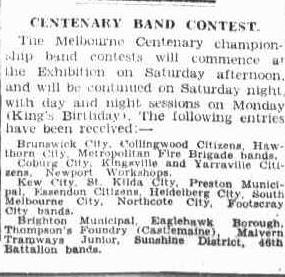
The Victorian centenary celebrations stretched into 1935, and a Melbourne Centenary Band Championship was held at the Exhibition Buildings under the auspices of the Victorian Bands’ League.  Like the South Street contests, this was another great event for bands, and twenty-one bands participated, as listed in the article below.

The Age, 28/05/1935, p. 11

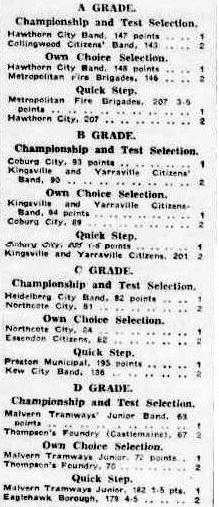
The main attraction of this event was a grand parade from Alexandra Avenue to the Exhibition Buildings and quickstep display on the Exhibition oval (“CENTENARY BAND CONTESTS,” 1935).  Again, the A Grade section continued the rivalries between Hawthorn, Melbourne Fire Brigade, Brunswick and Collingwood bands, with Hawthorn taking out the A Grade title (“CENTENARY GALA WEEK.,” 1935).  Another celebrated win was that of the Malvern Junior Tramways Band when they won their third D Grade title in a row.

The Age, 04/06/1935, p. 10

Conclusion:

What an intense period of activity for bands!  It is times like these that our bands came to the fore with all the ceremonial and contest activity, as well as local celebrations.  No doubt the communities appreciated the efforts and the entertainment.  Having a visiting band of the calibre of the Band of the Grenadier Guards made the Centenary celebrations even more special, and it was noted at the time that they were inspiring to local musicians.  The prevailing feeling when all was done was one of accomplishment, not just from the cooperation that made this all happen, but from all that understood the significance of the events.  It is not every day that a world-class military band and a Duke visits a band contest.

References:

BALLARAT AND DISTRICT. (1934, 08 June). Argus (Melbourne, Vic. : 1848 – 1957), 3. http://nla.gov.au/nla.news-article10944624

Ballarat Bandsman Invited To Join Grenadier Guards. (1935, 16 January). Sunraysia Daily (Mildura, Vic. : 1920 – 1950), 5. http://nla.gov.au/nla.news-article265838073

Band Contest For Centenary. (1933, 25 February). Sun News-Pictorial (Melbourne, Vic. : 1922 – 1954; 1956), 4. http://nla.gov.au/nla.news-article277163952

Band Contest Won By Mount Gambier : Judge’s Eulogistic Comments. (1934, 22 November). Portland Guardian (Vic. : 1876 – 1953), 4. http://nla.gov.au/nla.news-article64287397

BAND CONTESTS : OPENING AT BALLARAT. (1934, 02 November). Mercury (Hobart, Tas. : 1860 – 1954), 14. http://nla.gov.au/nla.news-article29165635

BAND CONTESTS : Three Bands Competing. (1934, 19 November). Portland Guardian (Vic. : 1876 – 1953), 5. http://nla.gov.au/nla.news-article64287383

BRILLIANT PLAYING : Ballarat Band Contest. (1934, 05 November). Evening Post, 9. https://paperspast.natlib.govt.nz/newspapers/EP19341105.2.61

British Pathé. (2014, 13 April). Melbourne Centenary (1934) [Video (Film Clip)]. YouTube. Retrieved 11 October 2024 from https://www.youtube.com/watch?v=C4DWQpyx4O0

Brown, S. L. (2015, 01 July). Victoria Day: Was secret gold behind 1851 separation from NSW? ABC Radio Melbourne,6584322. https://www.abc.net.au/news/2015-07-01/victoria-day-was-secret-gold-behind-separation/6584322

CENTENARY BAND CONTEST. (1935, 28 May). Age (Melbourne, Vic. : 1854 – 1954), 11. http://nla.gov.au/nla.news-article204361353

CENTENARY BAND CONTEST : Arrangements for Opening. (1934, 18 January). Age (Melbourne, Vic. : 1854 – 1954), 9. http://nla.gov.au/nla.news-article203377704

CENTENARY BAND CONTEST : Finals in Ballarat. (1933, 05 June). Argus (Melbourne, Vic. : 1848 – 1957), 9. http://nla.gov.au/nla.news-article4740383

CENTENARY BAND CONTEST : Proposed Opening by Prince George. (1934, 23 February). Age (Melbourne, Vic. : 1854 – 1954), 10. http://nla.gov.au/nla.news-article203376669

CENTENARY BAND CONTESTS. (1935, 31 May). Sunshine Advocate (Vic. : 1924 – 1954), 3. http://nla.gov.au/nla.news-article74757883

CENTENARY BAND CONTESTS : Mildura Band to Make Trip. (1934, 27 April). Sunraysia Daily (Mildura, Vic. : 1920 – 1950), 4. http://nla.gov.au/nla.news-article265690603

CENTENARY BAND CONTESTS : South-Street Prize Money. (1934, 13 April). Age (Melbourne, Vic. : 1854 – 1954), 7. http://nla.gov.au/nla.news-article203842698

CENTENARY GALA WEEK : BAND CONTESTS DECIDED : HAWTHORN CITY WINS A GRADE CHAMPIONSHIP : Malvern Tramway Juniors’ D Grade Treble. (1935, 04 June). Age (Melbourne, Vic. : 1854 – 1954), 10. http://nla.gov.au/nla.news-article204345548

CENTENARY PLANS TAKE SHAPE : Pageants, Exhibitions And Shrine Dedication : BIG MILITARY TATTOO. (1933, 11 May). Herald (Melbourne, Vic. : 1861 – 1954), 5. http://nla.gov.au/nla.news-article243112151

COLDSTREAM GUARDS BAND : Victorian Bandsmen Eager For Visit. (1933, 01 September). Argus (Melbourne, Vic. : 1848 – 1957), 8. http://nla.gov.au/nla.news-article11688130

de Korte, J. D. (2018a, 12 July). The A.B.C. Military Band: an ensemble of the times. Band Blasts from the Past: Anecdotes, Stories and Personalities. https://bandblastsfromthepast.blog/2018/07/12/the-a-b-c-military-band-an-ensemble-of-the-times/

de Korte, J. D. (2018b, 14 October). International band tours of the early 1900’s: bringing music to Australia. Band Blasts from the Past: Anecdotes, Stories and Personalities. https://bandblastsfromthepast.blog/2018/10/14/_international-band-tours-of-the-early-1900s-bringing-music-to-australia/

de Korte, J. D. (2018c, 15 March). The politics of affiliation: The Victorian Bands’ Association to the Victorian Bands’ League. Band Blasts from the Past: Anecdotes, Stories and Personalities. https://bandblastsfromthepast.blog/2018/03/15/the-politics-of-affiliation-victorian-bands-association-to-the-victorian-bands-league/

de Korte, J. D. (2019, 31 January). Bands on Australian islands: unique challenges in unique environments. Band Blasts from the Past: Anecdotes, Stories and Personalities. https://bandblastsfromthepast.blog/2019/01/31/bands-on-australian-islands-unique-challenges-in-unique-environments/

de Korte, J. D. (2020, 18 October). Testing times: the resilience of Australian bands during the Great Depression. Band Blasts from the Past: Anecdotes, Stories and Personalities. https://bandblastsfromthepast.blog/2020/10/18/testing-times-the-resilience-of-australian-bands-during-the-great-depression/

DEPARTURE OF H.M.S. SUSSEX. (1934, 09 October). West Australian (Perth, WA : 1879 – 1954), 17. http://nla.gov.au/nla.news-article32803514

DUKE AT BALLARAT : AMONG THE BANDS : A WOOLSTON HAKA. (1934, 02 November). Evening Post, 10. https://paperspast.natlib.govt.nz/newspapers/EP19341102.2.102.1

Duke of Gloucester to Come Here for Centenary Celebrations : AFRICAN TOUR TIRED PRINCE GEORGE. (1934, 05 May). Weekly Times (Melbourne, Vic. : 1869 – 1954), 5. http://nla.gov.au/nla.news-article223836381

FAMOUS BAND EXPECTED : Grenadier Guards for Centenary. (1934, 05 June). Herald (Melbourne, Vic. : 1861 – 1954), 1. http://nla.gov.au/nla.news-article243175540

GRENADIER GUARDS BAND. (1934, 25 October). Great Southern Advocate (Korumburra, Vic. : 1889 – 1906, 1914 – 1940), 5. http://nla.gov.au/nla.news-article255918717

GRENADIER GUARDS BAND HAS WONDERFUL WELCOME. (1934, 22 October). Age (Melbourne, Vic. : 1854 – 1954), 15. http://nla.gov.au/nla.news-article205884483

Grenadier Guards’ Band. (1934, 27 August). Age (Melbourne, Vic. : 1854 – 1954), 13. http://nla.gov.au/nla.news-article205524735

GUARDS’ BAND VISIT : Centenary Tour Almost Certain. (1933, 10 October). Age (Melbourne, Vic. : 1854 – 1954), 8. http://nla.gov.au/nla.news-article205104515

Kingtson, C. (Ed.). (1934). Grenadier Guards Band : Australia and New Zealand 1934-5 : By Special Permission of His Majesty the King : Official Souvenir : Tour under the Auspices of the Commonwealth Government and the New Zealand Government : In associaion with the Cenenary Celebrations Council of Victoria  [Printed programme]. Grenadier Guards Band. 

Kneller Hall. (1934, 27 July). THE BANDS : News and Views : WELLINGTON AND BALLARAT. Dominion, 13. https://paperspast.natlib.govt.nz/newspapers/DOM19340727.2.98

McCubbin, M. (2008). Centenary. In eMelbourne: the city past & present (pp. EM00316b). https://www.emelbourne.net.au/biogs/EM00316b.htm: The University of Melbourne, School of Historical & Philosophical Studies.

Melbourne Day. (2024). More marvellous than ever: FAQs: What is Melbourne Day? Melbourne Day: 30th August. Retrieved 26 October 2024 from https://www.melbourneday.com.au/about.html

Mildura & District Band, 1930s. (1930). [Photograph]. [phot6314]. The Internet Bandsman Everything Within, Vintage Brass Band Pictures – Australia. http://www.ibew.org.uk/vbbp-oz.html

Musician. (1933, 11 September). GUARDS’ BAND VISIT. Herald (Melbourne, Vic. : 1861 – 1954), 6. http://nla.gov.au/nla.news-article243423748

NEW ZEALAND BAND TO VISIT MELBOURNE. (1933, 13 October). Telegraph (Brisbane, Qld. : 1872 – 1947), 27. http://nla.gov.au/nla.news-article180593124

Phillip Island Brass Band, 1932. (1932). [Photograph]. [phot16005]. The Internet Bandsman Everything Within, Vintage Brass Band Pictures – Australia. http://www.ibew.org.uk/vbbp-oz.html

Pleasant Street School Band, Ballarat, 1933. (1933). [Photograph]. [phot20817]. The Internet Bandsman Everything Within, Vintage Brass Band Pictures – Australia. http://www.ibew.org.uk/vbbp-oz.html

PROVINCIAL CITIES AND TOWNS : BALLARAT. (1934a, 29 October). Age (Melbourne, Vic. : 1854 – 1954), 13. http://nla.gov.au/nla.news-article205882825

PROVINCIAL CITIES AND TOWNS : BALLARAT. (1934, 05 November). Age (Melbourne, Vic. : 1854 – 1954), 12. http://nla.gov.au/nla.news-article205083970

Royal South Street Society. (1934a). 1934-10-31 Brass Band Solos : Held at the A.N.A. Hall, Camp Street [Eisteddfod Results]. Royal South Street Society Results Database. https://results.royalsouthstreet.com.au/results/1934-10-31-brass-band-solos 

Royal South Street Society. (1934b). 1934-11-01 Brass Band Contests : Held at City Oval : Grand Champion Centenary Band Contests [Eisteddfod Results]. Royal South Street Society Results Database. https://results.royalsouthstreet.com.au/results/1934-11-01-brass-band-contests 

Royal South Street Society. (1934c). 1934-11-02 Brass Band Contests  : Held at City Oval [Eisteddfod Results]. Royal South Street Society Results Database. https://results.royalsouthstreet.com.au/results/1934-11-02-brass-band-contests 

Royal South Street Society. (1934d). 1934-11-03 Brass Band Contests  : Held at City Oval [Eisteddfod Results]. Royal South Street Society Results Database. https://results.royalsouthstreet.com.au/results/1934-11-03-brass-band-contests 

Royal South Street Society. (1934e). [South Street “Centenary” : Brass Band Contest : A, B, C and D Grades]. In S09 – Programs (Printed programme ed., pp. 14). Ballarat, Victoria https://victoriancollections.net.au/items/5d425e0c21ea6b1a84382033: Victorian Bands’ League Archive.

Royal South Street Society. (1979). Royal South Street Society : The First One Hundred Years. Royal South Street Society. 

ShrineMelbourne. (2013, 09 January). The Dedication of the Shrine of Remembrance – Remembrance Day 11 November 1934 [Video (Film Clip)]. YouTube. Retrieved 26 October 2024 from https://www.youtube.com/watch?v=jHcaXEpVdRA

Sunraysia, Land of Sunshine Greets The Duke : Prince Henry Is Our First Royal Guest. (1934, 31 October). Sunraysia Daily (Mildura, Vic. : 1920 – 1950), 21. http://nla.gov.au/nla.news-article265829018

The Shrine of Remembrance Trustees. (1934). The National War Memorial of Victoria : Aerial View of Dedication Ceremony [Postcard]. [No. 3]. The Shrine of Remembrance Trustees, Great Britain. 

To Visit Australia. (1934, 13 October). Dominion, 13. https://paperspast.natlib.govt.nz/newspapers/DOM19341013.2.116.5

Victoria’s Centenary. (1932, 06 November). Scrutineer and Berrima District Press (NSW : 1892 – 1948), 4. http://nla.gov.au/nla.news-article125232791

Victoria’s Centenary. (1933, 04 November). Record (Emerald Hill, Vic. : 1881 – 1954), 2. http://nla.gov.au/nla.news-article164468392

Victoria’s Centenary. (1934, 12 April). Chronicle (Adelaide, SA : 1895 – 1954), 39. http://nla.gov.au/nla.news-article92354462

VISIT TO BALLARAT : Desired for Band Competition. (1934, 01 March). Age (Melbourne, Vic. : 1854 – 1954), 10. http://nla.gov.au/nla.news-article203834255

YALLOURN NEWS : Yallourn Band. (1934, 08 November). Morwell Advertiser (Morwell, Vic. : 1888 – 1954), 9. http://nla.gov.au/nla.news-article71564079

A pastime with a purpose: band music in our institutions and the fourth prison band in the world.

Royal Victorian Institute for the Blind Band. ca. 1890. (source: State Library Victoria: cr001189)

Please note: This blog post has drawn upon information from photographic and print resources whereby the names of managers and deceased persons from former orphanages, secure health institutions, and penal institutions may have been mentioned.  Also, there are depictions of the recreational activities of such institutions described in this blog post. 

Introduction:

…undoubtedly music had a fundamental relationship to humanity.  It softened and soothed the hardness and harshness of life.

(Hotson in “Sunday Night Meeting AT THE SOCIALIST HALL,” 1920)

If there is one aspect of our band movement that has stood the test of time it is a willingness to play for all and encourage participation in music making.  One might say it goes with the territory.  However, our bands are special groups, and at times, they have performed for people who are in life situations where they are separated from general society.  It was judged at the time, rightly or wrongly, that this was necessitated, but it is not for this post to comment on the why.  It is the purpose of this post to highlight where band music has made a difference to the lives of the people within various institutions.

Let us turn back time to the early 1900s where we will find that the description, function, and language of these institutions is very different to what we know now.  It was not uncommon to read early newspapers and reports which mention Prisons and Orphanages, but also Lunatic Asylums, Benevolent Asylums, and Colonies.  It was also not uncommon in the newspapers to label anyone who was resident at these institutes as inmates – even hospitals.  The language of this post will draw upon the language of the time with its early usage and naming conventions, even if we are uncomfortable with this language in our own time.

Music had a role to play in such institutes, not only for listening but also for making and participating.  In the early 1900s, much thinking was being given to the humane way in which the people in the institutes could be treated and kept occupied, and music was a key activity.  We can view this as early forms of music therapy and there were some very forward-thinking people who made sure that music, partly through bands, became a staple part of the institutional routines.

At the start of this post is an early photograph of the (R.V.I.B.) Royal Victorian Institute for the Blind Brass Band from approximately 1890 which clearly displays how a meaningful activity such as a band was accessible.  This post will firstly show how bands made a difference through performances as many different institutions invited bands to come and play for their residents.  The next sections will highlight bands that were set up in institutes such as Orphanages, special institutes, and prisons.  This post will not be able to cover all forms of music making.  However, it will show how pervasive our band music was and how music was a pastime with a purpose.

Listening to music:

The institutions:

Several bands including the State Public Service Band, the Essendon and Moonee Ponds Salvation Army Band, and several other concert parties have kindly given concerts during this year.  These entertainments are very much appreciated and do much towards relieving the monotony of the patients’ lives. 

(Adey in Victoria. Lunacy Department, 1927b, p. 19)

There was no shortage of thanks given to bands for the work they did in these years, this mention by Mr. John K. Adey, then Medical Superintendent of the Hospital for the Insane, Sunbury being just one of them.  Aside from the two bands that are mentioned above, several other bands gave their services to the various Victorian Lunacy Department institutions including the Victorian Police Band, the Northcote Band (who visited the Hospital for the Insane, Ararat in 1925), the Beechworth Town Band, and the Essendon City Band (Victoria. Lunacy Department, 1914, 1927a, 1928).

Victorian Public Service Military Band. Herald, 06/06/1940, p. 7

This is just one series of examples noting bands visiting asylums, but why were they there? Firstly, these asylums were not pleasant places to be in, and too often we dwell on the negativity surrounding them, articles in the modern media being a prime example of focusing of the negativity of old asylums (Kamm, 2018; Pike, 2015).  This perception of negativity is a holdover from the early part of last century where the public knew very little about what went on inside these asylums because they were, essentially isolated. As Ann Hardy (2019) notes in her blog post about perceptions and lost voices of the asylum,

Asylums were considered as having unsuitable management, and not providing adequate care, and being isolated only fuelled negative ideas about them and further pushed institutions and inmates out of societies view. 

(Hardy, 2019)

Research by Dolly MacKinnon, however, shows that some social practices permeated the operations of asylums.  In a journal article about musical concerts in Queensland asylums, she wrote,

The insane were kept out of the public eye, yet the social and cultural values and practices of the times provided the filter through which appropriate musical recreation and employment were determined.” 

(MacKinnon, 2000, p. 43)

In a later article she challenges the perceptions of the asylum.

Stereotypical views of asylums or mental hospitals do not conjure up images of recreation and entertainment, but rather places of isolation, gendered confinement, and boredom.  Yet within the surviving Australian institutional records (from 1860 to 1945) it is clear that medical and lay staff, patients, and volunteers went to great lengths to provide entertainment and recreation of asylum inmates.

(MacKinnon, 2009, p. 128)

She further writes that,

…between the 1860s and circa 1945 the provision of recreation for Australian psychiatric inmates came from three main sources; paid professional groups, volunteers (from both inside and outside the asylum), and the asylum band.  Asylums made continuous and strenuous efforts to include the community in many of these activities.  Those that did volunteer were publicly thanked in their efforts by the medical staff.

[…]

Recreation was one of the few asylum activities that attempted, albeit in a highly regulated way, to encourage patients to respond and interact in appropriate ways in a social, physical, as well as an emotional sense.” 

(MacKinnon, 2009, p. 134 & 145)

The presence and performances of bands in these kinds of institutions was very important to the well-being of patients and staff.

The bands:

Herald, 05/02/1917, p. 6

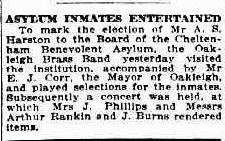
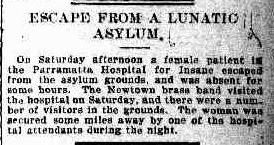
It was not uncommon for bands of this time to go and support these institutions either through their playing at the institution or by raising money through other means.  We can see this through articles published in the newspapers of the day and the reports that were submitted to the government of the day.  An article published in an August 1904 issue of the Daily Telegraph newspaper from Sydney tells us that the Newtown Brass Band played at the Parramatta Hospital for the Insane and there were a number of visitors in the grounds to listen to them  – although one the inmates escaped during the performance.  (“ESCAPE FROM A LUNATIC ASYLUM.,” 1904).  The Oakleigh Brass Band from Melbourne were quite active in this area of performance and the Talbot Colony for Epileptics and the Cheltenham Benevolent Asylum were two of the beneficiaries of their visits (“ASYLUM INMATES ENTERTAINED,” 1917; “Talbot Colony for Epileptics,” 1914).

Daily Telegraph, 15/08/1904, p. 7

General Hospitals also hosted performances of brass bands as they sought to bring some music and entertainment before their patients and staff.  The Lakes Creek Brass Band (pictured below) was booked to play at the Rockhampton General Hospital at various times during 1914 (“THE LAKE’S CHEEK BRASS BAND.,” 1914).  Likewise, the Darwin Brass Band paid a surprise visit to the Darwin Hospital to play a selection of music at Christmas time, a performance that was very much appreciated by the audience and communicated to the band by the Matron in charge (“XMAS AT THE HOSPITAL.,” 1920).

The Lakes Creek Brass Band, 1909. (source: IBEW)

As well as boasting their own significant music program which once included a brass band, the Royal Victorian Institute for the Blind also hosted performances by various musical groups.  The employees of the Melbourne and Metropolitan Tramways Board generously gave their time to provide some entertainment for the Institute and part of this entertainment included items played by the Malvern Tramways Band (“TRAMWAYS ENTERTAIN BLIND FOLK.,” 1925).  Likewise, in later years, the bands of the Victoria Police (pipe and brass) also gave their time to play for the R.V.I.B. (“Police help for Blind Institute,” 1947).

Of course, the band movement in Australia was not alone in the way they provided music for these institutions.  The band movement in Aotearoa New Zealand was similarly engaged in doing the same kinds of performances.  For example, in the Te Waipounamu South Island city of Christchurch, on the Sunday before Christmas each year all the bands in the city would turn out to perform at various institutions and hospitals (“BANDS’ VISITING DAY,” 1938).

Press, 19/12/1939, p. 13

And as mentioned, the bands turned out for charitable events to aid in the care of the infirm.  In one instance, the newly-formed Richmond Boys’ Band was featured in an article published by the Richmond Guardian newspaper when they assisted at an event to provide support for the Blind Soldiers’ Fund (“Richmond Boys’ Brass Band,” 1918).

The work of the Salvation Army bands should also be noted as they were also very active in this area of performance. Below is a photo of a Salvation Army Band visiting the Peel Island Lazaret which was a facility to house Queensland sufferers of Leprosy.

Salvation Army Brass Band visiting Peel Island Lazaret (Qld.) during 1920s. (source: State Library of Queensland: 74802)

There was no doubt that the bands were busy in this area of performance, and full credit to the work that they did. 

Music-making:

Postcard: St. Augustine’s Orphanage Band. Champions of Australia, 1906 (source: Jeremy de Korte Collection)

While the workings of the Lunatic Asylums were virtually unknown to the public at the time, the same could not be said for other institutions such as the Blind Institutes and the Orphanages.  And both mentioned types of institutions promoted their musical activities to the extent that the bands attached to them had excellent reputations.  The musicians that both programs produced were very good and in Victoria for example, while some former R.V.I.B. musicians did display their talents outside the Institute, the Orphanages were better known for producing some of Australia’s finest brass musicians.  This section will briefly examine the music-making at both forms of institutions.

The Royal Victorian Institute for the Blind:

Lantern Slide: Royal Victorian Institute for the Blind Orchestra, 1900. (source: Museum Victoria Collections: MM 95962)

Music-making at the R.V.I.B. was an activity that was immersed in the daily routines of the students, and this involved singing, piano, organ, a string orchestra, and a brass band.  A first mention of a brass band at the R.V.I.B. is made in an article published by The Age newspaper as far back as 1874 where they played “The Standard Bearer March with excellent precision and time” (“DEAF AND DUMB INSTITUTE AND BLIND ASYLUM.,” 1874).

It appears that the Institute’s musicians were sent out to tour and raise funds as soon as they could do so.  Judith Buckrich, in her book on the history of the R.V.I.B, details some of the tours of the musicians, and even in the earlier years, the touring was quite extensive.  From an Institution that started in 1866, to have musical groups sent to various places in Victoria by 1877 was a remarkable achievement.

The Asylum’s musicians and singers were often on the road.  In 1877, the choir gave concerts in Taradale, Kyneton, Castlemaine, Sandhurst, Eaglehawk, Echuca, Maryborough, Chinaman’s Flat, Stawell, Ararat, Beaufort, Learmonth and Ballarat.  The band performed in Emerald Hill, Eltham, Dandenong, Footscray, Berwick and other places.  They earned £827 for the Asylum.

(Buckrich, 2004, p. 36)

Reflecting on music-making at the Institute as a whole, some writers asserted that the musicians at the R.V.I.B were performing at a higher standard than amateurs. A writer under the pseudonym of ‘Assistant Needlewoman’ wrote an expansive article for the Argus newspaper in June 1886 in which she meticulously detailed the workings of the Institute (Assistant Needlewoman, 1886).  She offered this considered opinion of the musical skills of the students.

While the musical world of Melbourne is divided as to whether there shall be a chair of music, a conservatoire, or whether, as would be best, we should be content for the present with a grand orchestra, the material for which is almost ready to hand, the claims of this well-known and deserving institutions are entirely overlooked.  With one conscientious and painstaking music teacher, upon whom is laid the Herculean task of giving instruction in piano, organ, and solo-singing, the pupils of the Blind Asylum have already done enough to show that they are worthy of the best professional training to be had.

(Assistant Needlewoman, 1886)

The article by ‘Assistant Needlewoman’ correlates with the history detailed by Buckrich as in 1888, there are some detailed accounts of how many students are involved in music-making.

Members of the choir and band numbered twenty-nine, and some students were members of both.  Eighteen students were being taught the piano and two, the organ.  Many concerts have been given during the year and this activity had earned the institution the tidy sum of £480 after expenses.  It seems that the choir and band now enjoyed free travel on the railways.

(Buckrich, 2004, p. 50)

Four years after the article penned by ‘Assistant Needlewoman’, a writer with the pseudonym of ‘Benvolio’ visited the R.V.I.B. and was most impressed with what he saw during his visit – “All will agree that the Victorian Asylum and School for the Blind is one of the most humane establishments in the colony…” (Benvolio, 1890).  He wrote an article for the Illustrated Sydney News newspaper which was just as detailed as the article written by four years earlier.  Benvolio’s remarks on the music program provide us with some additional insight.

…in most cases, they find outside employment, either at their trades or in teaching music, for which most of them display a wonderful aptitude, one of the former pupils being a very successful teacher in one of the suburbs, and at present bandmaster of the Asylum, which boasts a very efficient brass band and string band, besides a senior and junior choir, and several very capable solo vocalists and pianists, to say nothing of the more advanced pupils referred to, whose performances on the organ are astonishing.

(Benvolio, 1890)

As mentioned, musical groups such as the choir and string orchestra frequently went on tour and we can see that in some Victorian and Tasmanian towns, the visits were precluded by letters in the local newspapers explaining the charitable situation of the Institute (Hogarth, 1897; Winkelman, 1897).  The R.V.I.B. was always in need of funds and “one sources of funding that remained reliable was the concerts given by its various bands, orchestras and choirs.” (Buckrich, 2004, p. 58).  While the R.V.I.B. groups were in the towns, they were assisted by many of the town’s folk – and the local bands.  In two instances, the Ulverston Brass Band and the Rutherglen Brass Band were thanked for their help (Hogarth, 1900; “Victorian Institute for the Blind.,” 1893).

In the early 1890s we can see that the list of engagements for the band was not so much in towns and tours, but for specific events.  The “Royal Agricultural Society Annual Show”, “Roman Catholic Bazzaar, Albert Park”, “Miss Turner Grammar School Sports”, and the “Caulfield Grammar School Sports” are just some of the engagements the band performed at during 1892 (Buckrich, 2004, pp. 58-59).

The work of the R.V.I.B. was expanded during the First World War to help returned soldiers who had become vision impaired and blind, and the choir and band “gave several concerts at the Base Hospital, as well as the Soldiers’ Lounge in St Kilda, to assist the Red Cross with funds” (Buckrich, 2004, p. 82).  It is unclear as to the official status of the band in future years after the early 1900s.  However, the music department is still an integral part of the Institute.

Seventy-three students received instruction in music during 1922 – mainly in pianoforte, violin. Class and solo singing, flute, cornet and other band instruments, harmony, counterpoint, and the art of teaching.

(Buckrich, 2004, p. 95)

The Orphanages:

The Largs Bay Orphanage Band. The Chronicle, 11/11/1922, p. 29

Admittedly, there is so much material on the exploits of the many Orphanage bands that they warrant a whole post just to unravel the fine work they did with their bands.  And unfortunately, this post will gloss over most of the achievements of these groups.  However, they do fit into this context of this post as the bands were set up to provide a musical activity to the routines of Orphanage boys and girls.  The newspaper photo above of the Largs Bay Orphanage Band shows an Orphanage band that was unique in Australia as all the band members were female – this band was also mentioned in a previous post (de Korte, 2018).

Orphanage bands in Australia were a copy of practices in England where the teaching of music in boys’ institutions was commonplace (Sheldon, 2009).  There was, however, a major difference to the outcomes of this musical education between the two countries.  Boys who were trained as musicians in English institutions readily found themselves recruited into the bands of the British Army and Navy (Sheldon, 2009).  Whereas the musicians that graduated from the Orphanage bands in Australia found themselves positions in the wider band movement.   Sheldon (2009) identified some benefits to music education in British institutions which were applicable to Australian Orphanages.

The evidence from the boys’ letters shows that they valued the intrinsic benefits of belonging to the band and learning an instrument.  For some poor boys, musical education offered a relief from the rigours of institutional care in circumstances where there were few pleasures on offer.

(p. 747)

We know that Orphanage bands in Australia have had a long and distinguished history, as well as enviable reputations.  The St. Augustine’s Band from Geelong is probably the most famous of them all, and it is mentioned that by 1898 they were already putting the call out for a new set of instruments (“ST. AUGUSTINE’S ORPHANAGE BAND.,” 1898).  St. Augustine’s went on to win many competitions at South Street in Ballarat and toured extensively – in one instance, in 1906 they won the A Grade Championships at South Street (Royal South Street Society, 1906).  The band at St. Vincent’s de Paul in Melbourne was no less famous than their counterpart in Geelong and in 1921 they gained the services of Mr. Leslie Hoffman, a graduate of the St. Augustine’s Band, as their conductor (“St. Vincent’s Bandmaster,” 1921).  The Minton Boys’ Home Band in Frankston gained the services of another champion Geelong bandsman, Mr. Harry Shugg, when he became their instructor in 1928 (“BOYS’ BAND.,” 1928; Davies, 2005).  In Ballarat the boys at St. Joseph’s Orphanage Band were conducted by the very famous Frank Wright (pictured below) (St Joseph’s Orphanage Brass Band, 1924, 1924).

Frankston and Somerville Standard, 20/04/1928, p. 4
St. Joseph’s Orphanage Brass Band, 1924. (source: Victorian Collections: Federation University Historical Collection: 11049)

With so much talent from the Australian band movement involved in the music education areas of the Orphanages, it is no wonder that the bands did as well as they did.  As well as being an activity to occupy the minds of the Orphanage boys and girls, it also gave them a sense of purpose and achievement.

Westmead Orphanage Boys’ Band. Southern Cross, 30/10/1936, p. 10

The fourth prison band in the world:

The clock in the prison tower strikes the hour of midday. The prison brass band – a dozen trained prisoners – has fallen in on the grass plot in the central quadrangle.  At a signal from the official in charge it bursts into an inspiring rendition of Off to Glory march.  There may be dilletante criticism of the music’s aesthetic quality.  There can be no doubt of its volume and its lilting spirit.

(“A NEW PENTRIDGE.,” 1923)

Pentridge Prison really needs no introduction as an institution as innumerable stories have sprung from its bluestone walls.  It was not a place that immediately springs to mind as a place for music-making. Yet that is exactly what happened in the early 1920s.  Pentridge Prison became the institution that hosted the fourth prison band in the world.

Up until the early 1920s, Pentridge Prison was operated like many other prisons in Victoria under the governance of the Penal and Gaols Department.  Reports on the on Victorian prisons from this time were not very informative and focused mainly on statistics – the reports of 1922 and 1923 being prime examples (Penal and Gaols Department, 1923, 1924).  Conditions for the Victorian prisoners were hardly humane as prisons “had been designed to ensure prisoner separation” (Paterson, 1997, p. 134).  However, as Paterson (1997) and Wilson (2014) identified in their respective research papers into the history of Victoria’s prison system, it is in the early 1920s when the Penal and Gaol Department, and Pentridge Prison, underwent a series of reforms.  The key to these reforms was prisoner education and music-making was a strong part of this.

Efforts by people such as Mr. Gibson Young, an eminent Melbourne musician with strong managerial skills and an association with the brass band movement, sought to bring music into Pentridge through community singing.  In 1921 he had the full intention of running community singing in the gaols. 

Now that the Music Week organisation has been placed on a more or less permanent basis, my executive committee is anxious to do all in its power to bring the good tidings of music into every department of civic life, and realises that no better opportunity for upliftment exists than among the prisoners in our gaols.

(Young, 1921)

While community singing was useful as an ad hoc form of recreation and a break in the prison routine, the new governor of the Pentridge in 1922, Major Walter Condor, had bigger ideas and he wanted to form a brass band.  His plans were outlined at the Tattersalls Club in Melbourne where he was trying to solicit donations for three pianos at Pentridge (“PIANO FOR PENTRIDGE,” 1922).  Major Condor, having previously overseen the A.I.F. camp at Langwarrin, had very firm ideas about making Pentridge a much more humane place for the prisoners and introducing educational reforms.

To the strains of “home, Sweet Home,” Victorian criminals may yet be welcomed back to the prisons after new convictions.  The provision of music for prisoners is one of the ideals of the governor of Pentridge Major Condor, and he hopes for much from such an experiment in the reclamation of the State’s “Bad Hats.”

[…]

Major Condor said that one of the most humanising things was work, and next to that was music.

 (“PIANO FOR PENTRIDGE,” 1922)

Ten days later, Major Condor gained further support for a brass band at a conference of the National Federation at Ballarat where some delegates thought it was a very good idea.  A Dr. Booth thought his “idea was a good one” and that “It was essential that the prisoners should not only have plenty of work to do, but the mind should be occupied after working hours.” (“A PRISONERS’ BAND.,” 1922).  And so, the brass band at Pentridge was created.

At first it was conducted by Mr. Gibson Young, and he had obviously used his contacts in the brass band movement to get the instruments and music that were needed – the Coburg Brass Band and Malvern Tramways Band were two bands that are mentioned as having donated these items (Cremona, 1923).  Mr. Young, who was associated with the Malvern Tramways Band, had apparently “remarked that Major Condor might try to inveigle members of the Malvern Tramways Band into Pentridge to strengthen the personal of his band” (Cremona, 1923).  One wonders what Mr. Harry Shugg, then conductor of the MTB, might have thought of this remark (if he knew about it).

An article published in The Herald newspaper in February 1923 gives us some insight into the way music has begun to transform life at Pentridge.

There are already 15 men in the band.  Some of them have had experience in regimental bands, some of have been connected with various bands that are not known in Pentridge.  Others have just “taken to music” as the best means of whiling away the time until they can know again outside of the walls.

 (“PRISON DE LUXE,” 1923)

By April 1923, the work that was taking place at Pentridge was noticed by the Chief Secretary, a Mr. Baird who was most impressed with what he saw in the music-making and the effect it had on prisoners (“IMPROVEMENTS AT PENTRIDGE,” 1923).  And some months later, Pentridge was a prison that was well on the way to reformation, all under the watch of Major Condor (“A NEW PENTRIDGE.,” 1923).  Mr. Gibson Young, the bandmaster of the prison band and conductor of the community singing, left his position (and Australia) in September 1923 and was presented with a gold-mounted baton by the band (“GAOL MUSIC,” 1923).  

Mirror, 22/09/1923, p. 2

Major Condor left the prison in November 1923 to try a new career radio broadcasting (Thomas, 2006).  While he had only been governor at Pentridge for eighteen months, he had overseen substantial reforms that benefited the prisoner population and facilities.  

He gave the prisoners more healthful surroundings, brightened their quarters, permitted slight decorations of the cells, and with a colour scheme has banished gloom from the long corridors.  He gave them a brass band, Saturday and Sunday concerts, taught them games, improved their methods of working at trades by installing electric machinery in the shops, and increased their self-respect.

 (“MR. CONDER.,” 1923)
Herald, 06/02/1926, p. 17

On a slightly humorous note, a letter was published in the Labor Call newspaper apparently from a prisoner at Pentridge.  In this letter, he provides his ‘opinion’ on the band.

Our brass (very brass) band keeps a fellow from getting the “blues,” except when they play “Home, sweet home.” We are going to petition against the tune, as it only applies to the “Gov.” himself – he has a good home here.” 

(No. —, 1924)

The band at Pentridge prison kept going from strength to strength at from these early years and were noted by all that saw them perform.  They were, or course, part of a bigger picture of reform at the prison, and Pentridge was no longer seen as a dull institution (“AN HOUR IN PRISON.,” 1927).  The band had established themselves quite a bit over the subsequent years, to the extent that the Governor of Pentridge at the time, Mr. J. Brown, thought that the prisoners at Pentridge led all other prisoners in Australia in their musical abilities – he wanted them to go up in musical competition with the prisoners at Goulburn prison.  (“GAOL MUSIC DERBY,” 1935).

Literally there is music in the air at Pentridge every day.  An accomplished brass band of 26 instruments, led by Warder George Williams, plays marches and waltzes as the gangs go to and from their labours at the lunch hour.

(“GAOL MUSIC DERBY,” 1935)

On a side note, when researching this post, this author learned that the Cornet used by Warder George Williams was donated to the Coburg Historical Society in 1978. 

Herald, 17/01/1938, p. 11

The Pentridge Brass Band lost the services of bandmaster Warder Williams in 1938 when he moved to Geelong to become an attendance officer for the Education Department (“FAREWELL TO PRISON BAND CONDUCTOR,” 1938).  Depending on which source is accessed, he was the conductor of the band for seven to ten years.  Evidently, the band was still in operation in the early 1950s as they were mentioned in an article published by The Herald newspaper about the new prison brass band which had been established in the Ballarat Gaol (“HARMONY IN GAOL,” 1951).  In 1954, the State Government spent £1,000 for a whole new set of instruments for the Pentridge Brass Band (“News of the Day,” 1954).

Herald, 12/11/1951, p. 5

It is unclear what happened to the Pentridge Prison Brass Band after the 1950s due to a scarcity of available records, and unfortunately, this author was unable to locate a picture of the band.  However, it is evident that the band had a very positive effect on the prisoners and staff, and that it fitted into the reforms that swept over the Victorian prison system.  

Conclusion:

There were many different types of music-making in these institutions, some which was kept hidden and others that were very much out in the open.  However, whatever the type of institution, the singular aim was to improve the mind with wholesome activities.  Music was the perfect activity, and bands were the outcome.  This was music therapy at its best.

References:

Assistant Needlewoman. (1886, 26 June). AMONG THE BLIND: THE VICTORIAN ASYLUM AND SCHOOL. Argus (Melbourne, Vic. : 1848 – 1957), 4. http://nla.gov.au/nla.news-article6099966

ASYLUM INMATES ENTERTAINED. (1917, 05 February). Herald (Melbourne, Vic. : 1861 – 1954), 6. http://nla.gov.au/nla.news-article242459034

BANDS’ VISITING DAY. (1938, 19 December). Press,13. https://paperspast.natlib.govt.nz/newspapers/CHP19381219.2.115

Benvolio. (1890, 02 August). MELBOURNE INSTITUTIONS: THE VICTORIAN ASYLUM AND SCHOOL FOR THE BLIND. Illustrated Sydney News (NSW : 1881 – 1894), 9. http://nla.gov.au/nla.news-article63615405

BOYS’ BAND. (1928, 20 April 1928). Frankston and Somerville Standard (Vic. : 1921 – 1939), 4. http://nla.gov.au/nla.news-article74994629

Buckrich, J. R. (2004). Lighthouse on the boulevard : a history of the Royal Victorian Institute for the Blind, 1866-2004. Australian Scholarly Publishing. 

CONCERT BY WESTMEAD ORPHANAGE BOYS’ BAND. (1936, 30 October). Southern Cross (Adelaide, SA : 1889 – 1954), 10. http://nla.gov.au/nla.news-article167081032

Conder, W. T. (1926, 06 February). One Year of Broadcasting. Herald (Melbourne, Vic. : 1861 – 1954), 17. http://nla.gov.au/nla.news-article244058874

Cremona. (1923, 02 April). MUSIC AND MUSICIANS : CURRENT GOSSIP. Herald (Melbourne, Vic. : 1861 – 1954), 6. http://nla.gov.au/nla.news-article243801873

Davies, S. A. (2005). One thousand white onions : a history of caring for children from 1865. Menzies. 

de Korte, J. D. (2018, 22 April). Early female brass bands in Australia: they were rare but they made their mark. Band Blasts from the Past : Anecdotes, Stories and Personalities. https://bandblastsfromthepast.blog/2018/04/22/early-female-brass-bands-in-australia-they-were-rare-but-they-made-their-mark/

DEAF AND DUMB INSTITUTE AND BLIND ASYLUM. (1874, 18 December). Age (Melbourne, Vic. : 1854 – 1954), 3. http://nla.gov.au/nla.news-article201534539

ESCAPE FROM A LUNATIC ASYLUM. (1904, 15 August). Daily Telegraph (Sydney, NSW : 1883 – 1930), 7. http://nla.gov.au/nla.news-article236885955

FAREWELL TO PRISON BAND CONDUCTOR. (1938, 17 January). Herald (Melbourne, Vic. : 1861 – 1954), 11. http://nla.gov.au/nla.news-article244947562

GAOL MUSIC. (1923, 22 September). Mirror (Perth, WA : 1921 – 1956), 2. http://nla.gov.au/nla.news-article77760324

GAOL MUSIC DERBY. (1935, 20 June). Telegraph (Brisbane, Qld. : 1872 – 1947), 15. http://nla.gov.au/nla.news-article182259204

Group of men wearing band uniforms and holding their brass instruments, R.V.I.B. [picture]. (1890). [negative : glass 16.3 x 21.4 cm. (full plate)]. [cr001189]. State Library Victoria, RVIB collection of glass negatives. http://handle.slv.vic.gov.au/10381/32332

Hardy, A. (2019). “Islands of the Insane” – our records, perceptions and the lost voices from the ‘asylum’. Hunter Living Histories : University of Newcastle. https://hunterlivinghistories.com/2019/10/16/islands-insane/

HARMONY IN GAOL. (1951, 12 November). Herald (Melbourne, Vic. : 1861 – 1954), 5. http://nla.gov.au/nla.news-article247850691

Hogarth, J. T. (1897, 05 April). ROYAL VICTORIAN INSTITUTE FOR THE BLIND : To the Editor. Ballarat Star (Vic. : 1865 – 1924), 1. http://nla.gov.au/nla.news-article210364264

Hogarth, J. T. (1900, 22 May). ROYAL VICTORIAN INSTITUTE FOR THE BLIND : To the Editor. Rutherglen Sun and Chiltern Valley Advertiser (Vic. : 1886 – 1957), 3. http://nla.gov.au/nla.news-article268489459

AN HOUR IN PRISON : VISIT TO PENTRIDGE. : Where Gloom is Dispelled. (1927, 14 December). Recorder (Port Pirie, SA : 1919 – 1954), 1. http://nla.gov.au/nla.news-article96058047

IMPROVEMENTS AT PENTRIDGE : FOURTH PRISON BAND IN WORLD. (1923, 23 April). Ballarat Star (Vic. : 1865 – 1924), 8. http://nla.gov.au/nla.news-article213810752

Kamm, R. (2018, 28 February). Life inside Victoria’s 19th-Century ‘Lunatic’ asylums. Vice Media Group. Retrieved 13 September 2020 from https://www.vice.com/en_au/article/vbpqwj/life-inside-victorias-19th-century-lunatic-asylums

THE LAKE’S CHEEK BRASS BAND. (1914, 27 February). Morning Bulletin (Rockhampton, Qld. : 1878 – 1954), 6. http://nla.gov.au/nla.news-article53319792

Lake’s Creek Brass Band, Rockhampton. (1909). [Photograph]. [phot20842]. The Internet Bandsman Everything Within, Vintage Brass Band Pictures – Australia. http://www.ibew.org.uk/vbbp-oz.html

MacKinnon, D. (2000). ‘A captive audience:’ Musical concerts in Queensland mental instituions c.1870-c.1930. Context: A Journal of Music Reseach, Spring(19), 43-56. https://cpb-ap-se2.wpmucdn.com/blogs.unimelb.edu.au/dist/6/184/files/2017/01/19-5-A-captive-audience-172c2wo.pdf

MacKinnon, D. (2009). Divine Service, Music, Sport, and Recreation as Medicinal in Australian Asylums 1860s-1945. Health and History, 11(1), 128-148. https://www.jstor.org/stable/20534507

MR. CONDER : CONTROL OF PENTRIDGE GAOL : FAREWELL BY PRISONERS. (1923, 07 November). Northern Star (Lismore, NSW : 1876 – 1954), 3. http://nla.gov.au/nla.news-article93506230

MUSIC AID TO RECRUITING. (1940, 06 June). Herald (Melbourne, Vic. : 1861 – 1954), 7. http://nla.gov.au/nla.news-article243225676

A NEW PENTRIDGE. (1923, 02 August). Age (Melbourne, Vic. : 1854 – 1954), 14. http://nla.gov.au/nla.news-article203628053

News of the Day. (1954, 11 December). Age (Melbourne, Vic. : 1854 – 1954), 2. http://nla.gov.au/nla.news-article205727521

No. —. (1924, 24 December). LIFE IN GAOL. Labor Call (Melbourne, Vic. : 1906 – 1953), 11. http://nla.gov.au/nla.news-article250083988

Paterson, W. C. (1997). Victoria’s prison policy 1851-1992: from hulks to unit management (Publication Number 21156) [PhD, University of Tasmania – School of Government]. Hobart, Tasmania. https://eprints.utas.edu.au/21156/

Penal and Gaols Department. (1923). Penal Establishments, Gaols, and Reformatory Prisons : Report and Statistical Tables for the year 1922 [Parliamentary Report](No. 25. – [1s] – 16851). Parliament of Victoria. https://www.parliament.vic.gov.au/papers/govpub/VPARL1923-24No25.pdf

Penal and Gaols Department. (1924). Penal Establishments, Gaols, and Reformatory Prisons : Report and Statistical Tables for the year 1923 [Parliamentary Report](No. 26 — [9D.] — 15596). Parliament of Victoria. https://www.parliament.vic.gov.au/papers/govpub/VPARL1924No26.pdf

PIANO FOR PENTRIDGE : PRISON CHIEF WANTS BAND ALSO. (1922, 05 September). Recorder (Port Pirie, SA : 1919 – 1954), 3. http://nla.gov.au/nla.news-article102724367

Pike, B. (2015, 03 March). Sydney’s shameful asylums: The silent houses of pain where inmates were chained and sadists regned. The Daily Telegraph. https://www.dailytelegraph.com.au/news/sydneys-shameful-asylums-the-silent-houses-of-pain-where-inmates-were-chained-and-sadists-reigned/news-story/b4205dc9a17e8ee0763711d93d720d04

Police help for Blind Institute. (1947, 13 September). Argus (Melbourne, Vic. : 1848 – 1957), 7. http://nla.gov.au/nla.news-article22507332

PRISON DE LUXE : PENTRIDGE MADE PLEASANT : Band Music, Electric Light. (1923, 27 February). Herald (Melbourne, Vic. : 1861 – 1954), 12. http://nla.gov.au/nla.news-article243791944

A PRISONERS’ BAND. (1922, 15 September). Daily Mail (Brisbane, Qld. : 1903; 1916 – 1926), 8. http://nla.gov.au/nla.news-article213217073

Richmond Boys’ Brass Band to Make Debut at Racecourse Carnival for Blind Soldiers—Amazing Growth of Notable Movement that will Bring Fame to This District. (1918, 12 January). Richmond Guardian (Vic. : 1917 – 1918), 2. http://nla.gov.au/nla.news-article93811136

Royal South Street Society. (1906). 1906-11-04 Band Contests : Held at the City Oval Royal South Street Society Results Database. https://results.royalsouthstreet.com.au/results/1906-11-04-band-contests

Royal Victorian Institute for the Blind. (1900). Lantern Slide – School Orchestra, Royal Victorian Institute for the Blind, circa 1900 [Lantern Slide, Standard (3¼ in. x 3¼ in.), Black & White]. [MM 95962]. Museum Victoria Collections, Royal Victorian Institute for the Blind Collection. https://collections.museumsvictoria.com.au/items/1390549 

Salvation Army brass band visiting Peel Island Lazaret during 1920s. (2007). [copy print : b&w]. [74802]. John Oxley Library, State Library of Queensland, Brisbane, Queensland. https://hdl.handle.net/10462/deriv/208680

Sheldon, N. (2009). The musical careers of the poor: the role of music as a vocational training for boys in British care institutions 1870–1918. History of Education, 38(6), 747-759. https://doi.org/10.1080/00467600903305590

St Joseph’s Orphanage Brass Band, 1924. (1924). [Photograph]. [11049]. Federation University Australia Historical Collection, Victorian Collections. https://victoriancollections.net.au/items/502db00e2162ef0f4c4ac157

ST. AUGUSTINE’S ORPHANAGE BAND. (1898, 01 March). Geelong Advertiser (Vic. : 1859 – 1929), 1. http://nla.gov.au/nla.news-article150368016

St. Augustine’s Orphanage Band : Champions of Australia. (1907). [Postcard]. Geelong, Victoria. 

St. Vincent’s Bandmaster : Mr. Hoffman Returns to Melbourne. (1921, 13 January). Advocate (Melbourne, Vic. : 1868 – 1954), 11. http://nla.gov.au/nla.news-article171054534 

Sunday Night Meeting AT THE SOCIALIST HALL : MUSICAL DEMONSTRATION : LECTURETTE BY MISS KATHLEEN HOTSON : PENTRIDGE JAIL METHODS CONDEMNED. (1920, 18 November). Socialist (Melbourne, Vic. : 1906 – 1923), 1. http://nla.gov.au/nla.news-article240692618

Talbot Colony for Epileptics : Visit by Oakleigh Brass Band. (1914, 24 January). Oakleigh and Caulfield Times Mulgrave and Ferntree Gully Guardian (Vic. : 1914 – 1918), 4. http://nla.gov.au/nla.news-article88807177

Thomas, A. (2006). Conder, Walter Tasman (1888-1974) [published first in hardcopy 1981]. In Australian Dictionary of Biography. Retrieved 27 October 2022, from https://adb.anu.edu.au/biography/conder-walter-tasman-5747

TRAMWAYS ENTERTAIN BLIND FOLK. (1925, 29 May). Prahran Telegraph (Vic. : 1889 – 1930), 3. http://nla.gov.au/nla.news-article165137965

Victoria. Lunacy Department. (1914). Hospitals for the insane : report of the Inspector-General of the Insane for the year ended 31st December 1913 [Parliamentary Report](25). Parliament of Victoria. https://pov.ent.sirsidynix.net.au/client/en_GB/parl_paper/search/detailnonmodal/ent:$002f$002fSD_ILS$002f0$002fSD_ILS:25004/one

Victoria. Lunacy Department. (1927a). Hospitals for the insane : report of the Inspector-General of the Insane for the year ended 31st December 1925 [Parliamentary Report](11). Parliament of Victoria. https://pov.ent.sirsidynix.net.au/client/en_GB/parl_paper/search/detailnonmodal/ent:$002f$002fSD_ILS$002f0$002fSD_ILS:25149/one

Victoria. Lunacy Department. (1927b). Hospitals for the insane : report of the Inspector-General of the Insane for the year ended 31st December 1926 [Parliamentary Report](37). Parliament of Victoria. https://pov.ent.sirsidynix.net.au/client/en_GB/parl_paper/search/detailnonmodal/ent:$002f$002fSD_ILS$002f0$002fSD_ILS:25005/one

Victoria. Lunacy Department. (1928). Hospitals for the insane : report of the Inspector-General of the Insane for the year ended 31st December 1927 [Parliamentary Report](41). Parliament of Victoria. https://pov.ent.sirsidynix.net.au/client/en_GB/parl_paper/search/detailnonmodal/ent:$002f$002fSD_ILS$002f0$002fSD_ILS:28338/one

Victorian Institute for the Blind. (1893, 27 January). Coastal News and North Western Advertiser (Ulverstone, Tas. : 1890 – 1893), 3. http://nla.gov.au/nla.news-article216216052

Wilson, R. (2014). Joseph Akeroyd: rediscovering a prison reformer (Publication Number 9921863848301341) [PhD, RMIT University – School of Management – College of Business]. Melbourne, Victoria. https://researchrepository.rmit.edu.au/esploro/outputs/doctoral/Joseph-Akeroyd-rediscovering-a-prison-reformer/9921863848301341

Winkelman, H. G. A. (1897, 25 November). THE VICTORIAN INSTITUTE FOR THE BLIND—VISIT OF THE BAND AND CHOIR. Bairnsdale Advertiser and Tambo and Omeo Chronicle (Vic. : 1882 – 1918), 3. http://nla.gov.au/nla.news-article86326868

XMAS AT THE HOSPITAL. (1920, 28 December). Northern Territory Times and Gazette (Darwin, NT : 1873 – 1927), 3. http://nla.gov.au/nla.news-article3303945

Young, G. (1921, 25 November). Pentridge Music. Herald (Melbourne, Vic. : 1861 – 1954), 8. http://nla.gov.au/nla.news-article242631362

YOUNG MUSICIANS. (1922, 11 November). Chronicle (Adelaide, SA : 1895 – 1954), 29. http://nla.gov.au/nla.news-article87519427