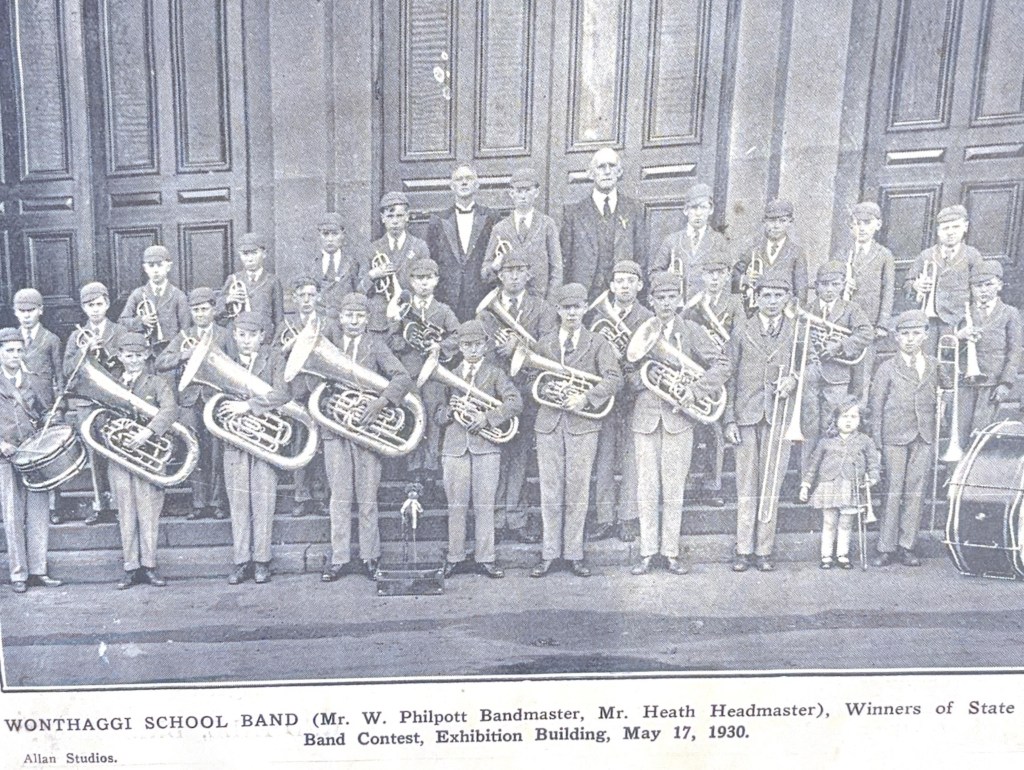
A little girl with a tiny trombone: one inspiration for a school band from Wonthaggi

Figure 1: The Australasian Band and Orchestra News, 26/05/1930, Front Cover

Wonthaggi also has a mascot of whom the boys are very proud. She is little Margaret Philpott aged three years and three months. (“TINY GIRL MASCOT FOR BOYS’ BAND“, 1930)

Introduction:

It is the 17th of May 1930, and the Exhibition Building in Melbourne is a hive of activity as the Victorian State School Band Association holds the first of many annual band contests.  Nine state school bands from across Melbourne, and one country representative from Wonthaggi, have come to compete and to show the rapid progress state school bands have made in the past few years from inception.

Wonthaggi State School Band did themselves proud that day by winning this inaugural contest against some other highly fancied school bands.  But the back stories before and after this win are many.  One of which being the story behind the mascot of the band, three-year-old Margaret Philpott, who is pictured with the band holding a tiny trombone.

The photo above did intrigue me when I first viewed it several years ago and I had been sporadically searching for the name of the small girl with a trombone.  Upon finding the name very recently, this made the photo even more special, and it adds a layer of context to the story.

This post is an addendum to a previous post outlining the development and legacy of Victorian state school bands, and many of the parts of this story mirror the earlier post.  So, it is interesting to unpick this on a local level as the school band from Wonthaggi is a perfect example of how a school band fared in its early years.  It is, perhaps, no accident that the Wonthaggi band was as good as it was due to good fortune and strong leadership – and an inspiring mascot.

Philpott’s and brass bands:
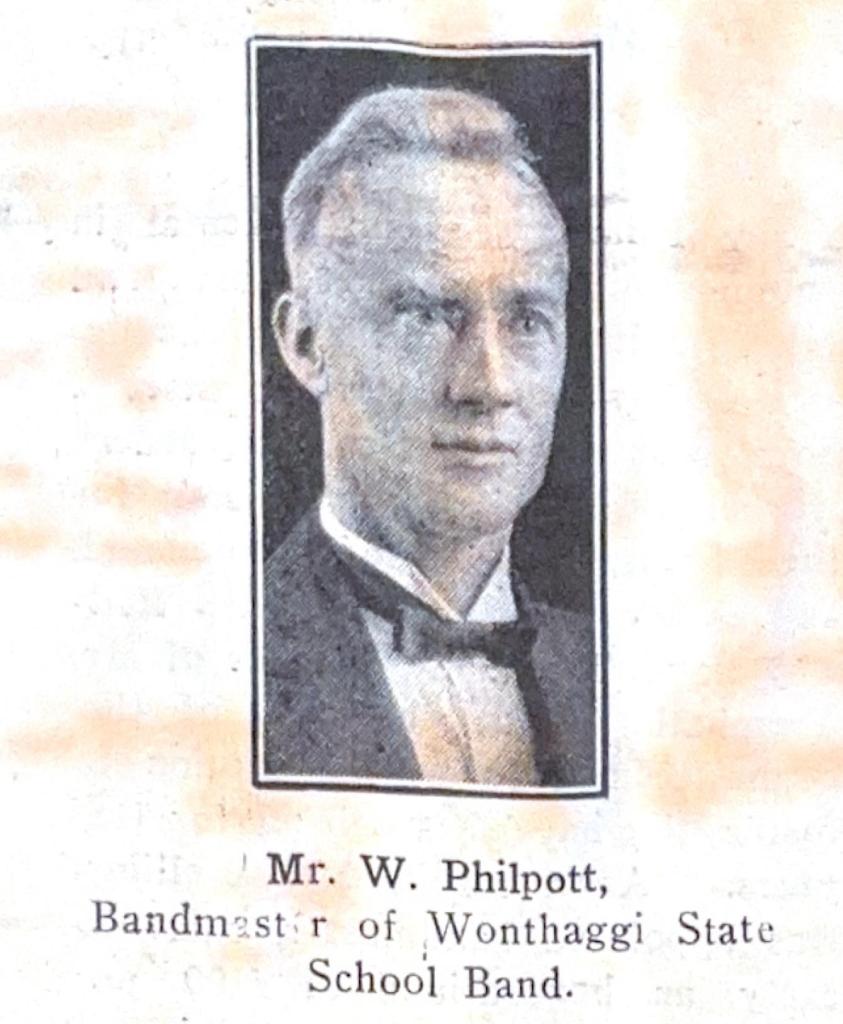
Figure 2: The Australasian Band and Orchestra News, 26/05/1930

The name says it all really.  Margaret Philpott may not have realised this at the age of three, but her name carries a legacy of brass band musicianship.  Her father and grandfather, both named William, were highly regarded brass musicians and conductors.  Her father, William ‘Bill’ Philpott was the ultimate journeyman bandsman.  By 1922 W. Philpott had played in or conducted:

  • 1899 Lismore Band (N.S.W.) conducted by his father, William George Philpott
  • Appointed Bandmaster of the Brighton Town Band (Vic.) which had recently amalgamated with the Elsternwick Band
  • Solo cornetist with the Prahran City Band under Edward Code and Solo Cornet with the St. Kilda Band
  • Engaged to play solo cornet for the Wellington Garrison Band (N.Z.)
  • Appointed bandmaster of the Coraki Band (N.S.W.) in 1908 while playing with the Lismore band
  • 1911 Appointed conductor of the Wagga Wagga Brass Band (N.S.W.)
  • 1918 played Soprano Cornet with the St. Augustine’s Band (Vic.) and Professional Cornet with the Ballarat City Band
  • 1921 Appointed conductor of the Young Brass Band (N.S.W.)

(Points summarised from “YOUNG’S BANDMASTER“, 1922)

W. Philpott continued on his journeyman ways when he moved to Wonthaggi in 1928 to take up a position of conductor of the Wonthaggi Union Band, and soon after the Wonthaggi State School Band (“THE LOSS OF OUR BANDMASTER.”, 1928;  “YOUNG’S BANDMASTER.”, 1928).  By all accounts, the bands that William had been associated with by this time were very grateful for his tutelage and his knowledge – and his success in competition – so they were sorry to see him go.  Wonthaggi offered much opportunity and under the leadership of William, the Wonthaggi Union Band and later the Wonthaggi State School Band both had success – the school band achieved second place in the 1929 Royal South Street contest (Royal South Street Society, 1929;  “SCHOOL BANDS’ CONTESTS.”, 1930).

Of course, William did not stop at Wonthaggi, he still had many years of conducting ahead of him, and his band journey continued:

The Gillies Bequest and the Wonthaggi State School Band:

As previously outlined in the post on school bands in Victoria, the support from the Gillies Bequest was a catalyst for the setting up of school bands across Victoria (de Korte, 2018;  “MUSIC AND READING ALOUD.”, 1925).  The establishment of school bands was a great success. At the presentation of trophies for the 1930 State School Band Association contest (which Wonthaggi won), Mr. Hansen, then Director of Education, outlined just how many bands there were.

There are now in State schools twenty brass and eight drum-and-fife bands.  The recent and rapid growth of them was due largely to the activities of Mr. A. B. Lane, president of the band association.  Of the bequest made by the late William Gillies, out of whose love of music and study the contests were inaugurated, £3750 had already been set aside. (“SCHOOL BANDS’ CONTESTS.”, 1930)

For perspective, the number of school bands grew rapidly in Victoria.  By 1932 there were “31 brass bands, 9 orchestras, 13 fife bands and 23 violin classes” (Hansen, 1932, p. 79) and by 1937, the number of school brass bands had risen to fifty (“BANDS IN VICTORIA“, 1937).  At the 1930 contest, as mentioned, there were ten school bands from “Albert Park, Ascot Vale West, Armadale, Coburg, Coburg West, Footscray, Northcote, Preston West, Princes Hill and Wonthaggi” (“BAND MUSIC IN SCHOOLS.”, 1930). 

At this time, not only were school bands forming at a rapid rate, but the expertise of some very fine conductors was also available.  Frank “Massa” Johnston of Melbourne Fire Brigade and Footscray City Band fame conducted the Hyde Street/Footscray School Band and Northcote Central State School Band, Mr. H. Hellings conducted West Preston, and Mr. W. Philpott conducted Wonthaggi (Allan Studio, 1930;  “Footscray State School Band”, 1930;  “Northcote Central State School Band”, 1928; Stevens, 1930).

With conducting pedigrees like this, and support from school communities and the Gillies Bequest, it is no wonder that school bands began to thrive and succeed.  The Wonthaggi school band was very lucky to share Mr. Philpott with the Wonthaggi Union Band.

A year of successes:
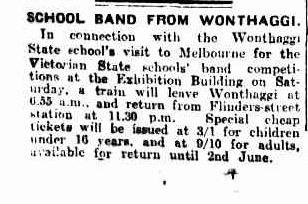
Figure 3: The Age, 14/05/30, p. 18

The State School Band Competition was a big day for Wonthaggi, and the other bands of course, not just because of the travel to and from Melbourne.  Mr. Philpott, the Headmaster, band, parents and supporters, and little Margaret Philpott, made the journey to the contest at the Exhibition Buildings.  Seven days before the contest, Mr. L. Jabara of Wonthaggi gave a gold cup to the Wonthaggi Headmaster, Mr. Heath, “to be presented to the winners of the State school band competition” (“WONTHAGGI.”, 1930a) which was also taken with the group.  In the end it was the remarkable success of Wonthaggi that was the story of the day. Comments from adjudicator Mr. Harry Shugg gave high praise to the Wonthaggi Band:

The adjudicator (Mr. Harry Shugg), commenting upon the performances, expressed surprise that the players, whose average age did not exceed 12½ years, had so done so well within such a short period.  He thought it especially true of the bass soloists. The Wonthaggi band astounded him, and shamed many of the adult bands in Victoria. (“SCHOOL BANDS’ CONTESTS.“, 1930)

The top three placings were as follows:

March:Hymn:National Air:Grand Aggregate:
Wonthaggi1111
Princes Hill2322
Footscray3233
Table 1:  (Placings found in “SCHOOL BANDS’ CONTESTS.“, 1930)

The band deserved all the accolades that were given to them, and the school was very proud of their achievements.

In recognition of winning all the cups and the honor of winning the championship at the State school band contest in Melbourne the teachers of the Wonthaggi State school entertained the members of the band at a dinner.  After playing for the sisters of St. Joseph’s and the scholars at St. Joseph’s school the band boys were entertained at afternoon tea.  Arrangements have been made by the school master (Mr. H. T. Heath) for the championship State school boys to play at 3LO and 3AR.  The band will also play on the M.C.G. ground on Saturday. (“WONTHAGGI.“, 1930b)

The Wonthaggi community was no less appreciative of Mr. Philpott’s dedication to the school band, and in July 1930 presented him with a gift.

In appreciation of his tutoring of the school boys’ band, which won every event at a recent band contest in Melbourne.  Mr. W. Philpott was presented with a wallet of notes at the Union Hall on Wednesday night.  The band is to take part in another contest in Melbourne on 23rd instant, and will also compete at South-street in October.  A school choir, which will also take part in the competitions at South-street has been formed with Mr, Philpott as conductor. (“WONTHAGGI.“, 1930c)

As for little Magaret Philpott, she was as much a part of the band as the bigger boys with their instruments.  Not much is said about her, but she is visible in some further photos, such as this one published in The Herald newspaper showing the boys arriving at the East Malvern State School in preparation for another contest.  Margaret, sporting a beret, can be seen right in the middle of the photo.
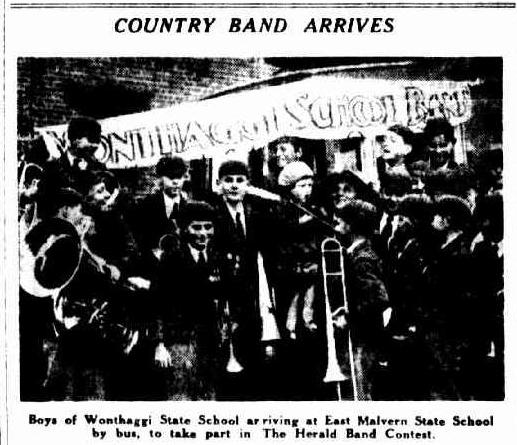
Figure 4: The Herald, 24/07/1930, p. 20
Figure 5: The Herald, 25/07/1930, p. 20

While the Wonthaggi State School band had numerous successes, and many engagements during 1930, they were not immune to events happening around them.  Wonthaggi was home to the State Coal Mine which supported the Wonthaggi Union Band, also conducted by Mr. Philpott.  Many of the mine workers were parents of children at the school, and in the 1930s there were disputes with the State Government which came to a head when a government delegation was to visit the town.  The Union band subsequently refused to play, and banned Mr. Philpott from conducting the school band when the delegation visited (“NO MINERS’ BAND FOR WONTHAGGI VISITORS“, 1930).  The caption on the photo below, published in The Weekly Times newspaper, provides some more reasoning.
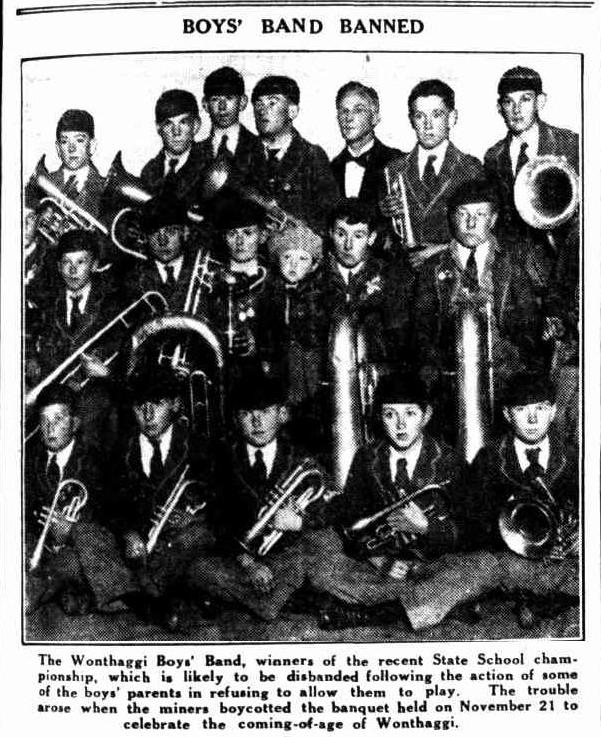
Figure 6: Weekly Times, 29/11/1930, p. 7

And again, here is another photo showing Margaret Philpott sitting among the boys of the band.

There are not many other mentions of the Wonthaggi State School Band after 1930 in the newspapers, and due to the transient nature of Mr. Philpott’s band career, he was not there to continue it through, although the political and industrial undercurrents did affect life in town.  We can at least, view the successes of the school band for what they were at the time; remarkable and very worthy.

Conclusion:

When William Philpott and family arrived in Wonthaggi in 1928, they could not have known what kind of influence they would eventually have.  Through Mr. Philpott, the town and school had musical expertise, with his sons they had solid musicians, and with little Margaret the school band had their own mascot – and she had her own tiny trombone.  Who knows what the Wonthaggi school band might have become if circumstances had been different?  This was only one Victorian school band among many, and they set the early standards.

As for Margaret Philpott, she may not have followed her brothers into brass music, but she was a creative type.  To finish this post, here is a poem that she wrote that was published in The Sun News-Pictorial newspaper, supplementary section in August 1936. Simply titled ‘The Clock’:
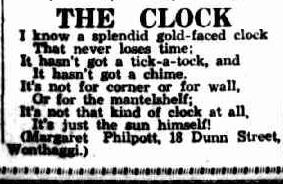
Figure 7: Sun News-Pictorial, 29/08/1936, p. ‘S3’

With thanks:

The author would like to thank members of the Young & District Family History Group for assistance in researching the Philpott family during their time in Young, and for providing further reading on the Young Town Band that mentions William J. Philpott.

References:

Allan Studio. (1930). Wonthaggi State School Band (Mr. W. Philpott Bandmaster, Mr. Heath Headmaster). Winners of State School Band Contest. Exhibition Building, May 17, 1930 [Digital scan of front cover photograph]. The Australasian Band and Orchestra News, XXV(9), Front Cover. 

APPOINTMENT OF BANDMASTER : Mr. W. J. PHILPOTT SELECTED. : Salary £130 Per Annum. (1940, 19 October). Williamstown Chronicle (Vic. : 1856 – 1954), 8. http://nla.gov.au/nla.news-article70695595

BAND MUSIC IN SCHOOLS: First Contest To-day. (1930, 17 May). Argus (Melbourne, Vic. : 1848 – 1957), 27. http://nla.gov.au/nla.news-article4087822

BANDMASTER RESIGNS : Goes Back to Wonthaggi. (1936, 31 January). Benalla Standard (Vic. : 1901 – 1940), 1. http://nla.gov.au/nla.news-article269674064

BANDS IN VICTORIA : High Musical Standard : Is Public Appreciating Lacking? (1937, 07 December). Age (Melbourne, Vic. : 1854 – 1954), 10. http://nla.gov.au/nla.news-article205550598

BENALLA’S NEW BANDMASTER : MR. W. J. PHILPOTT OF WONTHAGGI APPOINTED. (1934, 03 August). North Eastern Ensign (Benalla, Vic. : 1872 – 1938), 3. http://nla.gov.au/nla.news-article70790349

BOYS’ BAND BANNED. (1930, 29 November). Weekly Times (Melbourne, Vic. : 1869 – 1954), 7. http://nla.gov.au/nla.news-article224921183

COUNTRY BAND ARRIVES. (1930, 24 July). Herald (Melbourne, Vic. : 1861 – 1954), 20. http://nla.gov.au/nla.news-article242810008

de Korte, J. D. (2018, 08 April). Victorian State school brass bands: their legacy lives on. Band Blasts from the Past: Anecdotes, Stories and Personalities. https://bandblastsfromthepast.blog/2018/04/08/victorian-state-school-brass-bands-their-legacy-lives-on/

Footscray (Vic.) State School Band : Mr. Ellingsen, Headmaster, Mr. F. Johnston, Bandmaster. (1930). [Digital scan of front cover photograph]. The Australasian Band and Orchestra News, XXV(6), Front Cover.

Hansen, M. P. (1932). Thoughts that breathe. Robertson & Mullens. 

Lawson-Black, P. (2010). Bold as brass : the story of Stonnington City Brass then and now. Pat Lawson-Black, Stonnington City Brass. 

THE LOSS OF OUR BANDMASTER. (1928, 13 April). Young Chronicle (NSW : 1902 – 1910; 1913 – 1915; 1924 – 1934; 1936 – 1940), 2. http://nla.gov.au/nla.news-article234313241

Mr. W. Philpott. (1930). [Digital Scan of photograph]. The Australasian Band and Orchestra News, XXV(9).

MUSIC AND READING ALOUD : Object of Large Bequest. (1925, 01 June). Argus (Melbourne, Vic. : 1848 – 1957), 10. http://nla.gov.au/nla.news-article2122525

NO MINERS’ BAND FOR WONTHAGGI VISITORS : Quarrel With Ministry : PARLIAMENTARY PARTY THERE TOMORROW. (1930, 20 November). Herald (Melbourne, Vic. : 1861 – 1954), 4. http://nla.gov.au/nla.news-article242933719

Northcote Central State School Band : Mr. J. Bromilow, Head Teacher; Mr. F. Johnston, Bandmaster; Major Trengrove, Secretary. (1928). [Digital scan of front cover photograph]. The Australasian Band and Orchestra News, XXIV(3), Front Cover. 

Philpott, M. (1936, 29 August). THE CLOCK. Sun News-Pictorial (Melbourne, Vic. : 1922 – 1954; 1956), ‘S3’. http://nla.gov.au/nla.news-article277568115

Royal South Street Society. (1929, 05 October). 1929-10-05 Orchestral : Held in the Coliseum. Royal South Street Society. Retrieved 10 July 2026 from https://results.royalsouthstreet.com.au/results/1929-10-05-orchestral

SCHOOL BAND FROM WONTHAGGI. (1930, 14 May). Age (Melbourne, Vic. : 1854 – 1954), 18. http://nla.gov.au/nla.news-article203073779

SCHOOL BANDS’ CONTESTS : Wonthaggi’s Fine Performance. (1930, 19 May). Age (Melbourne, Vic. : 1854 – 1954), 11. http://nla.gov.au/nla.news-article203075313

Snowy Alps: Championship Golf: Band Boys’ Cup. (1930, 25 July). Herald (Melbourne, Vic. : 1861 – 1954), 20. http://nla.gov.au/nla.news-article242802853

Stevens, C. (1930). Preston West State School Band [Digital scan of front cover photograph]. The Australasian Band and Orchestra News, XXV(11), Front Cover. 

STH. MELBOURNE CITY BAND : Valedictory Of Old Conductor. (1938, 08 January). Record (Emerald Hill, Vic. : 1881 – 1957), 5. http://nla.gov.au/nla.news-article164490205

TINY GIRL MASCOT FOR BOYS’ BAND : Wonthaggi Competitors In Herald Contest. (1930, 19 July). Herald (Melbourne, Vic. : 1861 – 1954), 4. http://nla.gov.au/nla.news-article242814169

WONTHAGGI. (1930a, 10 May). Age (Melbourne, Vic. : 1854 – 1954), 17. http://nla.gov.au/nla.news-article203073601

WONTHAGGI. (1930b, 12 June). Age (Melbourne, Vic. : 1854 – 1954), 6. http://nla.gov.au/nla.news-article203086469

WONTHAGGI. (1930c, 11 July). Age (Melbourne, Vic. : 1854 – 1954), 12. http://nla.gov.au/nla.news-article202459763

YOUNG’S BANDMASTER. (1928, 05 April). Grenfell Record and Lachlan District Advertiser (NSW : 1876 – 1951), 3. http://nla.gov.au/nla.news-article115900873

YOUNG’S BANDMASTER : Mr W. J. Philpott. (1922, 04 February). Young Witness (NSW : 1915 – 1923), 4. http://nla.gov.au/nla.news-article113649653


Names and status: the rare National and State bands

Postcard: Australian Silver Band, 1925. (source: Jeremy de Korte Personal Collection)

Introduction:

For the most part, the naming of bands is logical based on location, type, or business association. It stands to reason that if a band was associated with a town, then that would be the town band, however, there were a number of exceptions  – the naming of some of the early private bands comes to mind. Likewise, if a band was in a locality and associated with an industry, a similar naming convention would follow, such as Newcastle Steelworks or South Australian Railways.  This gave the bands identity and a purpose.  Where two bands existed in the same area, there was undoubtedly some disagreements, although not generally over naming but over status and prestige…and performances!  If a band was given an Australian or State name, that lifted their reputations almost immediately, yes?  Possibly, but there were other factors involved.

The focus of this post is to explore a level up from the local bands where we delve into the rare State and National bands.  Granted, there were not many of them.  In fact, in the time period that is being focused on in this post, these types of bands were thin on the ground.  In a previous post, the life of the ABC Military Band was explored, a unique ensemble in its own right and one that included bandsmen from all over Australia.  This was a representative band but different from the more common brass bands in that it included woodwind and percussion.  In this post, we will highlight brass bands.

Admittedly, there was some difficulty finding material on these rare bands due to their short periods of existence.  That being said, there were other bands in Australia aside from the more notable ones and mention will be made of them.  We will also see how a certain State band raised the ire of the governing body of its home State.

There is no doubt that being part of a National or State band was one that bandsmen aspired, and for the National bands, the best bandsmen were picked for a proposed or grand world tour.  The one State band that was set up did so in unusual circumstances and the naming of them as a State band brought them much recognition and pride.  With this in mind, National and State bands did exist and although they were sporadic and formed mainly for tours, they developed reputations in their own right and gave more bandsmen another musical outlet.

Early attempts:

State and National bands were mainly set up by organizations that had the resources to undertake such ventures.  Remembering that this was an older Australia where the distances between places were sometimes very vast, and it was not easy to move people anywhere. Yet in the first instance, we can see that the Salvation Army pulled this off in 1898 with the formation of a Federal Band.  An article which was published in the South Australian Register on the 14th of February 1898 is very informative and details the formation of the band and the tour it had undertaken thus far:

There is now in Adelaide an interesting band of clever musicians picked from the ranks of the Salvation Army.  It is styled “the Salvation Army Federal Band” and has twenty-five playing members, exclusive of Major Taylor (Victoria), who is their director.  The bandmaster is Ensign Cater (New Zealand), who takes up an instrument.  Counting in Major Taylor, the seven colonies of Australia are represented in the following order: – Victoria, eight; South Australia, five; Western Australia; four; New South Wales, three; New Zealand, three; Queensland, two; Tasmania, one; total, twenty-six.

(“SALVATION ARMY FEDERATION.,” 1898)

The Salvation Army had begun planning for this band twelve months in advance, with the aim of the band being “the kind of which should tour the colonies and encourage the members of the Army, and by producing music of a high order raise funds for the work in the different parts of Australasia” (“SALVATION ARMY FEDERATION.,” 1898).  By the time the band had reached Adelaide it had already toured from Melbourne to Western Australia, back to South Australia and from there had been to the Yorke Peninsula and Broken Hill (“SALVATION ARMY FEDERATION.,” 1898).  According to another article published in The Advertiser, the Federal Band was a very fine combination of musicians and presented a wonderful concert (“SALVATION ARMY.,” 1898).  As it is ever thus with Salvation Army bands.

The Sydney Morning Herald, 1/04/1908, p. 8

In 1908 a tiny article was published in The Sydney Morning Herald in which the title is misleading. As you can see in the article (pictured), there is no “Commonwealth Brass Band” that has been formed.  Rather, it is a proposal to secure the services of the Newtown Brass Band to perform at the Anglo-French Exhibition (“COMMONWEALTH BRASS BAND.,” 1908).  By all accounts, the Newtown Brass Band was very famous having won numerous competitions by this time and could have probably served as the Australian band at the exhibition (Greaves & Earl, 2001).  However, the Prime Minister apparently rejected this proposal for reasons unknown.

The Australian Imperial Band:

Postcard: Australian Imperial Band, 1924 (source: Jeremy de Korte personal collection)

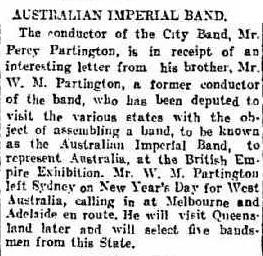
In terms of true Australian brass bands, the main one that is spoken about is the ‘Australian Commonwealth Band’ which was conducted by the great Albert H. Baile on two world tours – but more will be talked about this band in the next section (Sharp, 1993).  However, preceding the ‘Australian Commonwealth Band’ was another ensemble which was known as the ‘Australian Imperial Band’ (AIB), formed by Mr. W. M. Partington in 1924 (“AUSTRALIAN IMPERIAL BAND.,” 1924).  Mr. Partington is mentioned in some references –  he did conduct the Ballarat City Band from 1909-1910 and numerous other bands (Pattie, 2010).  That did not stop certain newspapers like the Ballarat Star waxing lyrical about his musical and organisational abilities (“AUSTRALIAN IMPERIAL BAND COMING.,” 1924).  Nevertheless, it is evident that in much later years he managed to form a true National band and while it seems he never took the band to England, he did take it on tour throughout Australia.

Morning Bulletin, 9/01/1924, p. 8

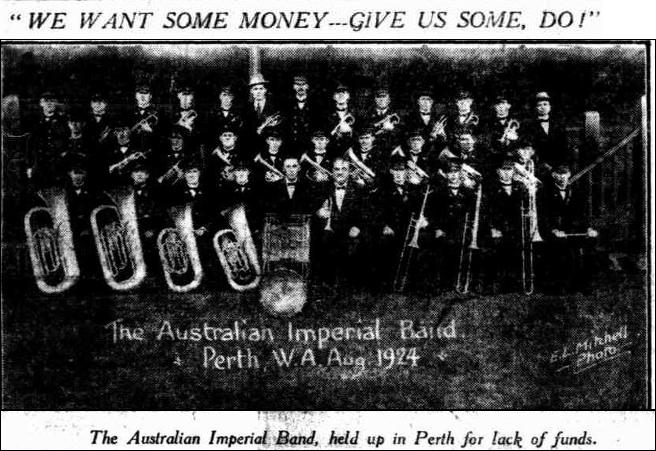
1924 was an interesting year for Australian bands.  Perhaps the most notable event was the tour of the Newcastle Steelworks Band to England where it achieved astounding success in competition under the baton of Albert H. Baile (Greaves & Earl, 2001).  The AIB had wanted to go to England to compete but were unable to make the trip due to a lack of funds.  The Newcastle Steelworks Band then went in their place (Cameron, 2020). We see in an article from the Daily Telegraph in June 1924 that there was an amount of work going on to try and secure more funds:

In Sydney, the Lord Mayor (Ald. Gilpin) now is issuing an appeal for funds, which should meet with a good response, as it is necessary for each State to provide a proportionate amount of expenses to send the band to Wembley and to compete in the Crystal Palace contests.

(“AUSTRALIAN-IMPERIAL BAND,” 1924)

However, as discussed in a previous post on bands that went on tour, it is a very expensive undertaking and the picture of the AIB (below) published by the Mirror newspaper in Perth is telling.  One could assume that by the time the AIB reached Perth, their general touring money had run out.  Which is probably a reason why there is no mention of the band traveling to England.

19240809_Mirror_Aust-Imp-Band-Money
Mirror, 9/08/1924, p. 1

The length of time this band was in existence was short however they managed to get themselves together and go on a grand tour of Australia, to some very favorable reviews.  There is not much mention of the personnel of the band but given there were many quality bandsmen in the country at the time, finding gifted musicians was probably not a problem.

The Australian Commonwealth Band:

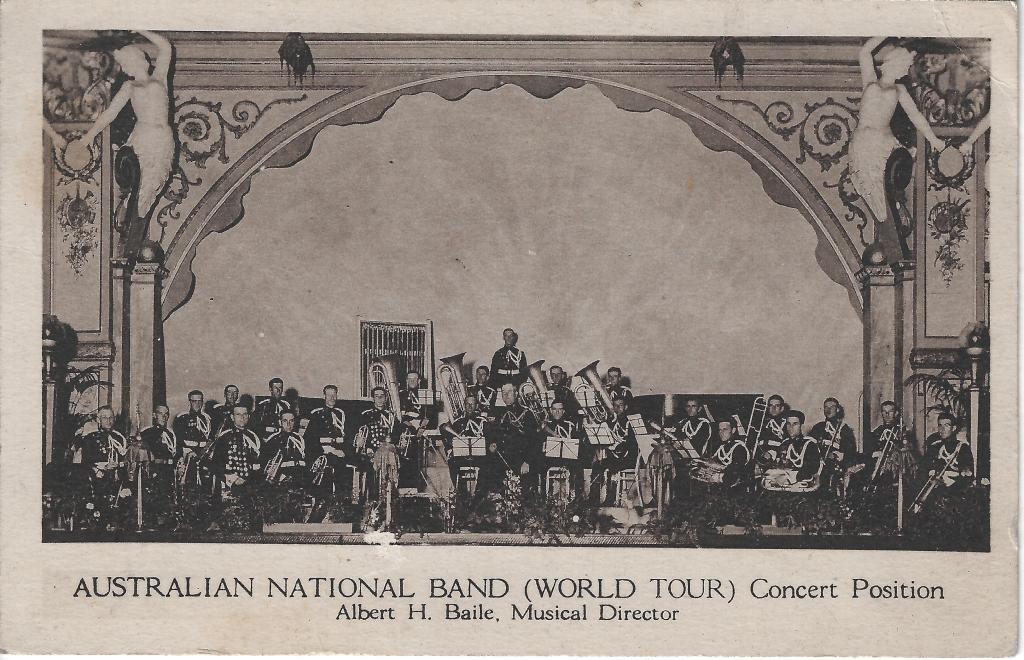
Postcard: Australian National Band – Concert Position, 1926 (source: Jeremy de Korte personal collection)
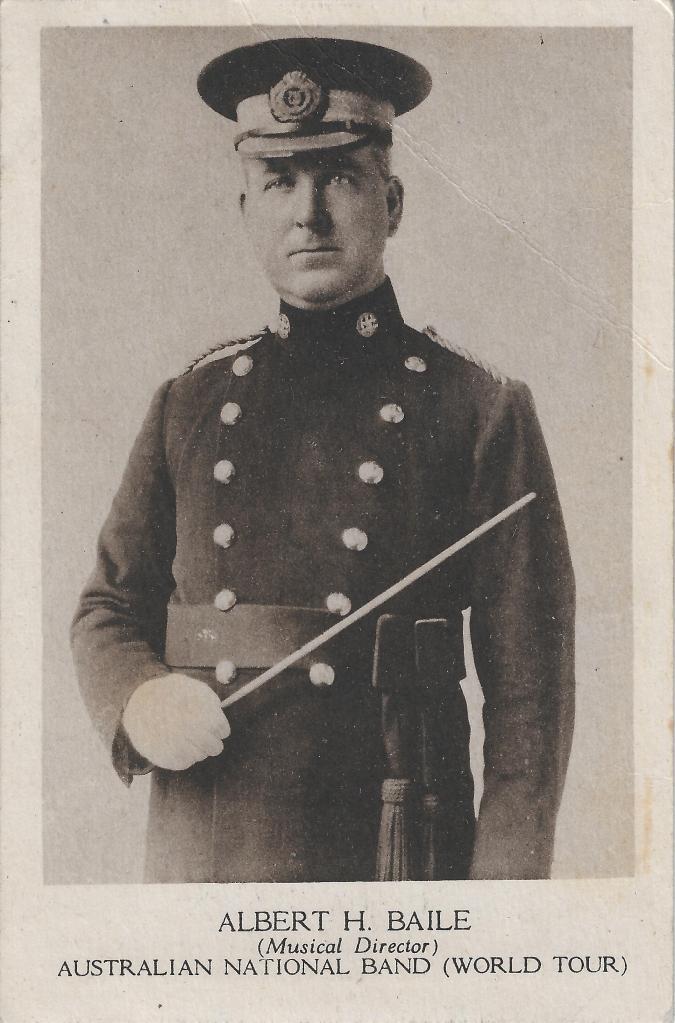
Postcard: Albert H. Baile, 1926 (source: Jeremy de Korte personal collection)

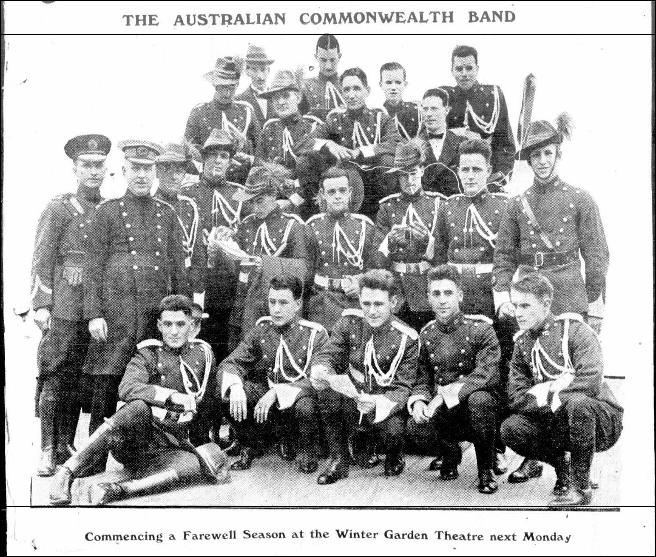
Albert H. Baile was one of the most famous band directors of this time and he had a masterful way of conducting his bands (Greaves & Earl, 2001).  No sooner had Baile returned to Australia in 1925 with his Newcastle Steelworks Band, he made moves to reform the band in Sydney as the Australian Silver Band and apparently included some Queensland bandsmen in the new ensemble (“AUSTRALIAN SILVER BAND.,” 1925).  Including some bandsmen from another State could probably justify the name change an Australian band. However, given the huge reputation of the Newcastle Steelworks Band after their competition wins, the name change stuck and the band proceeded on their first international tour to wide acclaim (“AUSTRALIAN COMMONWEALTH SILVER BAND,” 1926).

The Daily Mail, 29/09/1925, p. 10

The band name seems to have begun evolving into the Australian Commonwealth Band in various media with the dropping of the world ‘Silver’ from it, hence the more recognizable name is etched in history.  We see in the various photos and ephemera included in this post that they were a very smart looking ensemble and that they had a distinctly Australian look with slouch hats.

Aside from the way the name of the band continually evolving in the newspapers, this did not discount the fact that it was an extremely fine ensemble made up of the best brass soloists and led by Baile himself.  Certainly, reviews from Australian newspapers as well as those from overseas, gave high praise to the sound of this band likening it to an “organ” or an “orchestra” (“Australian Silver Band,” 1925; “VISIT OF AUSTRALIAN BAND,” 1926).   The newspaper article published by the Todmorden & District News (UK) in 1926 was very informative as to the concert it gave in their area, attended by 5,000 people, and the quality of the soloists, in particular, the Solo Cornet player, Mr Arthur Stender (“VISIT OF AUSTRALIAN BAND,” 1926).  Below is a list of the band members as published in the book, “Legends in Brass : Australian Brass Band Achievers of the 20thCentury”:

Postcard: Australian National Band, 1926 (source: Jeremy de Korte personal collection)

Front row: Len Ryan, Norm Forbes, Alf Cornish, Fred Myers, Vern Beacroft, Albert Baile, Clarrie Collins, Jack Stokes, Tom Bennett, Ossie Forbes
Middle row: Bob Gibson, Joe Clay, Len Atkinson, George Robertson, Stan Ryan, Albert Ovenden, Bill Murphy, Jack Murphy, Harold Hewson
Back row: Archie Moore, Harold Collins, James “Scott” Armour, Arthur Stender, Alfred Paxton, Joe Hardy

(Greaves & Earl, 2001, p. 51)

The Australian Commonwealth Band undertook two Australian/World tours, the first from 1925-1926 and the next from 1926-1928.  As in their first tour, they received rave reviews during their second tour, of which an article in New Zealand’s Evening Post from February 1927 provides a brief summary (“COMMONWEALTH SILVER BAND,” 1927).  This second tour was not all plain sailing.  While the band was traveling around Australia, the Australian Musicians’ Union was up in arms about a boycott of the Commonwealth Band while it was touring America (“COMMONWEALTH BAND,” 1927).  The Union started lobbying for retaliatory action against musicians visiting from overseas.  It is unclear how this action was resolved however it is interesting that despite the reputation of the Commonwealth Band, there was this hiccup while on tour.

19271203_Figaro_Aust-Comm-Band-Farewell
Queensland Figaro, 3/12/1927, p. 1

The Australian Commonwealth Band was disbanded in Sydney in early 1928 after they had finished their last tour of Australia (Greaves & Earl, 2001).  There is no doubt that this was a truly remarkable ensemble, started from the players of the Newcastle Steelworks Band to become a unique band in its own right. And it certainly boosted the reputation of Australian bands in general.  The legacy of this fine ensemble was felt for years to come.

The Queensland State Band:

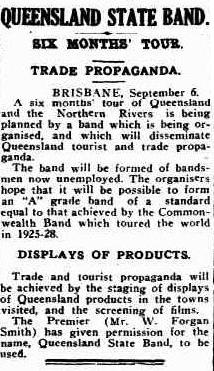
In the early 1930s, we see the formation of the one and only State band, the Queensland State Band.  This was formed in unusual, but possibly well-meaning circumstances as the musicians were notionally “unemployed” (“QUEENSLAND STATE BAND.,” 1933b).  The other aim of the band was to try to emulate the success of previous tours by the Newcastle Steelworks Band and the Australian Commonwealth Band by touring overseas and competing in England.  Nevertheless, the band formed in September 1933 and included previous members of the Australian Commonwealth Band (“QUEENSLAND STATE BAND TOUR.,” 1933).

The Northern Herald, 9/09/1933, p. 19

Almost immediately this band raised the ire of the Queensland Band Association (QBA) of which sent an annoyed letter to the Courier Mail published on October 9th, 1933.  In the letter, the QBA Secretary of the time, Mr J. R. Foster made some forceful points about the State band not being “tested for proficiency” under QBA rules, and the fact that the State band was professional yet had excluded some Queenslanders by bringing in bandsmen from Southern States (Foster, 1933).  In addition, apparently, the Lord Mayor of Brisbane had allowed the State band to perform in a park while excluding other Brisbane metropolitan bands (Foster, 1933).  It is fair to say that this letter (and the QBA) failed to have much impact on the operations of this band.

After being brought together, the Queensland State Band commenced a tour of Queensland where they visited many towns and rural centers north of Brisbane. The receptions they received were enthusiastic and many a town newspaper gave them favorable reviews of their playing (“QUEENSLAND STATE BAND.,” 1933a).  Indeed, they also inspired many local town bands and schools, and it is noted that they played for a combined total of 20,000 people over the course of the tour (“STATE BAND DOGGED BY RAIN,” 1933).  After this part of the tour ended, they were supposed to tour through Northern NSW and also raise finances for a trip to England, of which either activity does not appear to have happened.

As mentioned, this is one of the only instances during this time where a State band was formed.  It is unclear why other States did not form their own representative bands.  However, it does indicate that where there is a drive, things will happen even if all the aims are not met.

One more band:

There was only one more band to carry an Australian name during this time period, a band that was very short lived – the ‘Australian Girls’ Brass Band’ which was formed in 1934.  We know how rare female bands were through a previous post, so perhaps this was a tokenistic ensemble.  However, they were formed and presented one concert in Sydney where they were not exactly complimented for playing, but apparently looked very smart in green & gold uniforms (“Australian Girls’ Brass Band,” 1934; “FIRST CONCERT,” 1934).  There is no more record of this band doing anything else beyond this one concert.

Conclusion:

If there is anything showing from the stories of these ensembles it is a distinct similarity between them.  They were all formed basically for the one activity, which was touring.  Except that this aim was obviously dependent on having enough money.  That being said, the Australian Commonwealth Band took things a few steps further by acting on their aims to compete in England and tour around the world, and it was a band that was in existence for the longest time.  Certainly, the fact that the Commonwealth Band undertook two world tours in quick succession is a testament to the organization and prowess of its manager and conductor, no doubt both well-honed from the previous Newcastle tour.

In any case, once again we see that these bands added to the reputation and life of Australian banding and through them, we have seen some interesting histories.  Perhaps there are lessons to be learned and no doubt there are further stories to be unearthed.  We do have a unique history of bands in this country and having bands that carried the Australian name or a State name gained for themselves a distinct historical legacy.

Postcard: Australian National Band – Soloists, 1926 (source: Jeremy de Korte personal collection)

References:

THE AUSTRALIAN COMMONWEALTH BAND. (1927, 03 December). Queensland Figaro (Brisbane, Qld. : 1901 – 1936), 1. http://nla.gov.au/nla.news-article84901454

AUSTRALIAN COMMONWEALTH SILVER BAND. (1926, 02 February). Geelong Advertiser (Vic. : 1859 – 1929), 1. http://nla.gov.au/nla.news-article232244596

Australian Girls’ Brass Band. (1934, 24 January). Sydney Mail (NSW : 1912 – 1938), 19. http://nla.gov.au/nla.news-article166103727

AUSTRALIAN IMPERIAL BAND. (1924, 09 January). Morning Bulletin (Rockhampton, Qld. : 1878 – 1954), 8. http://nla.gov.au/nla.news-article54107997

AUSTRALIAN IMPERIAL BAND COMING. (1924, 03 June). Ballarat Star (Vic. : 1865 – 1924), 2. http://nla.gov.au/nla.news-article214257314

AUSTRALIAN SILVER BAND. (1925, 29 September). Daily Mail (Brisbane, Qld. : 1903 – 1926), 10. http://nla.gov.au/nla.news-article218269176

Australian Silver Band. (1925, 27 November). Te Aroha News. https://paperspast.natlib.govt.nz/newspapers/TAN19251127.2.15.1

AUSTRALIAN-IMPERIAL BAND. (1924, 24 June). Daily Telegraph (Sydney, NSW : 1883 – 1930), 6. http://nla.gov.au/nla.news-article245712884

Cameron, K. (2020, 12 August). Actually the steelworks band benefited from this group’s misfortune. The Newcastle band filled the Wembley exhibition dates that had been… [Comment]. Facebook. Retrieved 12 August 2020 from https://www.facebook.com/groups/1404925869759642/?post_id=2612055202380030&comment_id=2612128729039344&notif_id=1597219322511437&notif_t=group_comment&ref=notif

COMMONWEALTH BAND : Retaliatory Proposals. (1927, 01 November). Western Argus (Kalgoorlie, WA : 1916 – 1938), 13. http://nla.gov.au/nla.news-article34420586

COMMONWEALTH SILVER BAND : What others think. (1927, 09 February). Evening Star. https://paperspast.natlib.govt.nz/newspapers/ESD19270209.2.93

FIRST CONCERT : Girls’ Band in Gold and Green. (1934, 18 January). Daily Telegraph (Sydney, NSW : 1931 – 1954), 10. http://nla.gov.au/nla.news-article248959700

Foster, J. R. (1933, 09 October). QUEENSLAND STATE BAND : To the Editor. Courier-Mail (Brisbane, Qld. : 1933 – 1954), 3. http://nla.gov.au/nla.news-article1128247

Greaves, J., & Earl, C. (2001). Legends in brass : Australian brass band achievers of the 20th century. Muso’s Media.

Minton Witts Studios. (1924). Australian Imperial Band in Sydney (Conducted by: Mr W. M. Partington) [Postcard]. Minton Witts Studios, Sydney, N.S.W.  

Pattie, R. (2010). The history of the City of Ballarat Municipal Brass Band 1900-2010 : one hundred and ten years of music to the citizens of Ballarat (Rev. ed.). City of Ballarat Municipal Brass Band. 

Photogelatine Engraving Company Co. Ltd. (1926a). Albert H. Baile (Musical Director) : Australian National Band (World Tour) [Postcard]. Photogelatine Engraving Company Co. Ltd., Ottawa, Canada. 

Photogelatine Engraving Company Co. Ltd. (1926b). Australian National Band (World Tour) [Postcard]. Photogelatine Engraving Company Co. Ltd., Ottawa, Canada. 

Photogelatine Engraving Company Co. Ltd. (1926c). Australian National Band (World Tour) Concert Position : Albert H. Baile, Musical Director [Postcard]. Photogelatine Engraving Company Co. Ltd., Ottawa, Canada. 

Photogelatine Engraving Company Co. Ltd. (1926d). Australian National Band (World Tour) Soloists [Postcard]. Photogelatine Engraving Company Co. Ltd., Ottawa, Canada. 

QUEENSLAND STATE BAND : Brilliant Conductor. (1933, 28 October). Cairns Post (Qld. : 1909 – 1954), 3. http://nla.gov.au/nla.news-article41230080

QUEENSLAND STATE BAND : Six Months Tour : Trade Propaganda. (1933, 09 September). Northern Herald (Cairns, Qld. : 1913 – 1939), 19. http://nla.gov.au/nla.news-article150003898

QUEENSLAND STATE BAND TOUR. (1933, 29 September). Courier-Mail (Brisbane, Qld. : 1933 – 1954), 20. http://nla.gov.au/nla.news-article1124687

SALVATION ARMY : The Federal Band. (1898, 14 February). Advertiser (Adelaide, SA : 1889 – 1931), 7. http://nla.gov.au/nla.news-article35105401

SALVATION ARMY FEDERATION : A Capital Band. (1898, 14 February). South Australian Register (Adelaide, SA : 1839 – 1900), 6. http://nla.gov.au/nla.news-article54519628

Sharp, A. M. (1993). Baile, Albert Henry (Bert) (1882-1961). In Australian Dictionary of Biography. Retrieved 22 March 2019, from https://adb.anu.edu.au/biography/baile-albert-henry-bert-9402

STATE BAND DOGGED BY RAIN : Northern Tour Ends : Successful Results. (1933, 30 November). Telegraph (Brisbane, Qld. : 1872 – 1947), 6. http://nla.gov.au/nla.news-article181171770

VISIT OF THE AUSTRALIAN BAND : Magnificent playing to big crowds. (1926, 20 August). Todmorden & District News,2. https://www.britishnewspaperarchive.co.uk/viewer/bl/0001940/19260820/182/0002

“WE WANT SOME MONEY-GIVE US SOME, DO!”. (1924, 09 August). Mirror (Perth, WA : 1921 – 1956), 1. http://nla.gov.au/nla.news-article76437154